The post The Best Aquarium Light Timers for 2022 appeared first on Aquatic Eden.
]]>
You may think that you do not need the best aquarium light timer right now, but you will ask yourself why you did not get one sooner. This is especially true once you experience and discover how convenient it is.
You probably already have aquarium lights installed on your tank, but do you still need to turn them on and off by hand? Would it not be great if the lights would turn on and off on their own during certain times of the day? Aside from being convenient, this will also benefit your fish in more ways than one.
This article will teach you how to choose the right aquarium light timer, and why you and your fish need it.
Best Aquarium Light Timer Reviews
1. BN-LINK Surge Protector Digital Timer
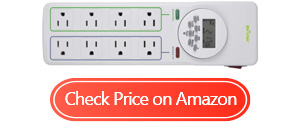
This product is essentially an aquarium light timer dual power strip, something that I did not know I needed until I tried it. This power strip has eight outlets in total, four of which are always on while the other four are programmable. Even when I am out of the house, I am sure my fish gets the light they need.
Aside from letting you set the timer to turn the outlets on and off at a certain time, you can also choose what days they turn on. Just set the date and time that you want the aquarium lights to turn on and this power strip will do so automatically. I also use this to automate the feeder so even when I am out, my fish will still get enough food.
Here is another impressive thing about this aquarium timer power strip – you can set up to 8 different programs for the timer. Your fish needs at least 10-12 hours of light every day so they can maintain their bright colors. This is especially true for goldfish. So, I set my timer to go on for around 6 hours during the day and 4 hours in the evening.
No need to worry about the power surges or interruptions damaging your aquarium equipment because this power strip comes with a built-in surge protector and circuit breaker. In addition, it also has a built-in battery. This means that in case of a power outage, it will not erase the timer programs.
My problem with this product, though, is that it is a bit too complicated. It has numerous buttons. You need to press multiple buttons at the same time for some functions. If you are getting this aquarium timer, make sure that you carefully read the instruction manual and keep it safe in case you need it later.
- Has 8 outlets in total
- Allows you to set the time and day for the timer
- Can set up to 8 programs
- Comes with a built-in surge protector and circuit breaker
- Has additional settings for DST and random
- Setting the programs can be tricky and complicated because of its numerous buttons
Overall, I find it the ideal product for aquarium lights and for automating other accessories. With this timer, you can be sure that your fish and live plants will have all the light they need anytime.
2. Hygger Auto On Off LED Aquarium Timer Lights

The one thing that you need to make sure of when choosing an aquarium light is that it must at least have some amount of water resistance. This aquarium light with a built-in timer has an IP68 rating so accidental splashes and even momentary submersion will not cause any serious damage.
I also liked how I can control the intensity and brightness of the LED lights as a means of imitating the actual lighting in the real world. This product also allows users to change the colors of the light. The best part about it is that you can set the light to change its colors and intensity at certain times of the day.
It also comes with a sunrise and sunset function. This means that at specific times of your choosing, the lights will turn on and off gradually to simulate the rising and setting of the sun. This is much better for the fish compared to abruptly turning the lights on and off, causing them stress. The best part about this is that it is completely automatic.
Aside from the sunlight and sunset function, this light also comes with a moonlight setting that allows dulling down the intensity and colors. This can mimic the slight illumination provided by the moon. It will also give your aquarium a more natural look and feel.
Now, this product would have gotten a perfect score if only they did a better job with heat dissipation. This light can get hot after it has been on for a couple of hours, so it might affect the temperature of the water quite a bit.
- High water-resistance
- Adjustable light intensity and colors
- Comes with a sunlight and sunset function
- Features a moonlight function
- Keeps the colors of the fish vibrant and the live plants healthy
- The aluminum housing can get quite hot
If you want almost total control over the lighting of your aquarium, then you need to check this product out. This aquarium light can simulate the lighting effects of real sunlight, but without the hassle of causing algae bloom.
3. DEWENWILS Indoor Plug in Outlet Timer
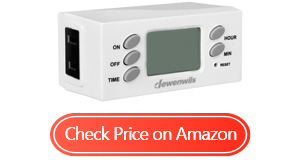
Unlike other wall-plugged aquarium lighting timers, this product does not take over the entire wall outlet. It is so slim and compact that you can still use the other outlets for other appliances. It is also so small that it is barely noticeable. This is great if you want to keep your aquarium setup neat.
This is almost as complicated as a regular kitchen timer. If you are even just a bit technically inclined, you can program this timer even without reading the instruction manual. Most people can probably figure out how to make it work just by looking at it.
You also do not have to worry about the power going out. This timer has an internal battery that will keep your settings. The backup battery is good for at least three months so an hour or so without power will not be a problem.
Unlike other timers, especially the mechanical ones, this product will not produce any noise at all. You can place it beside your bed to turn on your lampshade automatically, so you can wake up on schedule every morning. This timer will also help make sure that your fish gets all the light they need.
Keep in mind that this is a very basic timer. With that said, you should not expect that you can program it to turn on and off several times during the day. You can only set it to turn on once and then off again one time a day. If you will be using it for your aquarium light, then you need to set it for nighttime.
- Comes with a minimalist and compact design
- Easy to program and operate
- Has a backup internal battery
- Completely silent and automatic
- You can set it to be on all the time
- Can only program one schedule at a time
This product is an incredibly simple and easy-to-use timer. It does not claim to be the best but it is certainly reliable. Just program the on and off times and plug your aquarium light into it. You should then plug the device into the wall outlet and forget about it.
4. VIPARSPECTRA Timer Control LED Aquarium Lights
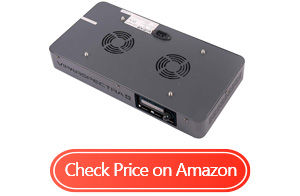
This aquarium light comes with two light channels with each one having its own spectrum of colors. One channel is for white light while the other is for blue light. You can program both channels to turn on and off at specific times.
This product is the ideal choice for aquarists who have a reef tank as well as for someone who is growing live rocks and corals. This aquarium light with a timer can easily penetrate deep into the tank to make sure that the corals get all the light they need to grow and cultivate properly.
You also get complete control over the intensity and the color of the lights. You can choose from two spectrums of colors. Also, you can adjust the intensity of the lights from dim to extremely bright. These lights are so bright that they can reach the bottom of deep reef tanks so that corals can have enough light.
This product also comes with a remote control. If you mount the light a bit too high, then you can use the remote to easily and conveniently control the lights from below. You can control all functions from the small remote that came with the lights.
The problem with these lights, at least with the ones I got, is that they require mounting on the ceiling. Although the reason for this is so you can adjust the height of the aquarium light, it would have been much easier if you could place this on top of the tank if you wanted to.
- Provides two separate channels for blue and white light
- Ideal for growing and cultivating corals
- Gives full control over light intensity and color
- Comes with remote control for easier operation
- Extremely bright – The light can reach the bottom of even deep reef tanks
- Needs to be hang-mounted on the ceiling
This light setup is ideal if you have light-hungry corals but it can also work if you have a freshwater tank, especially one with live plants. The installation can be tricky though. However, you have an assurance that it will be worth it in the end.
5. Fosmon Indoor Mechanical Outlet Timer
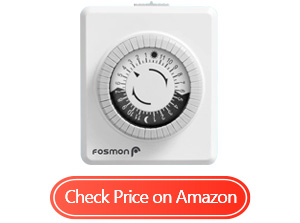
This product is one of the easiest to use when it comes to programmable timers for aquarium lights that I have used so far. You do not have to figure out which buttons to press. Just twist the dial to the current time then push down tabs to set the duration of each program.
If you wish to, you can set the timer to turn on and off up to 24 times a day in 30-minute increments. If you will be using it for controlling your aquarium lights, you can set them to turn on for four hours every morning and another four hours every evening. All it takes is to push the tabs that coincide with the time.
The nice thing about this type of timer is that everything is analog so you do not have to worry about power interruptions. If the power in your area fluctuates a bit, the setting on the timer will not reset. You can set the timer programs, plug it in, and forget about it.
Another neat thing is that it is quite compact. If you plug it into a wall outlet, it would not block the other socket. Moreover, this timer has two power sockets. This means you can control two electrical appliances at once. I use it to control my lights and an auxiliary aerator. This timer makes keeping an aquarium convenient.
Here is the problem I have with this timer – there is no manual override. If you want to turn on the plugged appliances into the timer manually, then you will not be able to do it. It would have gotten higher marks if there was an override function.
- Easy to use – You do not have any buttons to press
- Can accommodate up to 24 separate programs
- The timer is analog, so no problem with power interruptions
- No need to repeat your settings as everything will repeat every day
- Comes with two outlets, allowing you to control two appliances at the same time
- There is no manual override to turn on appliances
This timer is a great tool for controlling ordinary aquarium lights. It is easy to program, durable, and versatile. If you want something basic that you can just set once and forget, then this timer is what you have been looking for.
6. IREENUO Auto on/Off Timer LED Aquarium Lights
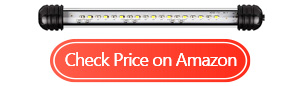
If it was not indicated in the packaging, you would not have thought that this LED aquarium lighting with a timer was programmable. This light has simple controls with only four switches to press. There is not even a screen that you need to decipher.
Speaking of programming, you just need to press one button to set the timer. There are three lights on the switch known as the timer indicators. You can set the timer to run for 6, 10, or 12 hours. Once you set the timer, the light will turn on again at the same time the next day.
Another neat thing about this aquarium light is that it has an IP68 waterproof rating, which means you can submerge it in the water. It also lets you position this light wherever you want.
This product is not like other aquarium lights where you need to install a bracket before you can install the actual light. With this aquarium light, you just have to attach it using the included suction cups. You can attach it wherever you want if the suction cups can attach to the surface.
The only thing about this aquarium light that I did not like is that you cannot program it in advance. You have to program it at the exact time when you want it to turn on for the succeeding days. This would not be too much of a hassle. However, if the power in your house trips up, you will need to do it all over again.
- Convenient and easy to use switch
- Simple and easy to program
- Submersible
- Easy installation as it does not require any brackets
- Adjustable brightness
- You will need to program the light at the exact time you want it to turn on
This is a great aquarium light for beginner aquarists. You can set the brightness and choose from two light colors. It is also submersible so you can give your tank even more light and a different look. Moreover, it is easy to install. Just stick the suction cups onto the side of the tank.
7. NICREW Controller Aquarium Light Timer
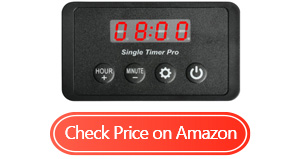
The neat thing about the NICREW aquarium light timer is that it is easy to install. You will have no problems installing it even without any electrical wiring. The only thing that you need to do is connect it in between the adaptor and the light fixture. You are essentially installing a bypass switch and extending the power cord.
For such a small and simple-looking device, I was surprised that this can hold 6 separate program blocks. You can use this simple device to turn any regular LED aquarium light into a programmable and dimmable lighting solution at a fraction of the price.
This product is not just for aquarium lights. You can use it on your bedside lamp so that you can dim the light whenever you need to. If your light uses the same dimmable lamps, you can use the switch to dim the lamp at a certain time and eventually turn itself off.
Another nice thing about this timer switch is that you can essentially add sunrise and sunset settings in your aquarium lighting. In other words, the lamps will gradually turn on and off so they will not shock your fish and live plants.
Now here is the issue. It might look like a simple gadget but it is a bit on the complicated side. Not only do you have a small-time window to start programming the timer, but it also uses a 24-hour clock. This means that if you are unfamiliar with that, then you need to learn how to read it. Moreover, in case of power failures, the programs will reset.
- Easy to install without the need for wiring
- Can accommodate 6 program blocks
- Doubles as a dimmer switch
- Can simulate dawn and dusk light conditions
- Ideal for use on any LED lights that have standard power connectors
- A bit complicated to program and does not have internal batteries
If you are a beginner aquarist and you do not have that big of a budget for a complicated lighting system, then this is the next best thing. With this switch, you can turn any compatible LED light into a programmable aquarium light with sunrise/sunset functionality.
8. MingDak Fish Tank Inline Timer Clip on Lights
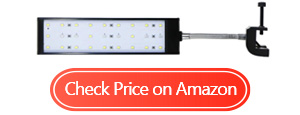
Installing this aquarium light could not get any easier. Just clip it on the side of your aquarium and plug it in the nearest power socket. You can adjust the distance of the lights from the surface by bending the flexible gooseneck.
You have a choice between three different timer lengths (6, 10, and 12 hours). Once you set the timer length, the lights will turn on again at the same time every day. This is probably one of the easiest to program aquarium lights that you can buy right now.
This aquarium light has adjustable brightness, which you can adjust in 10% increments. If your fish are not fond of overly bright environments, then you can dim the light down to make them more comfortable. You can also change the color temperature by choosing one of the presets.
Aside from providing illumination for your aquarium, you can also use it as a plant grow light. I use it to give my indoor succulent plants light throughout the day. Although they are not as great as full-spectrum grow lights, they still provide decent results.
The only issue that I have with these aquarium lights is that they can get hot when used for a couple of hours in the brightest setting. It is almost too hot to touch. This product might work a bit better if it had better heat dissipation.
- Clips onto the side of the tank
- Easy to program as it features three timer lengths
- Adjustable light intensity
- Has the correct light spectrum to keep both fish and live plants healthy
- Useful as a plant grow light
- Can get quite hot when used at full intensity
This light provides a good compromise between cost and functionality. Although it might not have the same functionalities that come with the more expensive aquarium lights, it does cover all the necessities, which is more than enough for most aquarists.
9. JOYHILL Timer Fish Tank LED Light Bar
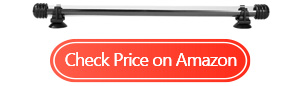
What I liked about this aquarium light is that you can submerge it when needed. However, I didn’t do it with mine. I was afraid that the casing would break over time. I just stuck the light at the side of my 50-gallon tank and it provided enough light for the entire tank.
It is also quite easy to program. The switch only has a couple of buttons that control the brightness, the color temperature, and the timer. You only need to choose the length of time the lights are on. It will turn on at the same time the next day and every succeeding day after.
It might look like a simple LED light bar but this aquarium light allows you to choose between three different light configurations – blue light, white light, and a combination of the two. The blue light is best for the evening as it relaxes the fish, thus allowing them to get some rest.
It also helped a lot that this aquarium light is so easy to install. You do not need to screw on brackets or clamps. It uses strong suction cups to attach itself to the sides of the tank, or any smooth, non-porous surface.
I do have a small issue with this light, though – that is it is too bright for small tanks even at the lowest brightness setting. If you have a bigger aquarium, like a 50-gallon tank, this would be fine. However, it will be too bright for a 5- to 10-gallon betta tank.
- Waterproof
- Easy to use and program
- Has three different light options
- Easy to install
- Adjustable brightness
- A bit too bright for some fish, even at the lowest setting
This submersible light is a good choice for larger tanks as it is quite bright. However, since it is mounted on suction cups, you can position it so that the light will not be as intense. Overall, this light provides good value for money.
10. AMZBD Programmable Time Aquarium Lights
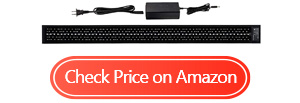
I liked that this light is so easy to install and it also looks great sitting on top of the tank. The only thing that you need to do is hook the brackets on the edges of the tank. It will be kept in place by the springs hidden inside the light housing. You can be sure that it will not be going anywhere.
I have had a couple of aquarium lights fail on me because my fish splashed water on them, thus shorting them out. It will not be an issue with this product as it has an IP68 water rating. This means that the light can survive even when you accidentally drop it into the water.
Another neat thing about this lighting solution is that it has a sunlight and sunset setting. This makes the lights gradually get lighter during the day and then slowly get dimmer once evening approaches. This prevents the fish from getting shocked because the light goes on gradually.
Because it is a full-spectrum aquarium light, you can tweak the settings a bit so that both your fish and your live plants will have enough light to grow. You can even change the color of the light to whatever shade and brightness you want.
If you are not that tech-inclined, then you may have a bit of trouble figuring out how to program the light. In addition, the buffer stage for each cycle is permanently set at 15 minutes. You cannot shorten or lengthen the time.
- Easy to install and comes with adjustable brackets
- Provides full-spectrum light
- Ideal for aquariums with live plants and/or live rock
- Has sunlight/sunset functionality
- Has an IP68 waterproof rating
- A bit tricky to program
This aquarium light timer dimmer setup is ideal for both experienced and amateur aquarists. The daylight cycle is great as it almost perfectly mimics outside lighting conditions. This aquarium light guarantees that your fish and live plants will have enough light to keep them healthy and happy.
What to Look For When Buying a Aquarium Light Timer
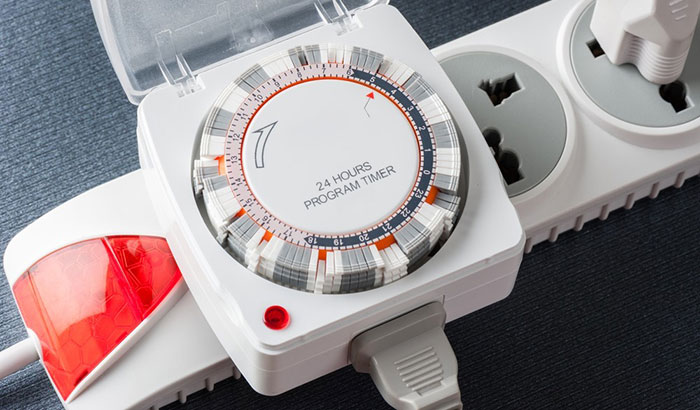
Now that you have seen a couple of recommendations, what are the things that you need to look for when choosing the aquarium timer light for your setup? Here are some of the most important qualities you should keep an eye out for:
Ease of Use
If you only want your timer to go on and off at a certain point during the day, then you should get a basic repeating timer. These are the ones where you only set the times when the aquarium lights will turn on and off. It will repeat the cycle every day.
Now, if you want to give your aquarium a more natural feel, get one of the aquarium light timers that have sunrise and sunset settings. However, keep in mind that these are a bit trickier to program.
Installation
There are aquarium light timers that easily connect to your existing LED lights and light setups that come with their timers. If you do not want to drill mounting holes in your walls or ceiling, then get the light timers that are easy to install.
The ones you can easily install are those that you just need to clamp onto the side of the tank. There are even those held on using suction cups.
Light control
If you want to get the most out of your money, then get an aquarium light timer or a new aquarium light that can let you control the brightness and color of the light.
Using a light that is too bright will only stress your fish and cause them to hide. That said, it would be best for you to get a light that you can dial down to a comfortable level for your fish and live plants.
Cost
If you do not have much room in your budget, which is understandable as aquariums can get expensive, then you should get a basic timer that allows you to set a daily schedule for the lights.
However, if you have a bit more wiggle room, I suggest that you get a product that allows multiple programs, preferably one that does not have ramp timer pro problems.
Frequently Asked Questions
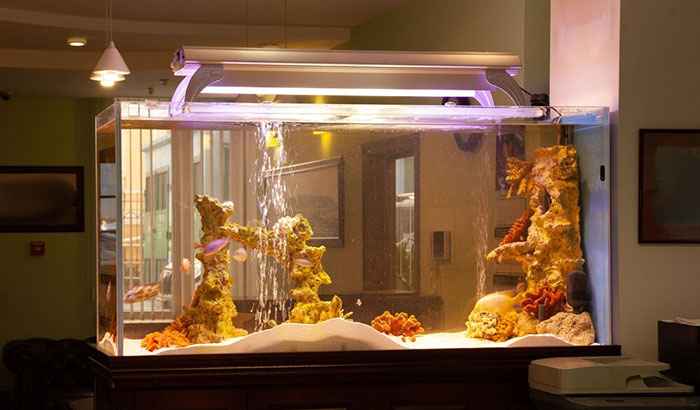
How to set Aquarium Light Timers?
This depends entirely on the brand of timer you have. Typically, they work like kitchen timers. The only difference is that you set a start and end time. Some timers let you turn the light on and off several times during the day.
How Long Should Aquarium Lights be on?
Ideally, your aquarium should get at least ten hours of light, especially if the tank is located where it does not get indirect natural light. If your fish does not get enough light, their colors will fade and they will get sluggish and prone to diseases.
Conclusion
A proper aquarium light timer makes aquarium keeping a bit easier. With this simple device, you can ensure that your fish will be getting the right amount of light during the day. This also assures you that they will remain colorful and healthy for many years to come.
The best aquarium light timer will automate the lights for you, thereby making the hobby a bit easier and more enjoyable.
The post The Best Aquarium Light Timers for 2022 appeared first on Aquatic Eden.
]]>The post The Best UV Sterilizers for Aquariums in 2022 appeared first on Aquatic Eden.
]]>
Partly due to the global pandemic, people are now somewhat familiar with UV sterilizing equipment. You will be using UV light to kill unwanted bacteria, viruses, and other microorganisms. What you might not know is that you can also use a UV light on your aquarium to keep the water clear and free of bacteria and algae blooms.
If you want to get the best UV sterilizer for aquarium, and not just a product that claims to sterilize the water, this guide might help you. You might be wondering why you would use the best aquarium UV sterilizer on your aquarium. Would it not also kill the beneficial bacteria that is in there?
The reason why UV sterilizers are viable is their placement. Most of these products do not directly shine light into the tank. Not only will doing so kill all the microorganisms, beneficial or not, it will also kill the fish, plants, and all living things.
You can typically install these sterilizers in line with the filtration system. This will allow the UV light to kill the bad bacteria that usually hang in the water while leaving the beneficial bacteria alone because those usually hang around the surface.
Best UV Sterilizer for Aquarium Reviews
1. Fluval in Line UVC Clarifier
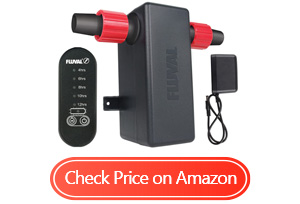
My aquarium had a rather serious case of bacterial and algae blooms before I used this product. It was so bad that even complete water changes did not help make the water look even halfway clear.
I tried this UV water sterilizer and after just one day, I saw a dramatic improvement in water quality. After a week or so of using the UV light for a couple of hours a day, the water was crystal clear.
Aside from the pesky bacteria that cause the water to become cloudy, this product also prevents the growth and spread of the deadly cyanobacteria. I had a tank that unfortunately got hit badly with cyanobacteria. Thankfully, this product was able to fix the problem before all the fish and plants died.
I have a Fluval filtration system set up in my tank, so getting this inline UV sterilizer aquarium to fit was a problem. The outlet hose is the same size as the inlet of the UV sterilizer so I did not do any modifications. The installation was also quite straightforward. I also like that this device comes easily hidden in the aquarium cabinet.
Supposedly, the UV bulb can last for at least 30,000 hours of use. If this is accurate, you will be using this best nano UV sterilizer for a very long time. I use mine for around 2-3 hours every day for maintenance purposes. If this can last for 30,000 hours, that means I can use this UV sterilizer for at least 27 years.
Now, it would be great if this ultraviolet sterilizer for fish tank could last almost 30 years, but we all know that it won’t happen. The problem is that in case the bulb gets damaged for any reason, you can’t replace it as it is completely sealed and cannot be opened. You will need to buy a new one in case a component gets broken.
- Effectively kills algae and bacteria in the water column
- Prevents the growth and proliferation of deadly cyanobacteria
- Should easily connect with Fluval canister systems
- The UV bulb can supposedly last for 30,000 hours
- Keeps tank water clean without using chemicals
- Comes in a completely enclosed system that does not allow bulb replacement
This best submersible UV sterilizer should supposedly be easy to install in all Fluval systems, but it only fits most of the 07 and 06 series. So, if you don’t have any of those systems, you will need to purchase additional fittings to make this UV sterilizer work for you.
2. 5W UVC Aquarium Clean Lights
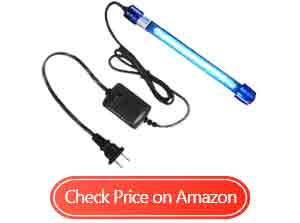
One of the things that I liked about this device is that this does not require any kind of installation. I have a sump system installed in one of my tanks, and I placed this UV lamp in one of the compartments, two spaces away from the biological filter. I can say that it works as expected.
You cannot tell how durable this UV sterilizer for planted aquarium is just by looking at it, but believe me when I say that this is one tough UV lamp. The glass housing is thick, and it would take a hard hit to crack it. I haven’t dropped mine, but just holding it in my hand, I can tell that it is quite durable.
This UV light is quite potent. It helped clarify my aquarium water in just a couple of days. I overfed my fish one time and it resulted in a bad case of bacterial bloom. Even partial water changes did not help. I tried this as a last-ditch effort before using chemical methods and it helped quite a lot.
Another neat thing about this UV sterilizer is that the installation process only requires you to stick the suction cups against the glass of the sump or filter. You do not need to do any plumbing or anything like that. Just position the lamp, plug it in, and turn on the light.
Now, the problem with this device is that your result may vary from that of others. I use this device in two of my tanks, and the rates at which the water cleared up are different. Don’t expect your bacterial or algae bloom to go away as fast as some fish tank UV sterilizer reviews say. Still, I can say that it will work, that is for certain.
- Submersible and will fit most sump systems
- Robust construction, which means that it will not break that easily
- Efficiently kills bacteria and algae without using chemicals
- Easy to install and comes with suction cups and brackets
- Works for both freshwater and saltwater aquariums
- Results may vary, though, you can still expect water clarity overall
The one thing that you need to avoid is to have any of the UV light leaks out. Most importantly, do not expose your aquarium directly to UV light. You need to have a filtration system that has a chamber where you can place this device.
3. SunSun Hw303B Canister UV Sterilizer Filter
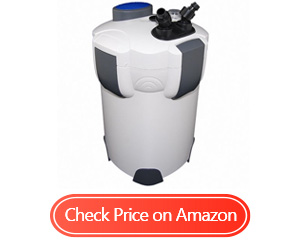
The best thing about the SunSun Canister Filter kit is that it is the only thing that you will need to keep your aquarium clean and clear. This top UV filter for aquarium is a biological filter, mechanical filter, and UV sterilizer all in one device.
I use one of these to keep one 70-gallon tank clean. There is also another one in the garden to maintain a small koi pond. It has several purposes even if the SunSun UV sterilizer is not that large it can contain quite a lot of filter media.
When you buy this canister filter, it will already come with a pound of filter carbon, a pound of ceramic rings, and a whole bunch of bio balls. There are also several filter pads. This means that even the smallest bit of debris will not be able to go through.
The thing I liked the most about this canister filter is that it has a built-in ultraviolet lamp. This allows the filter to not just remove solid waste in the water, but also kill floating germs and bad bacteria. I turn on the UV light for a couple of hours every other day whenever the tank gets cloudy because of bacteria or algae blooms.
I have this filter hooked up to a 70-gallon tank, but it is strong enough to handle up to a 100-gallon tank if needed. This has a pump that is capable of up to 370GPH flow rate. This allows the water to circulate and get oxygenated properly, thereby resulting in healthier fish.
Aside from being a bit expensive, which is subjective, there is nothing to complain about in this UV sterilizer freshwater aquarium. Ever since I started using this device, my aquarium has always been clean and clear. The fish and other aquatic creatures are all healthy and happy. If ever this filter fails eventually, I will surely buy another one.
- Comes in an all-in-one filtration system
- Capable of holding a lot of filter media
- Has a built-in UV light sterilizer
- Comes with free bags of filter media
- Can work for aquariums as large as 100 gallons
- There is nothing to complain about – This is one of the best canister filters that you will ever find
Although this all-in-one canister filter is a bit on the expensive side, it will be a good investment on your part. Aside from the fact that this device does a great job at cleaning the water, it is also very durable. I have read a lot of reviews saying that their devices lasted for years without any repairs.
4. Coralife BioCube UV Sterilizer
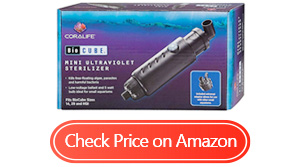
As its name suggests, this is a small UV sterilizer aquarium, which allows it to fit perfectly in small aquariums such as the BioCube. This sterilizer comes with a 5-watt UV bulb, which might seem small. However, it is just the right size for small aquariums. Anything bigger than that will just be overkill.
A nice thing about this sterilizer is that it is not technically proprietary for BioCube. You can use this device even if you own another brand of tank or filter system. This comes with a universal adapter and extra bits of tubing to make it fit on any kind of water pump that you may be using.
This kit comes with a long-lasting, 5-watt UV bulb. Aside from the bulb being able to last a long time, it is also nice that you can easily replace the bulb if ever it gets damaged, or burns out because you forgot to turn off the light and you let it run for an entire day.
I am quite happy with this device because ever since I started using it, I have yet to experience any bacteria or algae blooms. It also killed all the harmful parasites, thereby keeping my fish and plants healthy.
Although it is possible to just replace the damaged or burnt-out bulb, it is more cost-effective to just buy another unit. The replacement bulbs are hard to find, and they cost almost as much as an entirely brand-new UV sterilizing kit instead of trying to salvage your old one.
- The compact size makes it perfect for small aquariums
- Comes with a universal adapter so it can work with other brands
- Features a long-lasting UV bulb that you can also replace when necessary
- Easy to install
- Effectively kills bacteria, algae, and parasites in the water
- Replacement bulbs are almost the same price as a new unit
Even if you don’t own a BioCube aquarium, you can still use this filter attachment thanks to the universal adapter and extra bits of hose. It is unfortunate, though, that replacement bulbs cost almost the same as a complete unit.
5. GRECH CBG-800 UV Sterilizer
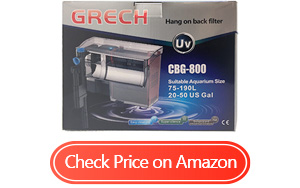
This HOB filter is perfect for 20- to 50-gallon aquariums, but it can also work with smaller tanks – up to 15-gallons I suppose. I use this on a 20-gallon tank and I am loving its compact design.
Another thing I liked about it is that it already comes with a built-in UV light. This HOB comes with a 5-watt UV light, which is strong enough that it can kill most of the bad bacteria, algae spores, and parasites suspended in the water.
I also liked that you can set the parameters of this filter any way you like. I have a 20-gallon tank, so I need to dial down the flow rate almost to the lowest point because the pump is stirring up the water too much. The telescoping water intake is also a plus. I adjusted mine to almost touch the bottom to greatly reduce the water disturbance.
This filter also comes with a surface skimmer, which is handy if you use a water conditioner that contains aloe. Although I rarely use this feature in my tanks, since surface film rarely happens in freshwater aquariums, it is nice to know that it is there if I ever need to use it.
The makers tried so hard to innovate this device that it became complicated. For instance, if you need to clean the filter, you will need to remove the entire filter basket. You will then have to remove the filter media carefully. After washing them, you need to align them perfectly; otherwise, the bag will not go back into the housing.
- Has a compact design
- Has all your filtration needs covered
- Comes with a built-in 5-watt UV lamp
- Adjustable flow rate and telescoping inlet tube
- Features a surface skimmer
- The over-engineered design makes it complicated to maintain
Although this filter can be quite tricky to maintain, it works quite well at removing all the nasty stuff in the water. The built-in UV light also worked in preventing algae and bacterial bloom. I highly recommend this for all aquarium owners.
6. Polar Aurora Canister UV Sterilizer Filter
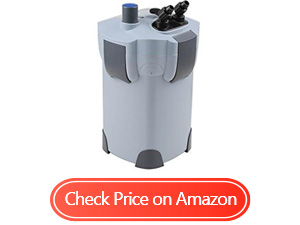
For such a powerful canister filter system, I was quite surprised at its compact size when I first got it. The base is just 9” by 9”, which makes it easy to stow away inside the cabinet of the aquarium. However, don’t be fooled by its size. It is powerful enough to circulate the water in a 75-gallon tank efficiently.
I also appreciated that Polar Aurora already included all of the filter media this canister filter will need to get started. The kit comes with a couple of fine and coarse sponge filters, a 1-pound bag of activated carbon, a pound of ceramic rings, and 40 pieces of bio balls.
Another quality of this device that I liked quite a lot is that it is so quiet. When I first used this cartridge filter, I thought I got a defective item because aside from the indicator light, I was not able to tell if it was working. It was that quiet. I placed my aquarium in the living room, so having a quiet cartridge filter was important for me.
This UV lamp is so strong that it can instantly kill bacteria and algae spores that are floating in the water. I used this canister filter system on one of my tanks that had a serious case of algae bloom. The water was so green that you cannot see the other side of the tank.
After using this filter for around 3 days at 3 to 4 hours a day, the water got much clearer and the green tinge was gone.
I have no complaints about how the device works, but I do wish that the plastic fittings were a bit more robust. I accidentally cracked one of the bolts that held the inlet hose in the tank and finding a replacement was a bit difficult. I just used an aquarium-safe superglue on it and hoped that it would hold.
- Compact product – It barely uses a square foot of space
- Comes stocked with filter media
- Operates quietly and without any noticeable vibrations
- Features a strong 9-watt UV bulb
- Has a respectable flow rate – It is powerful enough for a tank 75-gallons in size
- The plastic fittings are flimsy
There is nothing much to complain about regarding this canister water filter. It has a decent flow rate, a large capacity for filter media, and a powerful UV lamp that can kill all kinds of unwanted microorganisms in a split second.
7. TAISHAN UV Sanitizer Submersible Light
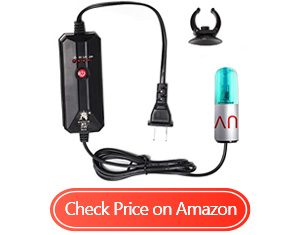
The Taishan submersible UV light bulb for aquarium is one of the smallest UV sterilizers that I have used as of yet. It is small enough that it can fit in a HOB meant for 20–gallon to 30-gallon aquariums. You just place this light in the compartment that is the farthest away from your biofilter – that is if you already have one.
Aside from its miniature size, this little gadget also comes with a bracket and suction cup. This means that you can place this device securely against the wall of the water filter chamber. Make sure to secure this device as the glass housing is quite fragile.
Another thing I liked about this submersible UV sterilizer aquarium is that it comes with a built-in timer. I liked it because I could just turn on the light and set the timer for an hour, and it would turn off on its own. This is quite unlike other UV lights I have used where I have to set a timer to remind me to turn them off.
The best thing about this UV sterilizer, in my opinion, is that it uses UV-C light. It is much more effective at killing harmful microorganisms. Unlike other UV lights that needed to be on for a couple of hours every day, my UV-C light only required 30 minutes every day for a significant increase in water clarity.
I have nothing to complain about regarding how this gadget worked. However, if I need to point out even just a minor issue, it would be that the instructions that came with the device were hard to understand because they were written in severely broken English.
- Miniscule size makes it perfect for small tanks
- Easy to position for maximum effect
- Comes with a built-in timer
- Uses UV-C light, which is more efficient at sterilizing compared to regular UV light
- Can kill not just harmful bacteria but also algae spores and microscopic parasites
- Quite hard to understand and comprehend instructions
If you always had problems with bacteria and algae blooms, you need to check out this rather simplistic device. This tiny light was able to turn my once algae-infested tank into one that looks almost crystal clear in less than a week.
8. VIP UV Sterilizer Aquarium Filter
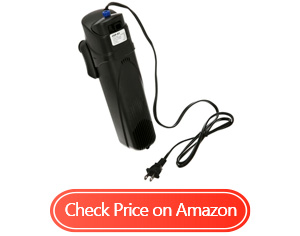
This water filter/sterilizer has a rather strong flow rate, up to 200 gallons per hour, so it is not advisable to use this in a tank with small and light fish. On the other hand, this works just great for my 75-gallon planted tank. The water circulates quite well, but it is not strong enough to uproot my plants.
The reason why it is one option for the most suitable UV sterilizer for saltwater aquarium is that it is both a filter and a UV sterilizer. This means that there is no need for a separate UV sterilizer for your aquarium setup. This does not just catch the solid waste particles in the water but also kills harmful bacteria and other microorganisms.
Unlike some of the other UV sterilizers that I have used before, this one was quite easy to take apart for cleaning. There are no screws to undo. There are only a couple of pieces to keep track of. The UV lamp is also easy to remove and replace when needed.
Speaking of the UV lamp, this device comes with a powerful 9-watt bulb. Any undesirable microorganism exposed to UV light will instantly die. I was worried that it would also affect my fish and shrimps but I am glad to say that there is a proper shield for the lamp. I haven’t seen any evidence yet of the UV light leaking out into the tank.
This UV light sterilizer for aquariums is at least a foot long, so you may not be able to use this properly if you have a small or shallow tank. It is also quite bulky for a submersible filter, so hiding it within the tank decor will be a challenge.
- Excellent flow rate, making it ideal for tanks 50-gallons and above
- Serves as an all-in-one device – It filters the water and kills all harmful microorganisms
- Easy to dismantle and maintain
- Has a powerful 9-watt UV light for purifying the water
- Aerates and circulates the water
- Much bigger than it looks in the pictures, which means it is not ideal for small tanks
This is an option for the most beneficial UV sterilizer for reef tank if you have a large tank (50-gallons and above) and you are not keeping small fish because the pump might blow them away. If you have a small aquarium, like a 20-gallon tank, then it might not be deep enough to submerge the device completely.
9. OXYFUL UV Ultraviolet Clarifier Lamp Filter
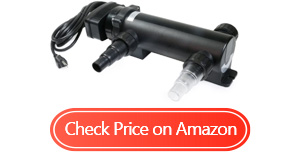
One thing I liked about this UV light sterilizer is that it does not disrupt any current filter setup. It was years before I learned about UV sterilizers and how they prevent algae blooms. It was nice to know that I could just install this one in line with my filter system and that I don’t need to replace everything.
Another benefit of using this brand is that you can use it on any aquarium filter system that you have. It has plenty of adaptors so it can fit on any rubber hoses that you may be using. You can also set it at any position you want. The cabinet of my aquarium is already quite cramped so I had to mount this device vertically and it still worked.
This filter attachment can also handle quite a lot of pressure. I have a large 100-gallon tank, so the water pump needs to be quite strong as well. This device has a rating of 792 gallons per hour, so the strength of the pump was not even a problem.
Also, even if water is passing through this device at a fast rate, the included 18-watt UV light ensures that every trace of bacteria, algae, and other nasty stuff will be rendered lifeless as soon as they get exposed to the UV light. I have not experienced algae blooms since I started using this device, and I bet that you won’t as well.
The device itself worked quite well for me, but I did have a minor issue with the included O-rings. The ones that I got were quite weak and brittle – two broke in half and the others were leaking. It is a good thing the manufacturer was gracious enough to send me a lot of spare O-rings when I sent them an email detailing my problem.
- Installed in line with the tank’s filter system
- Comes with lots of different fittings for all hose sizes
- Can handle high flow rates
- Has a strong 18-watt UV bulb
- Ensures water clarity and health
- The O-rings are not durable and flexible enough
The only issue that I had with this UV water sterilizer is that it has weak O-rings. It would not even be that big of an issue if the parts were easy to find. Thankfully, the manufacturer has excellent customer support and aftermarket services. I highly recommend this UV filter for any aquarium that uses a sump.
10. SunSun HW-304B External Canister Filter
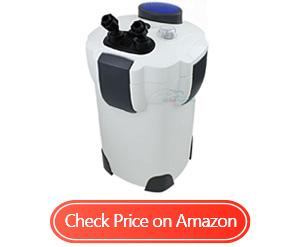
If you have a large aquarium, like something over 100-gallons, get this canister filter for your setup. This filter has a water pump that is capable of 525 gallons/hour, and it had no problem circulating the water in my 150-gallon reef tank. I positioned the intake pipe low, almost touching the substrate, to make sure that the water circulates properly.
This canister filter uses 5-stage filtration, so you can bet that it can remove almost every bit of debris floating in the water. This will keep your water clear and greatly reduce the chances of ammonia and nitrate spikes in the water. However, even though the water is still clear, I make it a point to test it every week, and so should you.
Aside from the solid waste particles, this canister filter also comes with a strong 9-watt ultraviolet lamp to kill bacteria and other harmful microorganisms that float in the water. If you are having trouble with green water due to algae bloom, then you need to try using this product.
For something that circulates water at a high rate, I liked how quietly this filter worked. Even in my quiet living room and with the cabinet door open, you can hardly hear it running, aside from the gentle trickling of the water in the tank. The sound of the water pump even goes away when I close the cabinet door.
I like this canister filter a lot, but I would have liked it even better if the instruction manual that came with the device was written clearly. It was a good thing that the manual came with illustrations because the instructions were written in broken English and were quite hard to understand.
- Has a high flow rate
- Compact design, making it easy to stow away
- Quiet operation
- Comes with a built-in 9-watt UV bulb
- Already comes with all the filter media needed to get started
- Quite hard to understand instructions
Just like its smaller variant, this canister filter can also move a large volume of water despite its rather small size. However, if you have a tank that is smaller than 50 gallons, I suggest using the smaller model instead of this one. This might be too powerful for a small tank.
What to Look For When Buying a Uv Sterilizer for Aquarium
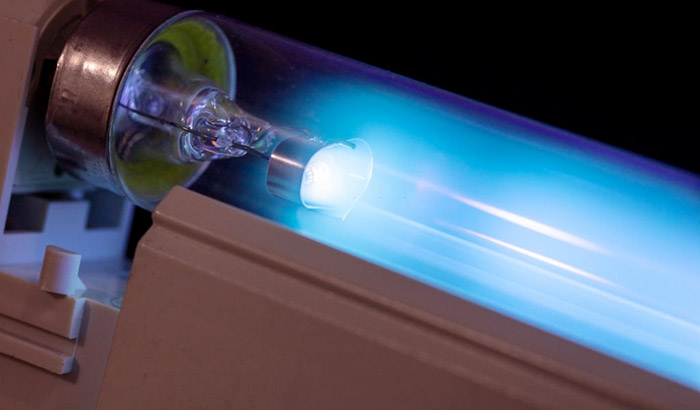
There are lots of brands of UV aquarium sterilizers in the market today, but not all of them work the same way. Some of them do not even work at all. To make sure that you will not be wasting your time and money on the wrong products, here are some of the factors you should consider when shopping for a UV sterilizer for aquariums.
Strength of the UV Lamp
This will depend on the flow rate of your water pump. If you have a fast flow rate, then you need a stronger bulb. I would recommend anything 9-watts and above. It is often the case when you have a big tank. On the other hand, if you only keep a small tank, like a 15- or 10-gallon aquarium, a 3-watt bulb will suffice.
Built-in or Needs Installation
If you will be starting a new tank, consider getting a filtration system with a built-in UV lamp. It will save you a lot of time and space. On the other hand, if you already have a filtration system in place, you can get one of those submersible UV lamps, or those you install in line with the filter system.
Ease of Use
The built-in UV lamps are the easiest to use. It is mainly because you do not need to position them where they will not hurt the bacteria in the biofilter, but will still be treating the water going through the system. However, most filters with built-in UV lamps do not have timers, something which submersible lamps have.
Cost
If you have a very limited budget and you cannot afford to replace your entire filtration system just for the UV sterilizing capabilities, then you should get a submersible or inline UV lamp. This should work the same way, but without breaking the bank.
Frequently Asked Questions
What Size UV Sterilizer do I need for my Aquarium?
If you have a large tank and your water pump has a high flow rate, you will need a UV sterilizer that has a 9-watt or stronger UV lamp. For a small tank, you can make do with a 6- or 3-watt bulb.
Where to Place UV Sterilizer in Aquarium?
The one place where you should not place your UV sterilizer is inside the tank, or anywhere that the light from the lamp can get into the tank. This will kill your fish. The best place to place your UV sterilizer is inside the box filter.
It may also be in a compartment that is away from the biological filter. If you have a sump, get an inline UV sterilizer and connect it to the return hose.
Conclusion
Sometimes, mechanical filtration is not enough to keep your aquarium clean and clear. Despite how many stages of filtration that your aquarium water goes through, bacteria and algae will still pass through them.
If you want clear and healthy water for your aquarium and its denizens, you will need the best UV sterilizer for aquarium that you can find. With this device, you will no longer need to use harsh chemicals to clarify the water in your tank. The UV light will do it for you naturally.
The post The Best UV Sterilizers for Aquariums in 2022 appeared first on Aquatic Eden.
]]>The post How to Heat Up Fish tank Water Quickly appeared first on Aquatic Eden.
]]>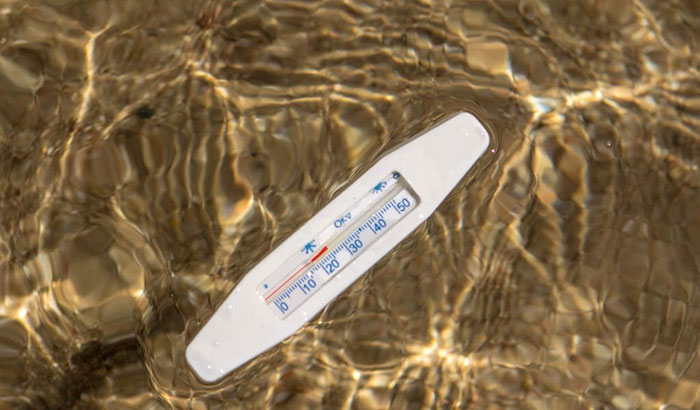
It’s the time of the year when the air gets cooler and the weather chillier. At this time, you have to be thinking about heating up your fish tank water. This guide on how to heat up fish tank water quickly includes equipment and manual solutions.
Heat Up Fish Tank Water Using a Water Heater
The surest way to heat up fish tank water is using a water heater for aquariums. Invest in good quality water heaters, and it should be a long-lasting solution.
It generates heat as long as it is turned on. You would not need to check the temperature all the time.
These heaters are attached to the tank, submerged in water, with a suction. Their power source is a cord that runs out. Most heaters already come with a built-in temperature setter. Just set the temperature you want the water to be, and the heater will do the rest of the work.
After a while, check the thermostat. When the desired temperature is reached, turn the heater off.
Heat Up Fish Tank Water Naturally
If you do not yet have the means to get a water heater, you can try these methods to heat up tank water naturally.
Turn Up the Room Temperature
Turning up the room temperature can also affect the water in the fish tank. This method will only take a few hours, but it has a prolonged effect.
Set the room temperature to 21-22°C so your fish tank water can gradually heat up. It may prove dangerous to the fish if there is a sudden temperature rise.
Frequently check the temperature of the water. Is it hot enough? Is it too hot? Be careful not to overheat it. Make adjustments to the room temperature if need be.
Move the Fish Tank Near a Heat Source
One heat source you can find in a house, especially during winter, is the fireplace. It would do your fish good if you could move the fish tank close. But do not place the fish tank too close.
You can also try moving your fish tank near to a vent. This method can quickly regulate the water temperature to heat up. So note that it should not be done for long hours as the water may overheat.
Another heat source is light. If your aquarium has lights, turn them on. You can also direct light from the outside to your aquarium. Make sure to use soft lights and do not expose your fish to light all the time.
Heat Up Fish Tank Water Naturally with D.I.Y Methods
What if you do not have electricity? What if there is no power source? What is the quickest and safe way to heat up the fish tank water?
Use Plastic Bottles
You might be wondering how to heat up fish tank water quickly using plastic bottles? Easy, with hot water.
Prepare plastic bottles that fit in the aquarium. Pour hot water in them, then seal the caps on. Place the plastic bottles in the aquarium. Let them float until you notice the change in the temperature.
If there is no heat left in the bottles and the water is still a little too cold, just change the lukewarm water in the bottles to hot water. Repeat this process until the tank water reaches its ideal temperature.
This method does take time and effort, but it can be your best solution when there is no electricity.
Wrap with Warm Blankets
A similar method with the plastic bottles is using a warm blanket; heat up a blanket big enough to wrap around the aquarium. Place it near the base of the tank and use two or three blankets if you want to see results faster.
This method, however, only lasts for a few minutes. However, you can always change the blankets, although it is more work than you might like.
Keep in mind that this solution is for when you have no other choice. It is when there is no electricity-generated heat available for you to use.
Surround with Heating Pads
Heating pads could provide instant heat to your fish tank. To keep the heating pads attached to the tank, you can use blankets. Warm blankets are best to hold the heating pads and help keep the tank water warm.
This method heats up the water quickly and provides a long-lasting effect. Heating pads are also helpful tools in maintaining the water temperature warm.
How Long Does it Take for Water to Heat Up?
Did you just notice that your fish tank water is too cold that you came to ask how long it takes for water to heat up?
Water heaters are the quickest way to heat up your fish tank water. Depending on the amount of water, the kind of water heater, and the initial temperature, it could take 30 – 80 minutes for the water to heat up.
I encourage you to invest in a good quality water heater to make it easier for yourself to heat fish tank water.
Conclusion
With all the methods listed above, make sure that you check the water temperature regularly. It is essential for the fish to live in well-heated water. They need it to survive the winter months. It is better if you could already start planning how to heat up fish tank water quickly before winter comes.
The post How to Heat Up Fish tank Water Quickly appeared first on Aquatic Eden.
]]>The post How to Read a Fish Tank Thermometer appeared first on Aquatic Eden.
]]>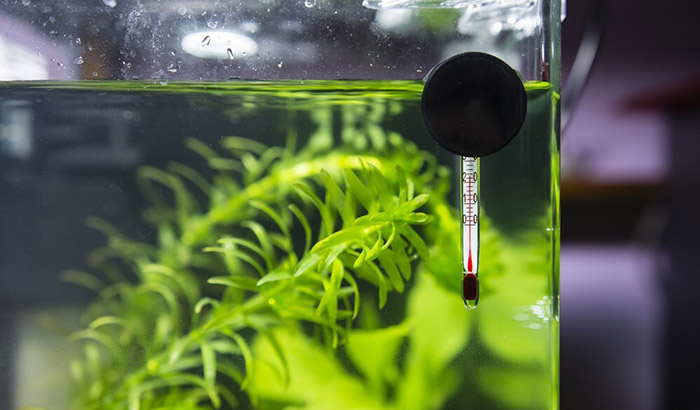
Maintaining a fish tank is no easy job as there are so many factors that need to be considered. From giving the right amount of foods to keeping the right pH level of water, all of these things need to be done in the right way. Another important factor is having the right temperature on the fish tank, which should always be monitored using a fish tank thermometer.
But how to read a fish tank thermometer? There are many available options for fish tank thermometers, but the stick-on thermometer strips are the most popular with their affordability and easy usage feature. The only issue with this thermometer is it is tough to read and understand. But do not worry. This article will cover everything, including the installation and reading of the stick-on thermometer strips for the usage of your tank.
Reading and Installing a Fish Tank Thermometer
But before we proceed with teaching you how to read the fish tank thermometer, I will first explain to you the proper way to install the stick-on thermometer strips. You can position the temperature reader anywhere in the fish tank. From the front, back, or the side portion, as long as it will not cover the overall view of the aquarium, then it’s totally fine. Then, you need to clean the area where you intend to put the thermometer using a glass cleaner and wiping it with a clean cloth.
The next step is to peel off the adhesive attached to the thermometer and then position it to the targeted place before putting it into the glass. This action is to ensure the exact location of the thermometer strip. Once the strip is on the glass, press it against the glass surface to make sure that it is properly attached. My suggestion is to use an atm card to smoothen the surface and possibly eliminate some air bubbles formed in the sticker if there are any. After that, wait for at least half an hour, and you are good to go in using the fish tank thermometer.
Reading the Fish Thank Thermometer the Right Way
After the installation, the next step is knowing how to read the thermometer, which is more complicated than the installation. If you take a look at the thermometer strip, it comes with two readings. One side is Fahrenheit, and the other is celsius. However, when reading the thermometer, this fish tank tool is different from the usual thermometer in that we know where a red line is going up at the center.
These thermometers come in three different colors that indicate the temperature of the fish tank. But how to read it? Find out the pointers below:
- In reading the stick-on thermometer strips, there are three different colors that you will see in the reading: brown, green, and blue.
- There will be moments that it will be difficult to see the reading on the strip. You will use a torched and point it to the meter reading to see the different colors clearly.
- Here is what the different colors mean: brown means temperature rising, the green color is the actual temperature, the blue color means the temperature is falling.
- If all the colors appear during the actual reading, then the actual temperature is the reading in green color.
- If two colors as visible in the reading, then the number between the two numbers is the actual temperature. For example, the blue color is on 18 while the brown color is on 20, then the essential temperature reading is between the two numbers, which is 19.
- If the green and blue colors are visible on the temperature reading, it means that the actual temperature is on the green color, but the temperature is falling.
- Meanwhile, if green and brown colors are visible on the temperature reading, then the green color is the actual temperature reading, but the temperature is rising.
Reading this fish thank thermometer can be difficult, but once you are familiar with how to do it, it will be easy for you. Reading the temperature of your fish tank is essential to your fish, but unfortunately, this type of thermometer is not the most accurate thermometer out there. But, nevertheless, this is an excellent tool to use when you are just starting as an aquarium owner.
The Downside of Using Stick-On Thermometer Strips
The stick-on thermometer strips might be the most affordable aquarium thermometer, but the accuracy of this tool is suspect. Since they are located outside the fish tank, the temperature reading may not be accurate as compared to an in-tank thermometer. There is a tendency that the temperature reading of the thermometer strips might be affected by the room temperature, which can also affect its accuracy.
But, there are things that you can do to make the temperature reading as accurate as possible. One of which is to avoid the strip from getting exposed to the sunlight as it might influence its temperature reading. Another way is not to put the strip or the aquarium, for that matter, near to any temperature-related sources such as conditioner vent, swamp cooler, fireplace, and other similar places. These places can make the stip provide inaccurate temperature reading plus the fact that these places can also affect your fish.
However, one suggestion is to used a thermometer strip and combined it with an in-tank thermometer. Doing this action will provide accurate data and is far more reliable. If you feel that the strip is not providing accurate temperature reading, you can always recheck it with the in-tank thermometer.
Conclusion
Learning how to read a fish tank thermometer is essential because monitoring the water temperature is an integral part of the maintenance process of the aquarium. There are many thermometers available, but the most affordable option is the stick-on thermometer strips. However, this type of thermometer is difficult to read, which is why it is essential to learn how to read it correctly. This tool may not be the most accurate aquarium temperature reading tool, but it is an excellent start for you as you go along with your journey of owning an aquarium and taking care of the fish.
The post How to Read a Fish Tank Thermometer appeared first on Aquatic Eden.
]]>The post Do I Need a Heater for My Fish Tank and Why Do I Need It? appeared first on Aquatic Eden.
]]>
I’m quite certain that you know the many nuances of taking care of fish in a fish tank. You know that they require the right amount of mineral content, pH levels, saline levels, filters, and many more. But have you given thought to the right temperature for your fish tank? Have you asked yourself “Do I need a heater for my fish tank and if so, why?”
Here’s the guide you need regarding using a heater for your fish tank.
Do I Need a Heater for My Fish Tank?
If you are keeping a tropical fish (fish that naturally inhabits warmer climates), then you should maintain the right water warmth for the tank. Tropical fishes, for example, live in bodies of water with an average water temperature of 75 to 85 degrees Fahrenheit. If the natural habitat of the fish is in warm water, then you should have a heater to keep the fish tank warm.
The answer to whether or not you need a heater for your fish tank is not always obvious. But here are some factors that will help you identify the need for a heater for your tank.
The Temperature of the Water Source
The first consideration you have to make is the temperature of your water source. Tap water, for example, is normally cooler than the average air temperature because the insides of a plumbing system keep it cool.
So if you are using tap water as your primary water source, then you probably need a heater so your tropical fish can thrive. But again, the temperature of the water source is not the only factor of consideration.
The Temperature of the Room Environment
Perhaps the bigger factor that affects the temperature of the water in a fish tank is the temperature of the room. Even if the water in the tank is too cold, it can get warmer if the room temperature is warm. The opposite effect happens if the water is too warm but the room temperature is low.
So that means that the temperature of the water source will only affect the fish tank temporarily. Sooner or later, the water’s temperature will shift closer and closer to that of the room temperature.
In other words, if your room temperature is just right for the fish, you might even need a heater. But if your room temperature is too low, you will need a heater for the fish tank. The room temperature is affected by the weather, insulation, or some sort of a heater.
How Do I Know if My Aquarium Heater is Working?
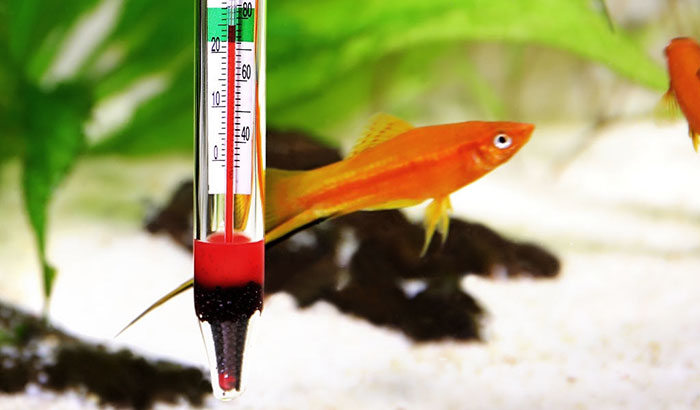
If you have an aquarium heater, it is quite tricky to tell if it’s working just by dipping your finger into the water. Here’s how I check if my aquarium heater is working.
Check the Heater Light
Most fish tank heaters have a light that indicates that it is on. But some models have a weird body that partially covers the light when you are looking at it from certain angles. But if you are sure that the light does not turn on, that might indicate that the heater is broken.
Use a Thermometer
A more certain way to check if your fish tank heater works is by using a thermometer. Make sure that you measure the temperature before you turn on the heater. After turning on the heater, leave it in the water for a few minutes before measuring the water temperature again.
If there’s no difference in temperature, the heater must not be working.
Pro tip: make sure that the tank is not under direct sunlight. Sunlight may give you inaccurate temperature readings.
How to Keep a Fish Tank Warm Without a Heater
Even if the temperature of the water source and the environment are too cold for your fish, you don’t necessarily need a heater. Here are some ways to keep your fish tank warm even without a heater.
Fish Tank Lighting System
Did you know that light results in heat? Without too much into the physics of the subject, light basically causes atoms to vibrate and produce heat. The lighting in a fish tank can make the tank warmer.
If you have sufficient light in your fish tank that the water temperature is habitable for your fish, you will not need a heater. Another factor related to the tank’s lighting system is exposure to sunlight. Is your fish tank exposed to sunlight? Sunlight makes the water considerably warmer.
Fish Tank Cover
If your fish tank has a cover on top, there is very little heat escaping the tank, if any at all escape. This means that the water will be more consistent in retaining its warmth. Even if the room temperature is too low, a fish tank cover will help keep the warmth of the water consistent.
If the day temperature is warm enough for your fish, adding a cover on top of the tank keeps the warmth through the night.
Water Movement and Amount
Water that moves due to currents is better at retaining its temperature. Additionally, a larger body of water keeps its core temperature better than a smaller body of water. If you want to better maintain the warmth from the lighting system or the daytime room temperature, I suggest two things.
I suggest that you make the amount of water as large as possible. The other step you can take is installing some sort of device that adds a current to the water.
Conclusion
“Do I need a heater for my fish tank?” If you keep fishes that only live in warmer climates, you should maintain the proper water temperature for them. If you live in a colder climate, or the average room temperature is low, you need a heater. There are ways to keep a fish tank warm even without a heater. A good lighting system, an aquarium cover, or maintaining a current in the water helps keep the warmth of the tank.
The post Do I Need a Heater for My Fish Tank and Why Do I Need It? appeared first on Aquatic Eden.
]]>The post What Does Blue Light in Fish Tank Do appeared first on Aquatic Eden.
]]>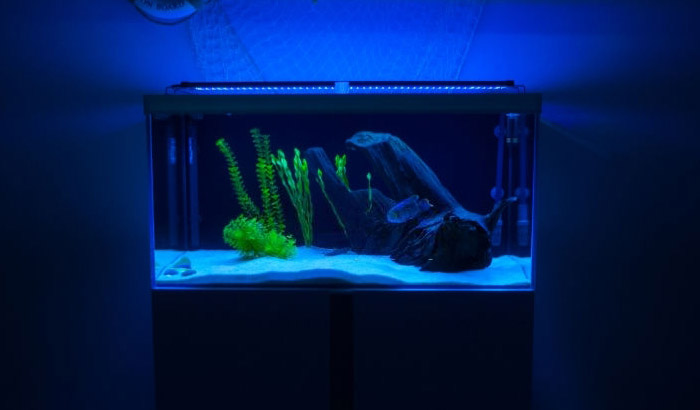
Lighting your fish tank is not just about enhancing the appearance of your aquarium. It also plays an essential role in the aquarium’s plants and coral photosynthesis. However, a type of lighting is gaining popularity because of what it brings to the fish and the aquarium in general. I am talking about the blue light, popularly known as the moonlight, which is known to mimic the moonlight and brings a lot of benefits to the aquarium.
But what does blue light in fish tank do? Having blue lighting in your fish tank provides an excellent view to the eyes of those who are viewing your aquarium. But more than the beautiful background it gives to the tank, there are other substantial advantages in having blue lighting in your aquarium, which will be discussed as we go along in this article.
What Does Blue Light Do in an Aquarium?
These blue lights have been popular through the years by most aquarium owners. They are commonly called moonlight, but actually, the primary purpose of this light is to let you see your nocturnal fish at night. So, if you own a fish that only comes out at night or when the lights are off, such as some species of catfish, the moonlight will make them comfortable because they will not be getting that white spectrum coming from the regular lighting.
Another reason for installing a blue light in the aquarium is to copy the moonlight. That is why it is commonly called the moonlight because it illuminates the aquarium while promoting the physical activity of all the species inside. However, blue lighting does not affect the day and night cycle of the fish and the growth of algae.
Upsides of Using Blue Light in the Fish Tank
As an aquarist, you should know that lighting is an essential part of an aquarium. And choosing the right color of light will benefit the fish in the long run. The lighting of the aquarium will have a positive impact on the fish. In fact, it improves the metabolism as well as helps the growth of the fish.
Lighting also contributes to regulating the eating and even the sleeping habits of all the fish in the aquarium. It provides energy and the all-important oxygen, which is critical to fish life. The fish will absorb the dissolved oxygen directly from the water to straight to their bloodstream using their gills.
Meanwhile, proper lighting also enhances the health status of every coral and plant in your aquarium. Blue light is excellent for coral development, but it has also been proven that it is also beneficial for plant growth. Although, there are many different light spectrum which consists of many colors, not all of them are essential to photosynthesizing the plants and other inhabitants found on the tank.
Another upside in having a blue light is it does not increase the water temperature. Regular lighting usually increases the temperature of the water, but in the case of blue light, it is not affecting anything. Meaning, you do not need to monitor the water temperature as it does not affect the hotness or the coolness of the water.
How Does Blue Light Affect Plant Growth
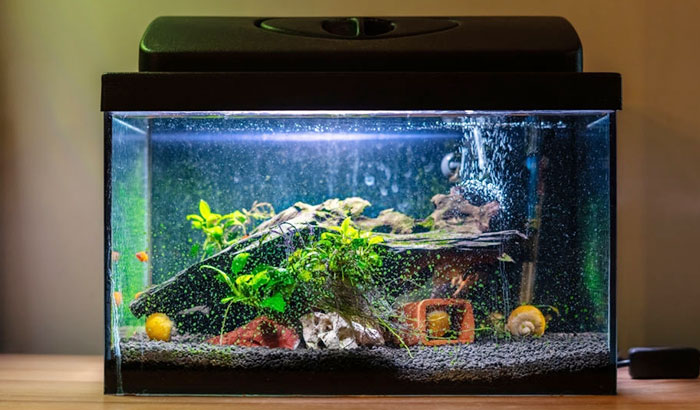
The color of the aquarium plants will pop more when there are blue lightings with the combination of the red lighting. In addition, your plants in the aquarium will absorb the red and blue lights spectrum when compared to other colors. Meaning, the blue and red color bulbs are an excellent option for planted fish tanks.
Plants in the fish tank need blue and red light in order to remain healthy inside. There are many aquatic plants that use chlorophyll which is the green pigments found in all of the plant cells. Chlorophyll is the fundamental of photosynthesis which is the process used by plants to make foods. If there is no photosynthesis, the plants will likely die in the aquarium, will rot, clog your filters, and eventually poison the fish and the aquarium.
In addition, if installed in the aquarium, the blue light will make the plants grow very bushy and leafy. In fact, plants in the aquarium use a specific type of blue light called actinic blue light for their growth. The blue light helps in the growth of the leaves and the stems of the plant. In other words, blue light is essential to the grown of the plants in your aquarium.
Another benefit of having a blue light in the aquarium is its ability not to contribute to excessive algae growth, which we all know is bad for the fish and the aquarium. We also know that algae thrive in lighting sources, but blue light does not help in making them multiply, which is an excellent benefit.
Conclusion
If you are not familiar with what does blue light in fish tank do, you are missing important information about being an aquarium owner. There are substantial benefits that blue light does apart from enhancing the overall appearance of your aquarium. It provides a positive impact on your fish as well as all the plants found in your fish tank. The moonlight, as they are commonly called, will also allow you to see those nocturnal fish and their activities when they are awake at night.
The post What Does Blue Light in Fish Tank Do appeared first on Aquatic Eden.
]]>The post The Best Aquarium Controller for 2022 appeared first on Aquatic Eden.
]]>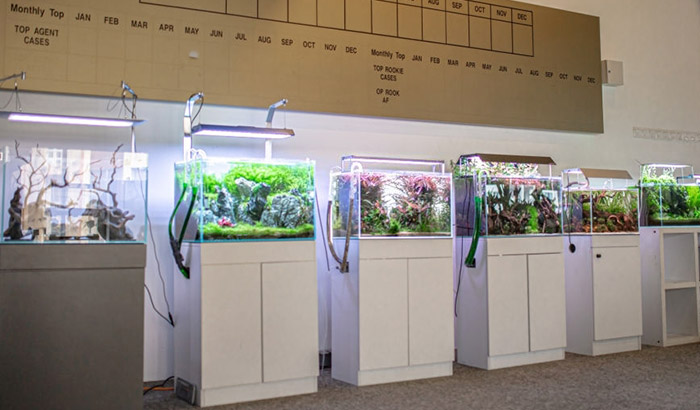
What if I told you that there is a way to control the different aspects of your aquarium from just one control panel? If you are tired of constantly adjusting the heater, the flow of the pump, and when to turn on the lights, then you need to get the best aquarium controller that you can find.
An aquarium controller board is a device that will monitor one or more tasks or pieces of equipment that you use in your aquarium. Their functions can be as simple as turning the light on and off at designated times, monitoring the condition of the water, and initializing an automatic water change.
Aquarium-keeping is a time-consuming hobby and today when everyone seems to not have enough free time, aquarium controllers are like gifts from heaven. In this article, you will learn what these controllers can do and how to shop for the best aquarium monitoring system for your needs.
Best Aquarium Controller Reviews
1. Hydor Smart Wave Circulation Pump Controller
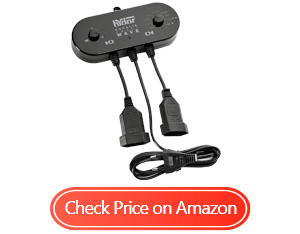
This pump controller is ideal for reef tanks as the water needs to flow constantly and randomly so that the corals and fish remain healthy. This controller will allow you to set a time when the flow pumps will start working and in which directions the water moves automatically.
One neat thing about this product is that there is hardly a learning curve to use it properly. Although it is always recommended to read the manual, you can pretty much figure out how to use this controller just by looking at the symbols on the dials.
Of course, this freshwater aquarium controller is water-resistant, more specifically splash-resistant. There is still a distinct possibility that water can get into the plugs and sockets of the device. However, if you place it where the most water that it can receive is a bit of splashing here and there, then you do not have to worry about it too much.
The best thing about this saltwater aquarium controller is that it can make the pumps recreate the ocean currents. Unlike rivers where the water only flows in one direction, ocean currents deviate from one direction to another at certain times. This controller helps by only allowing some pumps to work and then switching to the other ones.
The only complaint that I have is that if you place it in mode II and the timer runs down, both pumps shut down, thereby losing all flow in the tank. It would have been better if there was another mode where the pumps would work alternately after running them both at the same time.
- Allows to control at least two pumps at the same time
- Easy to use
- Water-resistant
- Allows the pumps to recreate natural currents
- Has a built-in hanger for convenience
- You lose all water flow when in Mode II
This product is one of the simplest and easiest to use flow controllers that I have ever used so far. There are only two dials, and you can probably figure out how to use them without even looking at the manual. The product has a couple of quirks, but for the price, you are getting a lot of value.
2. Inkbird ITC-308 Digital Temperature Controller
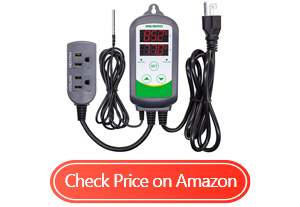
One might think that a temperature controller would be difficult to program and use, but not this one. You just plug the device and then plug your heater and chiller in their respective outlets. Once you set your desired temperature and place the probe in the water, it will automatically keep it that way.
Once you set the temperature, the automated aquarium systems will be responsible for monitoring the temperature. If the temperature in the tank gets a bit too hot (around 5 degrees above your target), it will turn on the chiller, and vice-versa.
You can still place a separate thermometer just for your peace of mind. However, you can be sure that this controller will be all that you will need.
If you are worried that the sudden switching between the heater and the chiller would damage your equipment, don’t be. There is a built-in delay before either the water heater or chiller turns on, which will protect them from electrical surges. This will keep your aquarium equipment working properly for many years to come.
If in case the sensor malfunctions or the temperature suddenly rises, this smart aquarium controller will let out an audible buzzer. This will give you more than enough time to figure out what is going wrong, or at the very least, save most of your fish and coral before they all die.
There is nothing serious to complain about. Other than it might be a bit too complicated for absolute beginners, this temperature controller has worked quite well in my experience.
- Automatically switches from heating to refrigeration as needed
- Comes with a delay built-in to protect your equipment
- Comes with a buzzer alarm for when the sensor malfunctions
- Long-lasting, allowing it to work for several years
- The company provides excellent customer service
- Kind of complicated to use for beginners
If you have a reef tank and the temperature in your area fluctuates quite a bit as the seasons change, then you need to hook your aquarium heater and chiller to this device. If you have a particularly sensitive stock, then it will help keep the water temperature at a constant level.
3. BN-LINK Digital Temperature Controller
This device is for controlling the heating and cooling of your aquarium. I have it hooked to a heating pad and on a chiller. When the water gets a bit too warm, the chiller turns on until the water goes back to the ideal temperature, and vice-versa. This took a lot of the hassle from aquarium-keeping by automating the heating and cooling.
This device comes with two brightly lit LED screens. One displays the temperature of the tank and the other is the set temperature on the controller. Don’t worry if there is a bit of a discrepancy between the two temperatures. If the heater or the cooler is not turned on, the temperature of the aquarium is still within the safe range.
Aside from the aquarium, I also have another one that I am using to convert a chest freezer into a regular refrigerator. I just put the thermometer probe inside the chest freezer, plug the appliance into the cooler outlet and leave the heater outlet vacant. This effectively converted the freezer to a fridge without the need for any rewiring.
I am not worried about this controller damaging my aquarium equipment. It protects them from damage. This device comes with several safety features, like a surge protector and delay switch, among others. You can be sure that your heater and chiller will be working perfectly for as long as possible.
This would have been the perfect temperature controller if only it was a bit easier to use. Don’t get me wrong. This device is still quite easy to use but it does have a bit of a learning curve.
- Allows the user to control both heating and cooling
- Come with bright LED screens
- The controller has a variety of uses
- Highly accurate temperature probe
- Comes with several safety features
- A bit complicated to set
Although it does have a bit of a learning curve, once you get the hang of it, setting the temperature will be easy. This helps keep my aquarium at a steady and healthy temperature, and my fish have never been happier.
4. JBJ Automatic Top Off Water Level Controller
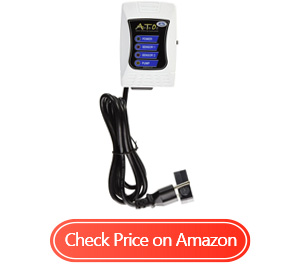
This device comes in handy if you live someplace that can get quite hot during certain parts of the year. This gadget monitors the water levels of the tanks, and when they dip below a certain point, it will trigger a pump to move water from another tank into the sump.
You can also use this controller for water changes. You only need to put new water into the reservoir and remove water from the tank. This will trigger the controller to replenish the tank with new water. You do need to remove the water gradually as the controller has a three-minute cutoff switch to the pump.
This device is not for beginners. The main reason is that you will be using three different tanks. If you are already a seasoned aquarist, though, then you will appreciate that this controller can work in three different tank setups, depending on which tank it will be monitoring.
The only real hassle I have with this device is that whenever the three-minute safety mechanism trips, you will need to unplug the controller to reset it. It would have been better if there was a convenient reset switch on the device itself.
- Automates water topping off
- Simplifies water changes
- Ideal for use in three different tank setups
- Keeps your sump pump from running dry
- Quite durable and can last for years
- Needs to be restarted whenever the 3-minute “safety” feature goes off
This controller is not for beginners. You should only consider getting this if you have a sump system in place, which is well beyond the realm of beginners. Now, if you know what you are doing and how to set up this rather complicated device, then you will discover just how useful it can be.
5. Inkbird ITC-608T Temperature & Humidity Controller
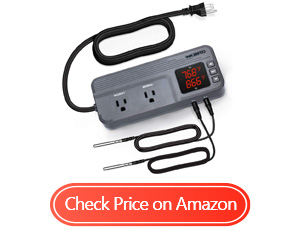
This neat reef keeper aquarium controller allows you to monitor different parameters, but you will only be using the temperature monitoring capabilities for your aquarium. With that, you only need to plug the heating pad and the chillers into their respective outlets set a temperature target, and let the controller handle the rest.
Aside from being a temperature controller, you can also use this device to monitor and adjust the humidity in an area. You only need to plug a humidifier and a dehumidifier and set the target humidity that you want to maintain. You can also use it to monitor heat and humidity, like what you need to do for a reptile enclosure.
You can also use this handy device to turn a freezer into a regular fridge. You just need to insert the probe into the freezer. Once it gets to above your desired temperature, then it will turn the appliance off. You will be getting a spacious chest-type fridge without having to do any new wiring.
This device comes with highly accurate temperature and humidity probes. If any of the two were to break, you do not need to replace the entire controller. You just have to buy the required probe. I have been using this controller to monitor the temperature of my aquarium, and so far, it is working quite well.
The problem that I have with this gadget is that it is a bit hard to figure out, even when you are reading the manual as you set it up. I consider myself a bit technically-inclined, but I still needed several re-readings of the instruction manual and watching instructional videos before I knew how to operate this thing.
- Allows you to control heat and humidity
- The device has a myriad of uses
- Comes with a delay switch to protect refrigeration equipment
- Accurate and sensitive temperature and humidity probes
- Comes with a built-in timer for temperature controls
- The instructions are vague and hard to understand
Once you get over how difficult it is to understand the included instructions, you can then start using this device to keep the temperature in your tank at a constant value. You no longer need to start and stop your tank heater or chiller manually. This device will do it for you.
6. Pymeter Digital Temperature Controller
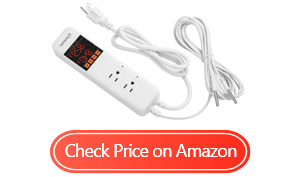
Unlike other temperature controllers, this one has two independent outlets. It means that two temperature probes are in charge of turning each of the outlets. Other controllers rely on just one thermometer probe.
Having two separate probes for the outlets allows you to operate a heater and a chiller at the same time. Other controllers rely on just one probe. When that single probe malfunctions, both the heater and the chiller will not operate. Having two probes serves as a safeguard against this.
This controller also comes with several alarms. There is an alarm that goes off when the temperature in the tank gets too high or low. There is also an alarm for temperature differences between the probes. If the difference is too high, then there might be a malfunction that needs your attention.
Aside from keeping my aquarium at the perfect temperature for my fish, there is also another controller that I use in my greenhouse. This device technically does the same thing as the one with my aquarium, but this one controls a space heater and a fan. This keeps my greenhouse always at the perfect temperature and humidity.
Now, here’s the catch: this device has a steep learning curve. I consider myself no stranger to tech, but it took me a while to figure out how to set the temperature switches properly. I suggest that you watch online video tutorials on how to use this device.
- Comes with two independent temperature switches
- Allows you to control a heater and a chiller at the same time
- The two temperature probes make this device more accurate
- Has different alarms for different situations
- Has a wide range of uses aside from aquarium-keeping
- Has a steep learning curve
Although it might take a while before you can understand the included instructions and you might even think that you got a defective item, you will discover that this controller might just be the best one in the market right now.
What to Look For When Buying a Aquarium Controller
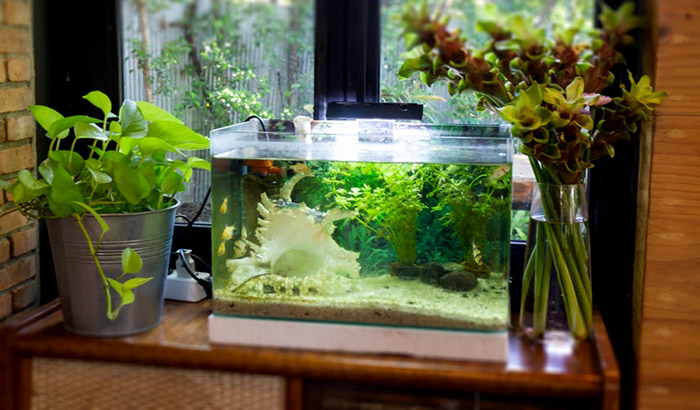
Now that you have received a couple of recommendations and aquarium controllers’ comparison, you now need to learn what features and qualities you need to look for when shopping for the best one that you can use in your aquarium.
Type of Controller
The first thing that you need to think about is the type of controller you need. Do you need one for your pumps, the lights, or the heater? Maybe you are in the market for a pH controller aquarium.
There is no such thing as an all-in-one aquarium controller. With that in mind, you will need to find a controller meant for a specific task.
Ease of Use
Do not punish yourself by getting a device that you cannot even understand how to use. As much as possible, the controller should be plug-and-play. It should not require you to do any rewiring, complicated programming, or anything of the sort. Everything that you need to do, you should be able to do using the main controls.
If the device is not simple enough that you cannot figure out how to operate it right out of the box, then the included instructions should teach you how. Now, if the instruction manual still does not offer that much help, then you should not bother with the device as it will only cause unwanted stress.
Reliability
You will be relying on the controller to monitor the conditions of your aquarium, and then making sure that they stay at the optimum levels. This means that you need to find controllers that you know you can trust to do their jobs.
For instance, a heater/chiller controller should have an accurate thermometer to measure the temperature of the water. That way, it knows when to switch the heater or chiller when needed. You can check other customers’ aquarium monitoring system reviews for information on reliability.
Durability
Just like how you should expect an aquarium controller to be reliable, it should also work for an impressive amount of time, or at the very least an acceptable length of time. You would not want to buy a new controller every two or three months. These devices are supposed to last a couple of years before you have to replace them.
Moreover, these devices do not come cheap, so if you need to replace the controller every time it breaks, then you are just wasting your money. Find an aquarium controller that can last at least a couple of years.
Safety Features
You will be using Neptune aquarium controllers on expensive tanks full of expensive fish, corals, and plants, so you better believe that you need one that can guarantee that it would not endanger any of your aquarium equipment.
The first thing to look for is surge protection. This will protect the equipment plugged in the controller from sudden electric surges that often happen during thunderstorms and other inclement weather. Moreover, the device should also be insulated and grounded properly. This will prevent electricity from leaking into the aquarium.
Cost
Some aquarium controllers can be quite expensive, but you do not necessarily have to spend hundreds or thousands of dollars on a single device. There are plenty of aquarium controllers that are below $50 and they work quite well.
However, you should not buy the cheapest device that you can find. Try to find the happy medium between price and quality. Also, if you already have a set budget, it is not worth going over your budget just for a controller. Take a bit more time to scout your options so you can get the best deal.
Frequently Asked Questions
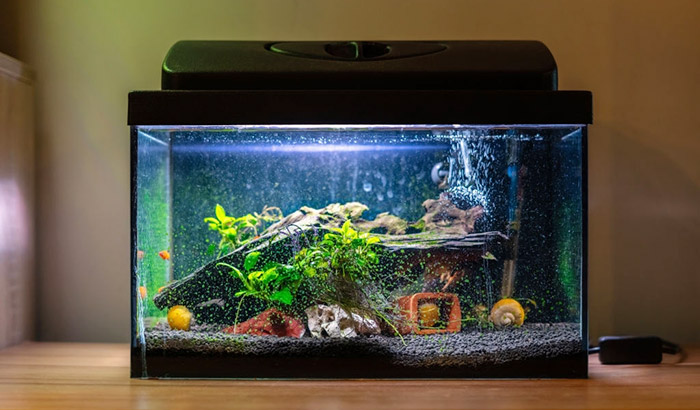
Why do I Need an Aquarium Controller Reef?
You will be mainly using an aquarium controller for added convenience. In the case of keeping your aquarium at a steady temperature, you would not want to be continuously checking the thermometer. Aquarium keeping is already a time-consuming hobby as it is.
An aquarium controller for water temperature will monitor your tank for you, and it will automatically turn on the heater or chiller to get the water back to temp. Once the water temperature goes back to normal, the controller will cut the power from the heater or chiller.
How to Control the Aquarium Heater with a Controller?
First, you need to get a proper temperature controller. Dip the probe into the water, plug the heater into the appropriate outlet on the controller and make sure to turn it on. After that, plug in the controller.
After turning on the controller, you need to set the temperature that you wish to maintain in your tank. When the sensor probe notices that the temperature dropped, it will automatically provide power to the heater.
Conclusion
Having an aquarium controller can be a game-changer, especially if you haven’t been an aquarium keeper for that long. With a proper controller, you will no longer need to closely monitor your tank to prevent any untoward disaster. You just let the device handle it for you.
You will discover that with the best aquarium controller installed and working, keeping an aquarium can truly be a relaxing hobby.
The post The Best Aquarium Controller for 2022 appeared first on Aquatic Eden.
]]>The post Do Fish Need Light at Night appeared first on Aquatic Eden.
]]>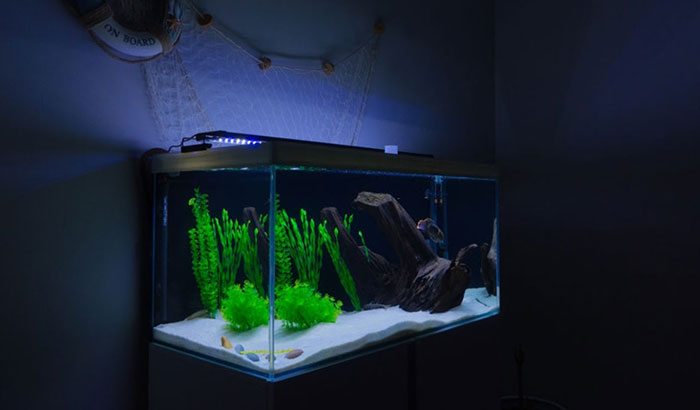
Caring for fish requires all sorts of equipment. You need a spacious aquarium, a filter, excellent plants, gravel, and light, among many other things. Keeping the fish happy and healthy is on the line, so you should know when these things are necessary and when they are not. One crucial question to ask is, “Do fish need light at night?” The short answer is no, fish don’t need light at night.
Fish don’t need light at night, and here are the reasons why.
Reasons Why Fish Don’t Need Light at Night
The reasons why fish don’t need light at night are:
- Fish need a light cycle that mimics the typical daylight and nighttime hours
- An irregular light cycle stresses out fish
- Extreme algae growth
- Adverse effects on plant life
Let’s discuss these factors in detail.
Fish Need a Light Cycle that Mimics Daytime and Nighttime Hours
Most aquarium fish such as bettas, Glofish, Bolivian, and German blue rams need light only during the day. Why? Aquarium fish have an active and inactive cycle based on the typical daytime and nighttime hours, just as humans do.
When the light does not turn off at night, the fish get confused about daytime and nighttime. Their sleeping patterns get scrambled, and their health goes down. They become prone to diseases, which leads us to the second reason why they don’t need light at night.
An Irregular Light Cycle Stresses Out Fish
An irregular light cycle or constant exposure to light day in and day out will stress your fish. They don’t know when daytime and nighttime are. They don’t know when to be active and when to rest. To them, each second is daytime.
Light plays an integral part in the circadian rhythm. The circadian rhythm is the program of sorts responsible for the release of melatonin, which induces sleep. When the body is exposed to light, the circadian rhythm thinks it is day and not time for rest or sleep.
The longer the fish are in constant light, the more confused and stressed they would be. Eventually, they will lose their vibrant colors and become sick. Death is a possibility if such conditions continue.
Extreme Algae Growth
Algae needs light to grow. Exposing your aquarium to light twenty-fours every day will expedite algae growth. Too many algae, in turn, is bad for the health of your fish. The most problematic thing about algae overgrowth is oxygen depletion.
Algae consume oxygen to live. If there are too many algae in the tank, the fish might not get enough oxygen, which leads to diseases and other problems.
Adverse Effects on Plants
If you have plants in the aquarium, it is necessary to have a light, especially a grow light. Light helps plants grow because it is essential for photosynthesis. However, plants also need a light cycle as fish do.
Like fish, plants need a light cycle that simulates the daytime and nighttime dynamic. They need around twelve hours of light and other twelve hours of darkness to rest.
Do fish need light at night?
For several reasons, no, they don’t. Constant exposure to light will inevitably cause sickness and potentially death to your fish. But what if you have nocturnal fish?
What If You Have Nocturnal Fish?
Does having nocturnal fish change the approach you should take regarding aquarium lights at night? Not necessarily. In the wild, nocturnal fish function without a big bright light shining on their surroundings. These fish can still function normally without a bright light at night.
However, some good arguments support having a night light for your fish. Those reasons are:
- Enhances visibility in the aquarium
- Expedites fish pigment darkening
Let’s discuss these factors one at a time.
Enhances Visibility in the Aquarium
A night light will help you see the fish even at night. Seeing the aquarium at night is essential because some fish species only do some activities at night. Examples of such activities include breeding, aggression, and other nighttime behaviors.
If you have nocturnal tenants in your aquarium, it’s best to see what they do at night. Some nocturnal fish species have an aggressive opinion towards diurnal fish (fish that are active during the day).
Additionally, a night light will help you see some mating and breeding behaviors. Livebearers such as guppies, for example, like to have their offspring at the early hours of dawn. Damselfish and tetras are other examples of laying their eggs at night.
Expedites Fish Pigment Darkening
Light darkens the pigments of organic things (plants, animals, and even humans). Constant exposure to light will help bring out your fish’s color faster. If an attractive and vibrant aquarium is a big deal for you, leaving a night light on must be appealing to you.
What Light is Best for Nighttime
The best option to get all the benefits of a night light but without its disadvantages is blue light. Blue light lets you see what’s going on in the aquarium at night and helps bring out the fish’s color faster. But it does not mess with the circadian rhythm of the fish, promote algae growth, or affect plants. It is the perfect solution!
Conclusion
Do fish need light at night? No, fish don’t need regular light at night. However, if you want to see your fish’s behavior at night or increase their color development rate, you can use blue light. Blue light does not affect your fish’s sleeping pattern and health. It does not promote algae growth nor has adverse effects on aquarium plants.
The post Do Fish Need Light at Night appeared first on Aquatic Eden.
]]>The post Why Did My Goldfish Turn White? appeared first on Aquatic Eden.
]]>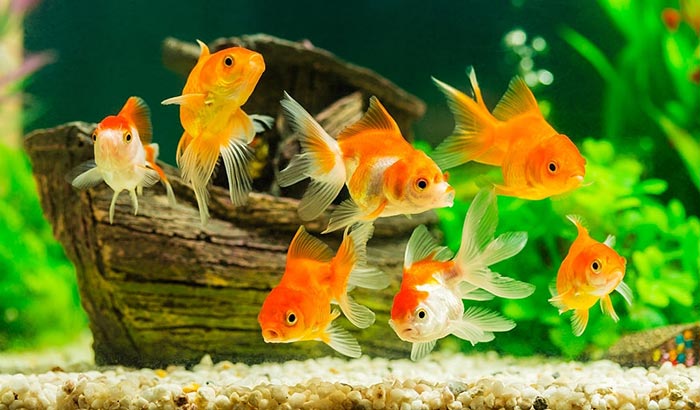
Keeping pets in your home means that you are responsible for them. It is your job to take care of them as they need your time, love, and attention. These, of course, includes fishes.
Goldfish are one of the most common pet fishes people choose to keep. They come in many different colors like vibrant yellows, golds, darker browns, and reds. Everyone loves their attractive and beautiful color, and it is what makes them stand out from other fishes.
However, they can change their color. It could be a serious issue, or it could be something normal! In this article, you will discover the reason for your goldfish turning white.
Reasons why Goldfishes Turn White
The change in your goldfish’s color might not matter for them, but it may be an indicator of the state of your goldfish’s health. It is essential to know the reasons why they turn white for you to be aware of any possible health issues.
Usually, color changes occur during a goldfish’s first two years of life. They are born either brown or black to help them blend in with their surroundings and avoid being eaten by predators. They only become orange or golden-yellow after they mature, but it depends on many factors.
Goldfish turn white over time due to many possible reasons. Read on so you can better assess their health and decide whether you should help them recover or enjoy their new look!
Growing up
One reason why your goldfish is turning white is that they are growing up. As goldfish grow older, the color may change several times before they have their true color, and their color depends on their breeding.
If the parents of your goldfish have white colors, then your goldfish may be turning white to mimic those colors. If this is the case, you should not worry about your goldfish. The reason why most goldfish are golden and yellow is simply because of selective breeding. As long as you take good care of your goldfish, they are going to be just fine.
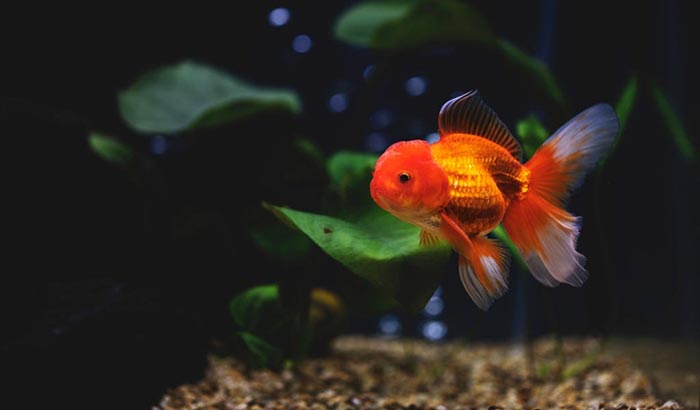
Lack of sunlight
The shiny color that we see goldfish have is actually due to them having pigment on their skin. This pigment reacts more to sunlight than other fish. So, the reason why your goldfish is turning white may due to a lack of sunlight exposure.
One solution goldfish keepers have for this is to let their goldfish bask in the sun for them to receive the benefits of sunlight. However, if your goldfish has fully turned white, this method might not work. It would be best to do this while your goldfish still have some color left on them.
Changes in their environment
Even the simplest change can affect goldfish because they are sensitive creatures. A new friend, changes in water type or temperature, or even just adding a new piece of decoration can change their color.
The only way you can find out that the reason for their color change is the sudden change in their environment is if you keep track of any changes you make to their aquarium.
You can use a pH stick to see if it is due to a change in pH levels. However, if you added a new friend or a toy, you may need to wait for a few months before they turn back to their original color. Just know that you do not have to worry, especially if you are taking proper care of your goldfish.
Sickness
The time where you should be worried is if your goldfish may be turning white due to an illness. Changes in their color are just one symptom of a possible disease. You could also tell if they are sick by noticing their movements.
If your goldfish are healthy, they would be swimming around like they usually do. If your goldfish is sick, it may take longer to move around, and it might change its eating habits. It would be best to see a vet if any of these changes occur.
Low oxygen levels
Your goldfish may be turning a translucent white color if there is not enough oxygen in the water. Low oxygen levels will need immediate action as they could make your goldfish turn ill.
You should test the water and also be mindful of strange behaviors. If they are looking a bit sluggish and you notice that they are having a hard time breathing, it would be best to change 60% of the water to improve their conditions. Air stones are also a great help in increasing water levels.
Old age
One answer to why your goldfish is turning white may be due to them getting older. All living things slowly feel changes as they grow older. You may notice these changes in their health, color, or energy.
If you own plenty of goldfish and have one that seems to be turning its color due to old age, you may want to put them in a separate fishbowl. If that goldfish dies in the aquarium with other fish around, germs might spread, which could cause health issues to the remaining fish.
Conclusion
Goldfish are sensitive creatures that can easily be affected even by the smallest changes, which is the most common reason why they change their color to white. Even though goldfish are not aware of it when they turn white, it is something you may want to check.
There are many possible reasons why your goldfish would turn white, and they are commonly due to sudden changes, which is why you need to be very careful if you want to keep them alive.
You need to make sure that they are getting enough sunlight, their oxygen levels are just right, and that you are keeping track of any changes you are making to the aquarium. Also, be mindful of the possibility that they are sick so you can take them to the vet early and get them treated immediately.
However, other changes may not be threatening. It could be just because they are still growing up or getting old. Either way, it would be best to prevent any potential issues by giving them a happy and healthy life.
The post Why Did My Goldfish Turn White? appeared first on Aquatic Eden.
]]>The post Aquarium Light vs Grow Light appeared first on Aquatic Eden.
]]>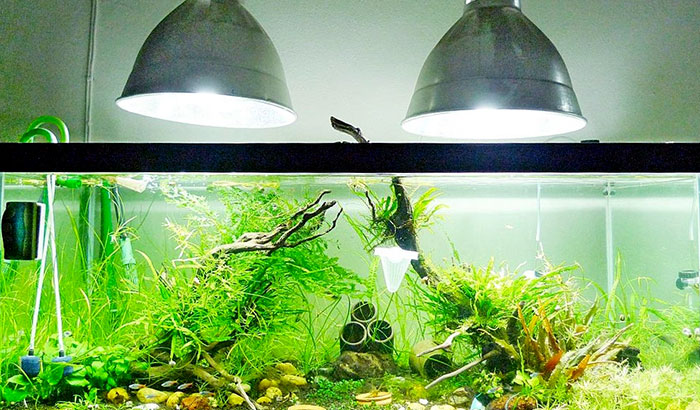
If you have tried growing plants indoors, you might have heard of grow lights. And if you try growing those plants in an aquarium, then you might be conflicted as to whether to use an aquarium light instead of a grow light. This post focuses on aquarium light vs grow light.
Which of these lights is better to use for what purposes? Is an aquarium light better suited than a grow light in an aquarium setting? This post will answer these questions and more.
Aquarium Light vs. Grow Light – Tackling the Differences
There are four primary differences between aquarium light and grow light. These differences are plant growth sustainability, composition, color spectrum, and Kelvin rating. Let’s discuss these factors in-depth.
Plant Growth Sustainability
The most significant difference between the two indoor lights is their capability to help plants grow.
As you might have already surmised, the grow light can help plants grow. Grow light is specifically designed to help plants grow, while aquarium light is only meant to illuminate aquariums.
Grow light has unique features that are conducive to plant photosynthesis. Its light spectrum delivers wavelengths of light that plants can use for energy. On the other hand, aquarium light may damage plants if it is too hot or lacks the correct light spectrum.
Composition
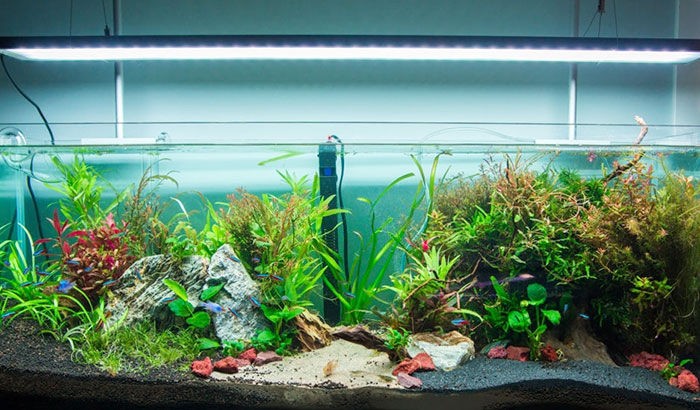
Grow lights usually are comprised of several LED lights mounted within a single casing along with a heat sink and a fan assembly to prevent overheating. Grow lights have these features because most of them have adjustable light settings. Some setups need specific wavelengths or temperatures, which a grow light with multiple LEDs can provide.
Types of Grow Lights
The types of grow lights are HID (high-intensity discharge) light, T5 HO (high output) fluorescent lights, and LED grow lights.
HID lights have high-pressure sodium and metal halide lights. People typically use these types of lights in large and deep coral reef tanks because of their high-intensity output. They produce a lot of heat, so you need extraction equipment to remove the hot air.
T5 HO fluorescent lights are popular in planted home aquariums. They last long and are affordable, so they make for great options. Even though they produce lights intense enough for plant growth, they don’t create a lot of heat.
LED grow lights are the most environmentally friendly grow lights. They don’t consume much power but still produce a light spectrum similar to the sun’s rays. Furthermore, you can get them tailored specifically for your aquarium.
Types of Aquarium Lights
On the other hand, aquarium lights don’t have these complicated setups. Any light that can illuminate the inside of an aquarium will suffice as an aquarium light. The light may be LED or fluorescent; as long as it can light up an aquarium, it will suffice.
But aquarium lights are not that simple. Different aquariums may need unique kinds of aquarium lights. The different types of aquarium lights include LED, fluorescent, compact fluorescent, metal halides, and incandescent lights.
LED lights are the most popular form of aquarium light for various reasons. One reason is that they are highly affordable both initially and in the long run. They consume very minimal power and have a long lifespan. Plus, they don’t emit high temperatures, making them suitable for making the water in aquariums stable. You can adjust the light intensity with LED and have different colored options.
Standard fluorescent lights are good options because they require very little power and are pretty efficient. They come in different sizes and colors, so you have options. However, they are unsuitable for non-planted aquariums as they don’t produce intense lights.
Compact fluorescent lights are smaller but produce brighter lights than standard fluorescent lights. These lights can produce intense illumination depending on their wattage, so they can be suitable for planted aquariums. However, they also produce heat, so you would have to invest in an auxiliary fan.
Metal halides are more suitable for reef tanks because they produce high-intensity lights. They are powerful aquarium lights better suited for large and deep tanks. However, these lights make a ton of heat and are pretty expensive to maintain.
Incandescent lights became obsolete because they produce a lot of heat. They might be initially affordable, but they are inefficient and often need replacements.
Color Spectrum
Aquarium lights tend to produce a green aesthetic that looks good in an aquarium setting. You might also get an aquarium light with a bright white light that showcases the unique colors of your fish.
On the other hand, grow lights produce red and blue hues that promote plant growth.
Kelvin Rating
The Kelvin rating of a light source describes the warmth or coolness of its color. Aquarium lights have a Kelvin rating of 8000K or higher because they produce bright lights.
On the other hand, grow lights range between 4700K to 6700K that emulate the natural daylight color. Within this range, plants can photosynthesize.
Conclusion
The four primary differences between aquarium and grow lights are their capacity to foster plant growth, composition, color spectrum, and Kelvin rating. But in a nutshell, grow lights can help plants grow while aquarium lights illuminate an aquarium to display its beauty. You just have to remember that core difference the next time you think about aquarium light vs. grow light.
The post Aquarium Light vs Grow Light appeared first on Aquatic Eden.
]]>