The post The Best Pleco Food for 2022 appeared first on Aquatic Eden.
]]>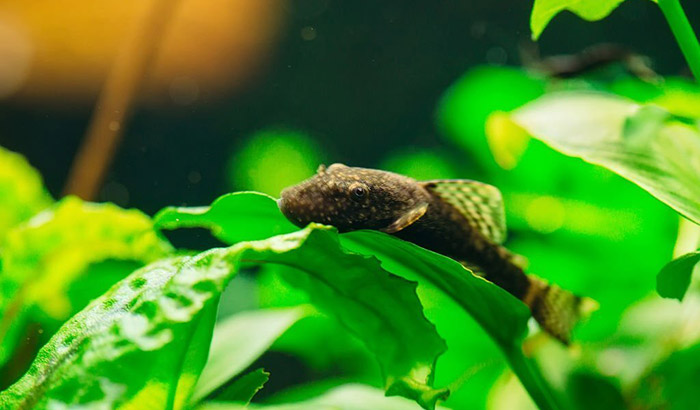
The best pleco food is different from regular fish food in the sense that it does not float. Plecos and similar fish species are bottom feeders. This means that their mouths are on their heads pointing downward. It would, therefore, be almost impossible for them to eat floating fish food.
Some people think that they do not need to feed their plecos since they eat the algae that grows on the glass. However, that is not always the case. Most of the time, a single pleco can eat so much algae that the tank would not be able to keep up production.
This article will help you sift through the many different brands of pleco food so that you will end up with the best. You will be getting some shopping tips and a couple of product recommendations. Once you reach the end, you will know all the things you need to know to make the right choice.
Best Pleco Food Reviews
1. Ultra Fresh Vegetables Shrimp Pie Pleco Food
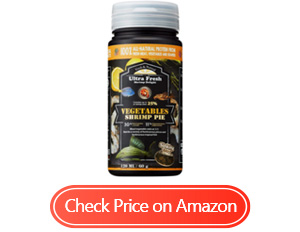
The nice thing about this product is that it does not cloud the water as much as other brands. These pellets soften after a couple of minutes but you can’t expect them to deteriorate and make the water murky. They keep their shape for up to an hour, which does not happen often as they usually get eaten immediately.
One of the reasons my plecos just love these pellets is that they contain dried sword prawns. This ingredient adds a lot of flavors that plecos and other fish just love, which is why it is one amazing option for the best food for pleco growth. Whenever I plop this pellet into the tank, other fish would swarm around it, not just the pleco.
Aside from the flavor, this product also has tons of vitamins and minerals to keep your plecos healthy. It contains all the required nutrients that plecos need for healthy skin and scales. You will be surprised at how much better your pleco will look after a week or so. I did not think my pleco was particularly beautiful but now, it certainly looks great.
Another thing that I liked about it is that it quickly sinks to the bottom of the tank, even without soaking. I did not need to worry about the pleco having to fight the other fish for the food. It was already at the bottom before the others even noticed. Plecos and other bottom feeders need not compete with the other fish for this product.
However, even though I like this product, it would have been much better if the pellets were a bit bigger. Plecos can get big quite fast and these little pellets are too small to keep them interested. Ideally, the pellets should be bigger than their mouths to encourage the plecos’ foraging instincts.
- Softens quickly but remains intact
- Contains sword prawns for added flavor and protein
- Enhanced with vitamins and minerals
- Sinks immediately to the bottom of the tank
- A bit small
- Somewhat pricey
Although this is a bit on the expensive side when it comes to pleco food, I can still say that it is a worthwhile purchase. I have never seen my pleco look as healthy as it is now, and it is all thanks to this pleco food.
2. Aquatic Foods Plecos Sinking Wafers
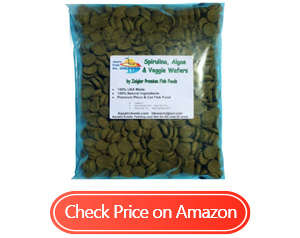
Plecos grow quite quickly and I noticed that they do so much quicker with this fish food. This product contains a good amount of protein, which greatly increases the rate at which they grow. I also keep a couple of breeder stock and I discovered that these wafers are great for the fry. This makes them grow faster and more resilient to illnesses.
Aside from protein, these algae wafers also contain a healthy amount of fiber. This greatly improves the digestion of the fish who eat it. This means that the plecos will be able to absorb more nutrients from the food they eat but produce less waste. In other words, the pleco will not be adding much to the ammonia load of the tank.
These wafers come in the shape of discs that are also the perfect size for plecos. These are big enough that they will not fit entirely in their mouths but small enough that a single pleco can finish eating one wafer in five to ten minutes. One wafer is usually enough for one pleco every day.
One of the things I liked about this product is that it does not cloud the water easily. When the wafers sink in the water, they will soften after just a minute or two but they will not disintegrate and make the water murky. I have used other similar algae wafers, and some of them have turned the water green.
What I did notice about this product is that a couple of my fish, who are notoriously picky eaters, will not go near them. It is a good thing that my plecos like these but unfortunately, my catfish do not seem to care for these at all.
- Contains a lot of protein to promote fish growth
- Has fiber for improved digestion
- Just the right size for plecos
- Does not break up as easily as other wafers do
- Takes a bit longer to sink
- Not ideal for picky eaters
I am fortunate enough to have fish that are not that picky when it comes to food. However, it is hard to find fish that will not eat this fish food, at least in my experience. Plecos sure do love these and the ones that I have become significantly healthier since I started giving them these wafers.
3. Zoo Med Laboratories Pleco Banquet Block
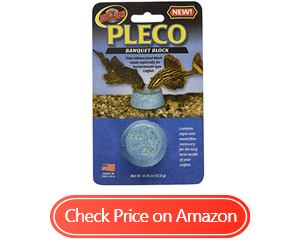
This is the ideal food block if you are usually out of the house. It can last up to five days, depending on the size of the fish that will be eating it. I like using this whenever I am leaving the house for more than a day, just so my plecos and other bottom-feeding fish would have something to eat while I am gone.
Even if I am not leaving the house, I would use these blocks to ensure that my plecos and other bottom-feeding fish are fed. I have a four-inch-long pleco and it takes around two days before he can eat through an entire block. This food block is also great because its form promotes the natural feeding pattern of bottom feeders.
Plecos are not the only fish that like this food. I also keep a couple of shrimps and snails and they cannot get enough of this food block. Of course, these small creatures will not be able to finish this entire block by themselves. This means that there must be at least a small pleco in the tank with them.
The reason why I got this food block is that I feel bad for the plecos having to fight with the other fish in the tank. Some fish food takes a long time before they reach the bottom that the plecos have nothing left for them. This one is so dense and large that they have no trouble feeding anymore.
The only problem that I have with this product is that it initially hardens the water quite significantly. The water hardness is not so high that they harm the fish but the rise is also significant enough that you should address it soon. It also clouds the water a bit but expect it to be cleared up after about an hour or so.
- Can last for up to five days (depending on the size of the fish)
- Ideal for feeding your fish for several days
- Loved by shrimp, snails, and bettas, too
- Provides the plecos a chance to feed without fighting with the other fish
- Affects the hardness of the water significantly
- Clouds the water a bit
This is a good solution when you need to leave the house for a couple of days. It is hard enough that it will not dissolve completely even after a couple of days. The hardness also promotes the natural feeding habits of the plecos and other bottom feeders.
4. Hikari Monster Fishes Food
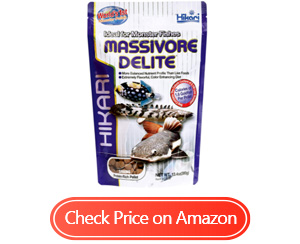
If you thought your lowly pleco cannot look nice, you will change your mind after you have fed it with the best food for plecos. I have a bristle nose pleco that did not stand out when I first got it but it now has brighter colors and more vibrant patterns. This has kindled an interest inside of me to keep more types of catfish and plecos now.
When it comes to the size, they are just the right size and shape for plecos and other bottom-feeding fish. They are small enough for a single pleco to finish by itself, but not so much that the fish could swallow whole. However, if your pleco grows to its maximum size, these pellets might become too small.
Because these pellets are for bottom feeders, I noticed that they are quite porous and would sink to the bottom almost immediately. This will allow the plecos and other bottom-feeding fish to eat without the other fish stealing their food. The pellets also make sure that your pleco gets the nutrition it needs.
This bristle nose pleco food also contains quite a lot of protein, which is important for the proper growth of fish. If you think that your pleco already grows quite fast, wait until you start feeding it with this product. Aside from making your fish grow faster, the protein content also improves their immune system.
Although I do like this product quite well, it still has a couple of issues that I did not like. The biggest issue I have is that these pellets dissolve too fast and the particles cloud the water. You will need a quite efficient filter to keep the water clean if you are feeding your fish this food.
- Enhances the colors of the fish
- Just the right size for bottom-feeding fish
- Sinks to the bottom fast
- Promotes proper growth and boosts immunity
- Contains a lot of filler ingredients
- Dissolves too fast and clouds the water
The nice thing about this product is that it significantly enhances the appearance of your plecos and other bottom-feeding fish. I did not know that they can look as appealing as mine look right now. If you keep catfish, this will make their colors pop out much more.
5. Xtreme Aquatic Foods Cat Scrapers
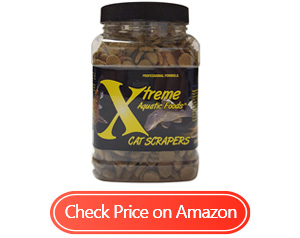
My whole tank would go into a feeding frenzy whenever I plop a couple of these wafers into the water. It is a good thing that it sinks rather quickly to the bottom, or else my pleco would not have a chance to eat. Aside from my pleco, my shrimps and snails also love this product. I sometimes go through one package a week.
Another nice thing about this fish food is that the pellets are in a disc shape. This means that they lay flat on the bottom of the tank, making it easier for bottom-feeding fish like plecos, catfish, and loaches to eat them.
The disc-shaped pellets promote the natural feeding behavior of bottom-feeders. This makes them feel more at home in their artificial environments.
In addition, these fish pellets do not disintegrate quite as fast as other similar products. I have tried other brands of algae wafers and some of them would break apart easily once in the water. The tiny particles they release would also often make the water cloudy. This keeps its shape much longer than most of the other products in the market.
This stuff also contains a bunch of probiotics, thereby encouraging the growth of beneficial bacteria in the guts of plecos. What this means is that your fish will have a much more efficient digestive system. They would be able to get more nutrients out of their food and produce less waste.
I only hoped that this stuff came in a larger container. As it is, you will only be getting a small jar, which would only last me on average around two weeks. Having to purchase every week or so racks up the costs over time. Also, this must be one of the smelliest algae wafers that I have tested so far.
- Almost all fish like it, not just the bottom-feeders
- Shaped into discs to promote natural feeding habits
- Contains probiotics to improve the fish’s immunity
- Does not dissolve quickly and will not cloud the water
- The container is quite small
- This product smells quite bad, even compared to other algae wafers
Its repulsive smell might be the reason why all my fish seem to swarm over this food. It works just like how a stink bait would. Also, because my fish do love it quite a lot, it would have been much better if this came in a larger container. It would have lowered the price a bit, and I also do not need to buy a new pack every week or so.
6. Hartz Wardley Fish Food
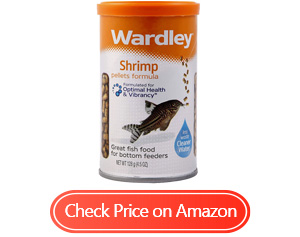
This pleco fish food comes enhanced with additional Vitamin C, which helps bolster the immune system of all the fish. I have not had any serious illness breakouts in any of my tanks since I started using this food. And because my fish like this a lot, they have been eating quite heartily, which means they are getting even more nutrition.
This fish food is also easy for fish to digest. Plecos and other bottom-feeding fish already have strong digestive systems, so they have no problem digesting these pellets. Not only can they get the most nutrients from this food, but it also means they make less waste. My fish are healthier and the ammonia level of the water stays low.
This fish food has a specific formulation for bottom-feeders like plecos, loaches, catfish, and others. These pellets sink to the bottom of the tank, unlike traditional fish food that floats on top of the water. This promotes the natural foraging and feeding habits of the bottom feeders.
Here’s the best thing about this fish food, it will look like you have been starving your fish when you feed it to them. They would quickly go into a feeding frenzy when you sprinkle these pellets into the water. Even the picky eaters in my tanks can’t resist this food. It caused a bit of a problem since everyone in the tank competes for the pellets.
I found that it will be better for the plecos to put this food in the tank at night when they are most active. This gives them a better chance at eating. I also did not like how these seem to get suspended in the middle of the water where the plecos cannot reach them.
- Contains Vitamin C to boost the fish’s immune system
- Easy to digest
- Formulated specifically for bottom feeder fish
- Even picky eaters love this
- Small jar and kind of overpriced
- Does not sink fast enough
This fish food is almost too good. All the fish in my aquarium love this a bit too much, I think. They would swarm towards the pellets as soon as they hit the water, which means that only a couple would reach the pleco. This is why you should use this at night when the plecos and other bottom feeders are most active.
7. Tetra Shrimp Wafers Plecos Food
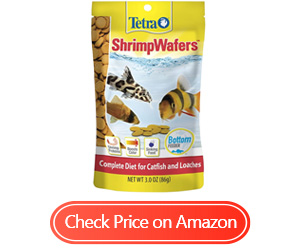
These wafers are orange in color, indicating that these pellets contain a lot of shrimp. This means that they contain a lot of proteins that will promote proper growth and improve your fish’s immunity. My plecos love this fish food and it made their colors quite vibrant. I did not know they can be this beautiful.
This fish food boasts of their flat disc shapes. I also noticed that they sink quickly to the bottom of the tank. This is an important feature because this is the ideal form for bottom-feeding fish like catfish, plecos, loaches, and similar species. These fish have mouths situated at the bottom of their heads, so they cannot eat floating food.
These pellets are also nutritionally balanced to promote proper growth and improved health of bottom-feeding fish. As I mentioned earlier, this food greatly improved the coloration and vibrancy of their details. My pleco used to look plain and dull but now, the brown coloration has gotten brighter and gave it a bit of a reddish tinge.
A nice thing about this product is that it does not disintegrate as quickly as other pleco wafers. These wafers can last for a couple of hours in the water and they will keep their shape. This prevents the water from getting too cloudy if the fish will not eat the pellets immediately.
Although these pellets do not cloud the water, it does make the water a bit hard, so you may need to put on a bit of water conditioner every other day. The water does not get immediately toxic. You will still need to pay attention to your water’s quality closely.
- Contains a lot of protein from shrimp
- Just the right size and shape for plecos to feed on
- Nutritionally balanced for the proper growth and health of your fish
- Does not cloud the water
- Not for picky eaters
- Somewhat made the water hard
I am fortunate enough that my pleco likes this fish food because the other fish would not even touch these. Even the snails and shrimp do not like these discs. This means one package can last quite a long time and your plecos will have plenty of food.
8. API Tropical PELLETS Sinking Fish Food
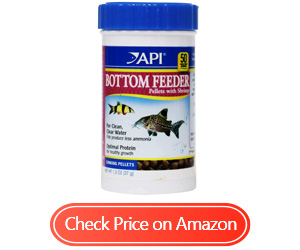
API is one of the companies that you can trust for proper fish care and these sinking pellets are not an exemption. This fish food is specifically formulated to be easier to digest so that your fish will get the most nutrients. After just a week or so of feeding my tank with this exclusively, the fish have gotten quite livelier and more active than before.
Because this fish food is easier to digest, that also means that the fish that eat this will not create that much waste. I have been feeding this product to my goldfish tank, and I was surprised at how little waste they have been making so far. This also means that the ammonia level in the tank will always be manageable.
Another nice thing about this product is its price. For the size of the packaging and the amount of product it contains, you are getting great value for your money. This brand is one of the more reasonably priced fish foods and one package can probably last a month or so of regular feeding.
Although these are sinking pellets, other fish and other creatures would swarm towards this fish food. All kinds of fish just love this fish food, fish like goldfish, catfish, plecos, shrimps, snails, and more. I just love seeing a mini feeding frenzy whenever I plop a couple of these discs into the water.
As much as I love this product, it does have a couple of issues. The biggest issue that I have is that these discs dissolve rather quickly and they cloud the water. It does not happen often as the fish would almost immediately devour it, but sometimes, a pellet would escape the mob, which is enough to make the water murky for a day or two.
- Easier to digest and absorb the nutrients
- Makes fish create less waste
- Great value for money
- Not just for bottom feeders but other fish as well
- Disintegrates quickly and makes the water cloudy
- Inaccurate product weight
My fish goes crazy for this fish food. However, since this does make the water cloudy, you must only do a light sprinkling. You will need to wait until every pellet is eaten before giving your fish more. Although this food is not exclusively for plecos, they do get quite a lot of benefits from this.
9. Aqueon Bottom Feeder Tablets
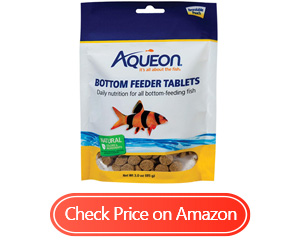
This sinking fish food does not cloud the water quite as much as other brands, especially when used properly. Each pellet is just the right size for a modest-sized pleco or catfish, so I just drop one pellet every feeding time. My pleco usually finishes one pellet in 5 to 10 minutes and I feed him twice a day.
This fish food contains so many vitamins and minerals that it could pass as nutritional supplements. It also has quite a lot of fish proteins that aid in the proper growth and development of fish.
Plecos grow quite fast on their own, but add these pellets into their diet and they will grow at a much faster rate. This is why I also plop a tablet into my breeder tank. The fry loves this and it makes them grow faster.
Aside from bolstering their overall health, these pellets also improve their appearance quite a bit. Plecos have beautiful scale patterns and most people do not notice it is because they have not been fed the right food.
This fish food improves the overall health of plecos, which reflects in how they look externally. My pleco now has a brighter brownish-red color instead of the drab brown it once was. Their markings are also now more visible.
These pellets are so dense that they readily sink to the bottom of the fish tank. I do not need to soak them in water, nor do I have to wait for them to sink. This means that the bottom feeders do not have to compete with the other fish in the community tank. However, it is also nice that some of my tetras and mollies love this fish food.
I am quite disappointed though that these pellets still manage to make the tank water cloudy. Even if you follow the instructions perfectly, the pellets still dissolve quickly and would make the water a bit murky. With a good filtration system, the water would clear up in fifteen to thirty minutes, but this should not have been an issue, to begin with.
- Used properly, this food will not cloud the water
- Contains nutrients and minerals necessary for an improved immune system
- Contains nutrients that bring out the natural beauty of fish
- Sinks readily and is the ideal shape for bottom-dwelling fish
- Picky eaters might not like this food
- Still cloud the water a bit
I was a bit disappointed at how this fish food still seems to make my water cloudy regardless of whether you follow the feeding instructions or not. However, the results do speak for themselves. My bottom feeders are more active and they look healthier than before. The cloudiness disappears after an hour or so, so it is tolerable.
10. Fluval Bug Bites Algae Crisps
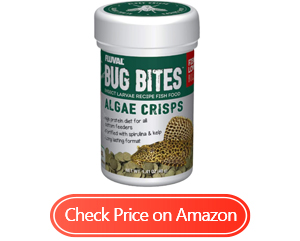
The best thing about this fish food is that it contains premium ingredients, quite unlike other brands that are full of extenders. This one has black soldier fly larvae, which Fluval breeds and cultivates in a controlled environment. It is one of the best sources of natural protein for fish and my plecos just love eating it.
In addition to protein, this fish food comes further fortified with additional vitamins and minerals that aid in the proper growth of fish. My pleco, which was usually sluggish and would just hide in a corner most of the time, is now significantly more active. He is also looking a whole lot better than he did before.
My pleco is not the only one that just loves eating this fish food. Whenever I drop a pellet or two into the tank, it causes almost all the fish to swarm towards it. Besides my pleco, it seems like my tetras and mollies also love eating this fish food, which can be a problem sometimes because the pleco will be competing for its food.
I also love that this does not cloud the water. Even if I put two or three wafers into the tank, the water stays clear. I do have to remove any leftovers, if there are any, immediately as they tend to grow mold when left in the water for too long.
I do have a couple of minor issues with the product. First, these pellets do not sink immediately. You will need to force them to make them go down. Second, in my opinion, these are too small for plecos, especially full-grown ones.
- Contains highly nutritious black soldier fly larvae and other protein sources
- Further fortified with additional vitamins and minerals
- Causes a mini-feeding frenzy in aquariums
- Does not cloud the water
- Takes a while to sink
- A bit too small for plecos
Aside from a couple of minor issues, I think this is the best repashy pleco food that you can give to your bottom feeders. Not only does it contain a lot of protein but it also seems to taste great. Almost all the fish in my community tank love it.
What to Look For When Buying a Pleco Food
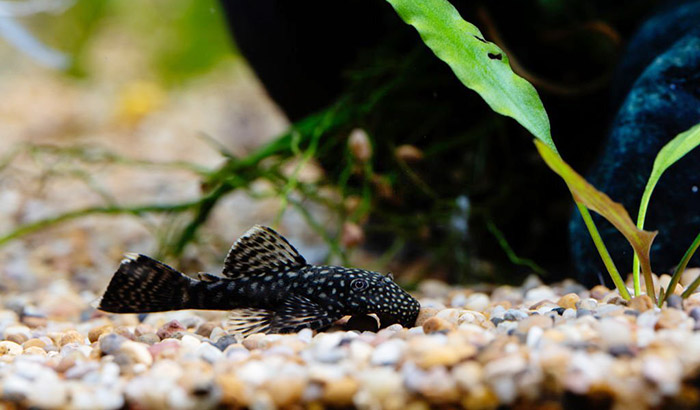
This might be the first time that you even thought of buying food just for your plecos. Most people think that plecos and other bottom feeders are perfectly fine just eating the algae off the sides of the tank.
However, they need proper nutrition like the other fish in the aquarium. Here are a couple of things to look for when shopping for the algae wafers for plecos:
Protein Content
Check the labels of the fish food you are thinking of buying. It should contain a decent amount of protein from natural sources. Plecos and other bottom feeders need a lot of protein because they usually do not get enough from just algae. Look for products that contain shrimp or fish meals as the main source of protein.
Size
Unlike other fish, bottom feeders have mouths situated under their heads, and they do not swallow their food whole most of the time. Choose fish food shaped into flat discs that are around a third of an inch in diameter. This will promote the natural feeding behavior of plecos, which will then make them want to eat more.
Does not Affect Water Quality
There are many pleco wafers out there that would start dissolving the second that they get wet. This can result in a cloudy tank. Good fish food should be able to get soft so that the fish can eat them easily but still be able to retain their shape and not disintegrate.
Sinks immediately
Plecos and other bottom feeders have mouths on the underside of their bodies, so they will find it almost impossible to eat floating food. The food you get them should be able to sink immediately so that bottom feeders can reach them easily.
Frequently Asked Questions
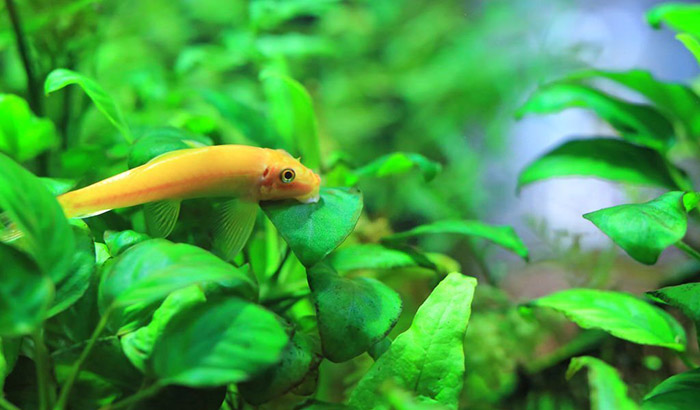
What do Common Plecos Eat?
Most of the time, plecos would eat algae and the bark of driftwood. However, they would also eat, and further process, the waste from the other fish in the tank. They are also scavengers, so they will eat dead vegetation or fish that sunk to the bottom.
You can also feed them with homemade pleco food containing vegetables, like cucumbers, carrots, and lettuce leaves.
How Often do Plecos Eat?
Plecos do not eat that much. It is recommended that you only feed them just once every other day or two, or maybe once every day if you have a large fish.
Conclusion
You might have bought a pleco just for keeping your aquarium free of algae but that does not mean it does not need any other food. Give your hard-working pleco the nutrition it deserves and it will work even harder at keeping the tank spotless. In addition, if fed properly, plecos can look quite beautiful.
Now that you know how to shop for the best pleco food, you should buy one so you can provide your bottom feeders the nutrition they need and deserve.
The post The Best Pleco Food for 2022 appeared first on Aquatic Eden.
]]>The post The Best Algae Wafers for 2022 appeared first on Aquatic Eden.
]]>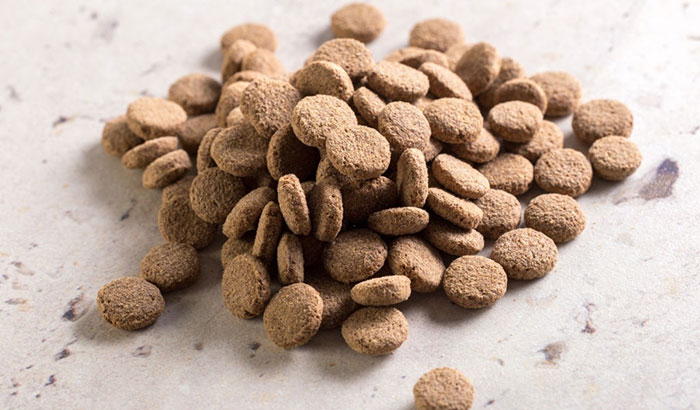
Some people keep algae-eating fish like plecos mostly to keep their aquariums clean, but that is quite unfair to the humble pleco. Plecos and other algae-eating fish can look quite nice, especially if you take good care of them. One way to treat your aquarium cleaners is to give them the best algae wafers as a treat.
Algae wafers for algae eaters are not just made of algae. They also often come fortified with additional vitamins. So, not only are your fish getting a tasty treat, but you are also supplementing their diets. This article will teach you how to choose the right brand of algae wafers for whatever fish you have in your tank.
You will also receive a couple of product reviews and recommendations so you can decide which is right for you.
Best Algae Wafers Reviews
1. King British Algae Wafers
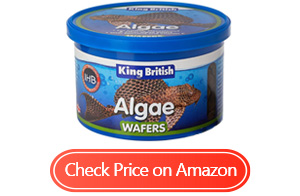
I keep a couple of shrimps and a pleco just to keep my aquarium clean. However, because they are doing such a great job, they would not have enough algae to eat. A friend suggested that I try using these algae wafers for fish and I was kind of hesitant at first.
I did not want to put algae in my tank on purpose. However, the moment I put on a single wafer, all my shrimp came swarming towards it and finished it in a matter of hours.
The organic algae itself already provides enough nutrition but it also comes fortified with spirulina for additional health benefits. Just like in humans, spirulina promotes a stronger immune system in bottom-feeding fish, crustaceans, and invertebrates.
Aside from spirulina, these wafers also contain a healthy amount of Vitamin C. Just like spirulina, Vitamin C also promotes a stronger immune system. In addition, it makes the skin and scales of fish and other aquatic creatures healthier. I saw the most improvement in my cherry shrimp as they now have brighter colors than before.
These algae wafers also contain additional protein to increase the mass of my aquarium denizens’ mass, thus making them healthier. The shrimp gained the most benefits. They managed to grow quite fast and are more active than before.
The only thing that I did not like about these wafers is that they would turn the water momentarily cloudy. However, once the shrimps and my pleco started eating, the water would clear up again. I just don’t like the shock of seeing a cloudy tank.
- Bottom-feeders like them a lot
- Contains spirulina to boost fishes’ immune system
- Contains Vitamin C for healthier skin and scales
- Also contains additional protein
- The wafers are a bit too big
- Temporarily turns the water cloudy
My shrimp and plecos like this product a lot, so much that they would swarm to it immediately. Even though the wafers are a bit too big in my opinion, my fish still manage to finish them in just a couple of hours.
2. Aquatic Foods Inc Sinking Algae Wafers
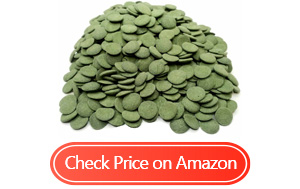
Spirulina is considered a superfood, which is why you would find it in many human food supplements. So, it makes sense that you should also include it in your fish’s food. After I started giving my catfish and shrimp these algae wafers, they have gotten considerably bigger and more active.
Aside from algae and spirulina, according to the company’s website, these wafers also contain a variety of different ingredients. From fish meals to different vegetables, they are all in this healthy fish food. In addition to getting bigger, my shrimp’s colors have gotten significantly brighter than before.
I also like this choice for the best algae wafers for shrimp as it does not muddle the water in the tank, unlike the other algae wafers. I have tried other brands of wafers that would immediately break down once in the tank, turning the water green. These algae wafers are a bit firmer but still easy for small creatures to nibble on them.
I have a couple of Amano and cherry shrimps in one of my tanks and they would swarm to the wafers that I put into their home. I would usually break a wafer in half because they are a bit too big, so a bag would last quite a long time.
The shrimps are not the only ones that benefited from these algae wafers. The plecos and catfish looked great, too. I have a couple of apple snails in one tank and all of them look amazing. The apple snails, in particular, looked much better. They did not have the vibrant colors they have now when I just let them eat any algae that formed in the tank.
The only major complaint that I have with this product is its smell. These algae wafers have a rather strong smell. I needed to transfer them into an airtight container to keep the smell from getting out. I do recommend putting a desiccant pouch in the container to prevent these wafers from getting moldy.
- Infused with spirulina for added nutrition
- Contains various ingredients that will help keep your fish healthy
- Specifically formulated to increase the clarity of the water
- Promotes shiny and healthy skin and scales
- Has a very strong odor
- The packaging does not have any nutritional information
Unlike some of the other brands of algae wafers I have tested, I liked how this one does not make the water cloudy. It would have been much better if the nutritional information were on the packaging instead of being only on the company’s website.
3. Ultra Fresh Picky Pleco Algae Wafers
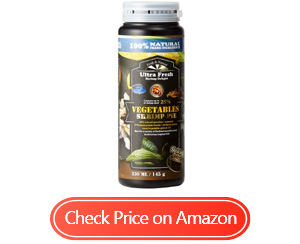
What’s great about the best algae wafers for plecos is that it contains a lot of natural and healthy ingredients. This does not just contain algae but also different fruits and vegetables to provide additional vitamins and nutrients. In my opinion, this product is more like a food supplement rather than plain fish food.
Another thing that I liked about this brand of algae wafers for shrimp is that it does not make the water in my tank cloudy at all. This fish food drops immediately to the bottom of the tank, so it is ideal for bottom-feeders like plecos, catfish, snails, and shrimp.=
Moreover, although it softens quickly, it does not dissolve easily. This means that the fish can eat it easily without clouding the water.
This fish food also contains premium dried prawns for additional protein content. The additional protein helped my sick fish recover quickly, particularly that one catfish I had that my cichlids bullied (he’s now in another tank). It also helped my shrimp grow quite fast and they are now livelier than ever.
This food also contains seaweed, which is something that helps improve the coloration and skin condition of fish. It also contains beneficial probiotics that help fish absorb more nutrients.
I only have one, somewhat big, issue with this product – that is the fact that it is a bit too small for my plecos. Although these pellets sink immediately to the bottom, they are still hard by the time my plecos get to them. It means that they would sometimes choke on them a bit before they could swallow the pellets.
- Contains a wide variety of natural and healthy ingredients
- This fish food softens quickly but does not dissolve easily
- Contains premium prawn meat for additional protein
- Sinks to the bottom to make it easier for bottom-feeders to access
- A bit too small for most plecos
- Not everyone liked it – Some of my shrimps did not touch it
The fish that did like this product cannot get enough of it but those who are not fond of it did not even touch it. I would still recommend this if you have any algae-eating fish in your tank. Some of them might not like it, but those who do will surely love it.
4. Tetra Algae Wafers
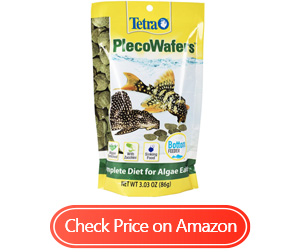
The tetra algae wafers are specifically formulated to provide bottom-feeding fish with the nutrients that they need to thrive. For instance, since bottom feeders usually eat the waste that the other fish leave behind, they need hardy digestive systems. This product promotes the overall health of plecos and other similar fish.
This fish food contains just a couple of basic ingredients that might not sound appealing but it is quite beneficial. This fish food contains quality algae and zucchini, which provides most of the vitamins and minerals that plecos need. It also contains additional fiber, making it easier to digest.
Another nice thing about this fish food is that it does not dissolve quite as fast as other brands. This means that it will not make the water cloudy unless your fish will not eat it, which is unlikely to happen.
This fish food is also shaped perfectly for bottom feeders. They have a disk shape that promotes the natural foraging instincts of the plecos and similar fish. This means that your fish will still feel like they are in their natural habitat. Expect them to feel more comfortable and happier as a result.
The only problem that I have with this product is that, unlike the other brands I have tried, they are hard to sink. I had to soak these pellets for a couple of minutes before they could sink to the bottom. Other brands would sink readily without any preparation at all.
- Specifically formulated for bottom feeders
- Contains algae, zucchini, and additional fiber for easier digestion
- Does not dissolve quickly – It keeps your tank water clean
- Has the right shape for bottom-feeding fish
- Kind of hard to make them sink
- Most fish leave the outer part of the wafers uneaten
Despite the mentioned flaws, I am still satisfied with the overall performance of this product. The algae wafers are good enough for bottom feeders plus they promote ease of digestion, making them good additions to their diet.
5. New Life Spectrum Algaemax Wafers
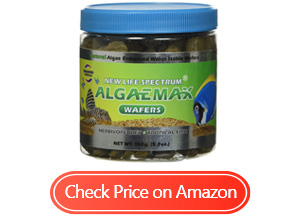
I like the dense packing of these wafers as this means that they will immediately sink to the bottom. I don’t like using the ones that you need to soak first so they would sink. These wafers are just a lot more convenient to use. Moreover, they do not dissolve quickly so the water remains clear.
These wafers do not just contain algae. Although they do have a good amount of it, there are also several different kinds of seaweed in it. They provide a lot of additional vitamins and minerals that are beneficial for your fish, including Vitamins A and C – all of which are important for the growth and health of your fish.
Aside from vitamins, additional protein also enhances this fish food. This is ideal in case you have a tank for the fish fry. The additional protein will help them grow faster and healthier. It also helps sick and recovering fish get better faster, so consider using this in your quarantine tanks.
Just because this fish food contains seaweed, that does not mean it is for marine fish only. The seaweed does not contain enough salt to affect freshwater fish, so this is perfectly safe for all kinds of fish. I keep a couple of apple snails as well and all of them like this stuff.
However, if this is the first time that you will be using algae wafers, I need to warn you about its smell. You will need to keep the lid screwed on tight and you might want to hold your breath when you place this in the water. Other than the smell, I do not have that many other complaints.
- Easily sinks to the bottom and breaks apart
- Contains several kinds of seaweed for optimum nutrition
- Has additional protein, making it great for fish fry and recovering fish
- Ideal for both marine and freshwater fish
- They smell horrible
- Not good for picky eaters
If you have picky fish, there is a good chance that they will not like these “pellets”. My catfish are not that picky when it comes to their food and they even did not like this. However, my shrimps and snails went crazy for the best algae wafers for otocinclus. They would immediately swarm to the food plate when I put these wafers in there.
6. Hikari AHK21328 tropical Algae Wafers
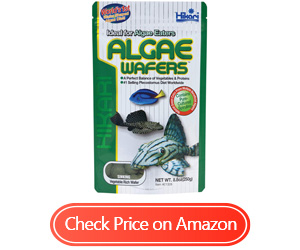
Aside from algae, this fish food also contains a variety of vegetable matter that will provide your bottom-feeder fish with proper nutrition. It also comes enhanced with additional vitamins and minerals, most notably Vitamin C, Vitamin A, and phosphorus.
I cannot say the same for other aquarium owners, but my plecos, shrimps, catfish, and snails just love eating Hikari mini algae wafers. Especially my plecos, they would immediately go to their feeding plate when it is feeding time.
I also discovered that fish fry likes this product. I think this is the reason why I am getting a higher yield of new fish every breeding season.
Unlike traditional fish food, this sinks immediately to the bottom. This means that your bottom-feeding fish will not be competing with the other fish in your tank. Also, unlike the other brands that I have tried, you do not need to soak these wafers in water to make them sink. They will do so quite readily.
Another nice thing about this product is you are getting a lot for its price. Algae wafers are quite expensive but not this brand. These algae wafers are nearly half the price of some of the other premium brands but they still work the same.
The only downside I can think of is that it contains copper sulfate, which a lot of Hikari algae wafers review posts did not like. Although it is not necessarily toxic, it does tend to increase the oxygen levels in tanks, which kills plants. If you have a planted tank, then you should use this product sparingly or at least no more than once a day.
- Contains a bunch of different vegetable matter aside from algae
- Plecos and other bottom feeders just love it
- Sinks quickly and does not dissolve that fast
- You will be getting a lot for the price
- Contains copper sulfate so you should use it just once a day
- The resealable packaging does little to keep the smell from leaking out
Aside from containing a bit of copper sulfate, there is not that much to complain about the Hikari tropical algae wafers. My plecos and shrimps just love this stuff and they have gotten visibly healthier than they did before I started using it. Just make sure to feed it to your fish no more than once daily to keep the copper sulfate at a tolerable level.
7. Aquatic Arts Algae Wafers

One thing I liked about this product is that it provides awesome value for money. Each packaging contains 8 ounces of algae wafers and it is enough to last a couple of months. As per package instructions, you only need to feed your fish every other day. Since I am only feeding one 2” pleco and a couple of Amano shrimp, half a wafer is enough.
I have another small pleco that shares a tank with a rather large goldfish. I had a problem when the goldfish would steal the pleco’s food, but this product solved it. These wafers are big enough that they will not fit inside the goldfish’s maw.
They are also hard enough that they could not crush it. This means my plecos can take their time nibbling on this wafer without disturbances.
One problem I used to have with other algae wafers is that a lot of my fish are picky eaters. I would plop a wafer in the tank and it usually gets ignored. This is not an issue with this brand. I often see the fish and shrimp swarm these wafers. In the tank where I keep mostly shrimps and snails, one wafer will be almost completely gone in an hour.
Another nice thing about these algae wafers is they contain a lot of protein, which all fish and invertebrates need to grow. My shrimps and plecos are visibly healthier after just a month of using these wafers. My shrimps are also more active now and their colors are brighter.
The only thing that I did not like about this product is that the surface layers would soften and disintegrate quickly. This causes the water to turn cloudy for around an hour or so. It is a good thing that I have beefy water filters; otherwise, this could become a serious issue for me.
- Great value for money
- The pellets are big enough that even goldfish will not be able to swallow them
- Even picky eaters love these wafers
- Contains a lot of protein
- Has filler ingredients
- Disintegrates fast and clouds the water temporarily
If you are looking for big algae wafers, these might be the ones you are looking for. A reason why these are so great in my opinion is that they are big enough that my large goldfish could not devour them.
This means that my plecos, shrimps, and other bottom feeders do not need to compete with the other fish. This ensures that they are getting enough of the right kinds of nutrition.
8. Invert Aquatics Mini Algae Discs
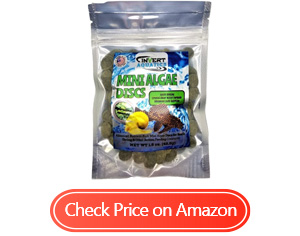
Other algae wafers are too big for feeding one pleco or several shrimps. You will need to break them in half. This brand is just the right size for my catfish, plecos, shrimps, and snails. They can finish all of the discs in under an hour and there are rarely any scraps left behind.
These discs also have spirulina. This is a superfood that contains lots of beneficial vitamins and minerals, which is why you usually find it in many food supplements. Humans are not the only creatures that can benefit from spirulina. My plecos and shrimp have gotten a lot healthier since I started using this product.
This fish food is not just for plecos, even if the packaging states it is. All algae-eating fish and invertebrates just love this. Whenever I place one disc in my shrimp tank, they would all come out of hiding and swarm over it. It is also ideal for fry, snails, and even crayfish. I also keep a couple of hermit crabs and they would fight over these discs.
Although they come shaped like discs, these wafers immediately sink to the bottom of the tank. This is important because bottom-feeders like plecos have mouths that point downward, meaning they cannot eat food that floats on the water.
This also prevents other fish from stealing food from the plecos. It usually happens if they share a tank with cichlids and other big fish species.
The only issue that I have with this product is that it does not provide a lot of information about its ingredients. Aside from the brand name and a couple of pictures, there is no ingredients list and nutritional information. You can find the necessary information on the company’s website, but you should not have to do that.
- Just the right size for small bottom feeders
- Contains spirulina for additional nutrition
- Not just for plecos but also shrimps, snails, and crayfish
- Sinks quickly
- There is no ingredients’ information on the packaging
- They disintegrate quickly
You will be getting a one-pound bag for a reasonable price and this bag will last for at least a couple of months. It may feel like you are taking a risk since there is no ingredients’ information on the packaging, though.
However, if you can take my word for it, I have used it for close to a year, and my plecos and other algae eaters are quite happy.
9. API Algae Eater Wafers
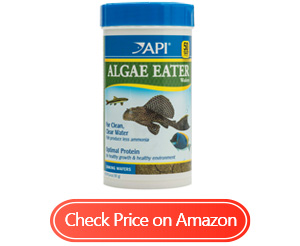
The nice thing about this fish food is that it is specifically formulated for bottom-feeders like plecos, catfish, loaches, and others. If you have a pleco that is way too good at its job, you can supplement its diet with these wafers. I have a couple of young plecos and they love the wafers.
Another nice thing about this product is that it makes fish more efficient at absorbing nutrients from their food. According to API, this makes fish absorb more nutrients and produce less waste. This means that your fish are healthier and theoretically should keep your water clear.
It seems like these algae wafers are tasty because even my catfish, who are picky eaters, love them a lot. Whenever I place one wafer down in my tank, all the shrimp, along with the pleco, would immediately swarm towards it.
Aside from vitamins and minerals, these algae wafers also contain a lot of protein that promotes the healthy growth of fish. I have a smaller tank that I reserve for fry and these algae wafers are what I feed them. These are also great for injured and/or recovering fish. It makes them get well much faster.
Now, here are the things that I do not like about this product. First, these wafers dissolve so fast that they make the water cloudy. There are even instances when the water would have a greenish tint for a day or two. However, the biggest issue that I have is that, if the fish are not able to eat all of the wafers, they make the water smell bad.
- Provides superior nutrition for bottom-feeders
- Makes fish more efficient at absorbing nutrients
- Even picky eaters love it
- Contains a lot of protein that promotes healthy growth
- Makes the water cloudy
- Prone to making the water smelly
You can avoid the issues with decreased water quality by feeding your fish just enough wafers that they can finish in a couple of minutes. These algae wafers are just chock full of beneficial nutrients that it would be a shame for you not to try.
10. Aqueon Algae Rounds
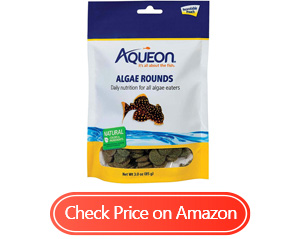
These algae rounds contain a lot of other ingredients aside from dried algae. The most notable ingredient is the dried kelp, which provides the kind of flavor that most fish find irresistible. My Amano shrimps seem to particularly love this algae wafer because they would immediately flock to it.
These algae wafers are not just a nice treat for bottom-feeders but they also contain a lot of vitamins and nutrients. These wafers contain spirulina, which promotes a healthy immune system. It also provides a lot of Vitamin C for healthy scales and skin. My pleco used to look drab and dull but now, it is quite vibrant and healthy.
Unlike other algae wafers that turn the water cloudy, these will take maybe thirty minutes to start dissolving. However, if you forget to fish out the leftovers, it will cloud the water. I avoid this problem by feeding my fish one wafer at a time, only putting more if my fish wants it.
These wafers are especially for bottom feeders, which is why they immediately sink to the bottom. These also have a disc shape so they lay flat on the substrate, making them easier for fish, like plecos, catfish, and loaches, to eat.
Just like the other algae wafers I have tried, these also smell horrible. These wafers come in a plastic bag that is not resealable. If you do not want your house to smell like the beach at low tide, you should put them in an airtight plastic container immediately after opening.
- Contains dried kelp and spirulina
- Improves the fishes’ immune system and their appearance
- Does not dissolve quickly, preventing the water from clouding
- Sinks to the bottom and lays flat on the bottom
- Can make your tank cloudy
- Has a terrible smell
I have only experienced the water-clouding problem one time. Since then, I have only been putting these wafers one at a time. I found that you need to remove leftover wafers immediately as these would dissolve in half an hour or so. If you have lots of algae eaters in your aquarium, they would most likely love this.
What to Look For When Buying a Algae Wafers
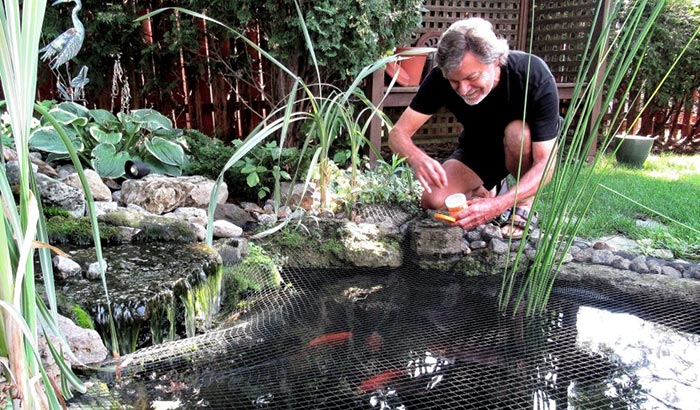
Shopping for the best algae wafers can be tricky, especially if this is the first time you are buying them. To make this task a bit easier, here are some of the things that you need to consider.
Size of the Wafers
The wafers should not be too large that your fish and other bottom feeders cannot finish even one piece. Of course, you can just break the wafer apart, but it would be a lot more convenient if it is already the right size.
You should also take into consideration the size of the fish that you will be feeding. If you are feeding plecos, the wafer should be bigger than its mouth so that it will promote its natural feeding habits. If you will be feeding shrimp and/or snails, the wafers should only be big enough that they can finish one off in ten to fifteen minutes or so.
Ingredients
Aside from algae, good-quality algae wafers should also contain other beneficial ingredients. Look for products that contain kelp, spirulina, and other superfoods. You can also look for products that contain dehydrated shrimp, fish meal, and other protein sources.
Look for products that contain lots of Vitamin C and Vitamin A. These vitamins would make your fish look and behave healthier.
Immediately Sinks
Algae wafers are ideal for bottom-feeding fish and other scavengers, so they need to immediately sink to the bottom of the tank. There are some brands that you need to soak for a bit of water before they settle at the bottom, and they are fine if you do not mind the extra steps.
Does not Dissolve Quickly
Some algae wafers would immediately turn to mush after just a couple of minutes. These are the ones that you need to avoid as they will turn the water in your tank cloudy fast. Because they start to deteriorate quickly, you will not even be able to fish out the leftovers without making the water even murkier.
Frequently Asked Questions
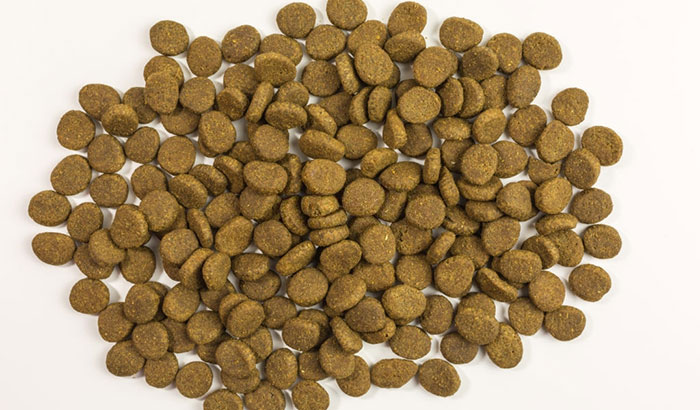
Do Algae Wafers have Calcium?
The best algae wafers for snails contain a significant amount of calcium. This means that crustaceans and mollusks will benefit greatly from eating them.
Do Algae Wafers Cause Ammonia?
The bottom feeders will still produce waste, but if you feed them quality algae wafers, they will not produce that much ammonia. Most algae wafers are formulated to give bottom-feeding fish more efficient digestion.
Conclusion
It would be problematic if you put too many shrimps or plecos in your tank. They might do too good of a job at cleaning your aquarium, thus leaving them with nothing to eat. If this happens to you, you need to procure these algae wafers to supplement their diets.
Algae wafers do not just nourish bottom-feeding fish but they are also great for other fish like loaches and even bettas. Your fish deserves the best algae wafers and it is up to you to find them.
The post The Best Algae Wafers for 2022 appeared first on Aquatic Eden.
]]>The post What to Feed Pleco Fish? appeared first on Aquatic Eden.
]]>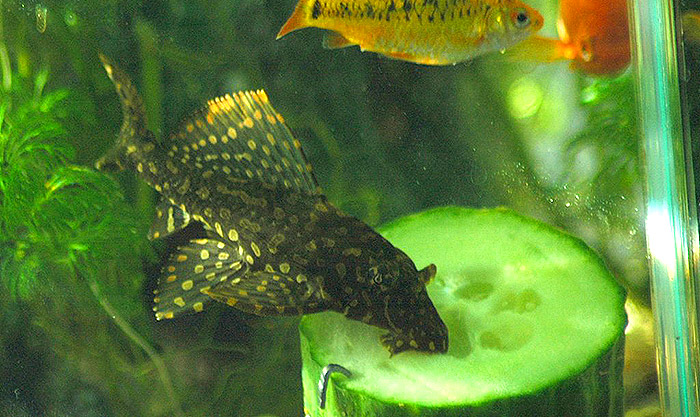
Plecos or short for Plecostomus fish are generally easy to care for, which is why they have become one of the most sought-after fish species by aquarium owners. When considering adding a fish tank at home, many people consider this Central and South American native species. Among their first questions is what to feed Pleco fish.
What Do Pleco Fish Eat?
It is not difficult to feed Pleco fish also known as sucker mouth catfish in tanks. It is important to consider, however, that these bottom-dwelling fish have a higher bulk diet than many other species of fish.
Owners or soon-to-be owners of Pleco fish should be aware that the fish tend to be omnivorous, consuming almost anything you put in front of them.
As opportunistic scavengers, Pleco fish tend to eat anything they find on their journey. If you want them to live longer due to their lifespan of 10 to 15 years, you need to consider the nutrition they receive.
Here’s what they can eat.
Algae
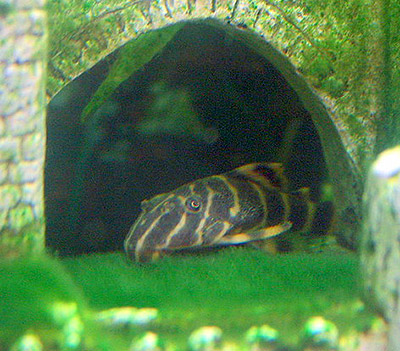
Algae are often eaten by Plecos when they are in their natural habitats. As algae-eaters, they help in cleaning aquariums easily, which is one of the reasons why they are so popular as pets.
Home aquariums do not typically produce enough algae to meet the needs of plecos. As such, owners must find alternatives such as algae tablets available in pet stores.
Fresh vegetables
After algae, fresh vegetables are the staple food of plecos in captivity. You may want to consider these fresh veggies for feeding.
Green leafy vegetables: Lettuce and other green leafy vegetables are good food for plecos. Many recommend the dark leaf lettuces as well as the romaine variety due to their high nutritional value. These leafy vegetables can be blanched by placing them in boiling water quickly. Another way of feeding the pleco green leafy veggies is to freeze them before throwing them in the tank for feeding.
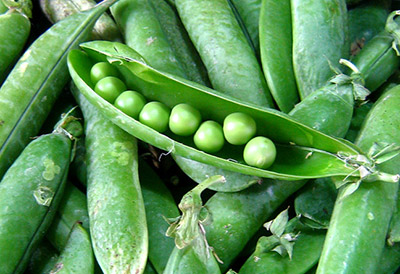
Lima beans and green peas: Many fish keepers also recommend feeding Pleco fish with lima beans and green peas. Make sure to remove the cover or shell on each pea or bean especially if you are feeding a delicate catfish.
Zucchini and cucumbers: Both are classic fresh vegetables that Pleco fish enjoy eating. These two can be sliced if you have bigger fish that need frequent feeding. Make sure to slice these vegetables according to the size of the fish you are feeding. For example, for bigger plecos, you may need to cut the whole vegetable into two to three parts and freeze the excess ones.
Micropredator food
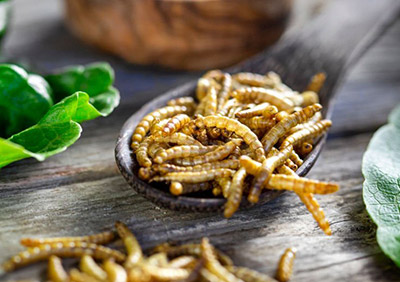
Some Plecos prefer eating meatier food. It is important to note that plecos’ diets change as they grow. Older Plecos prefer meat and usually would prey on weaker, slower, or smaller moving fish.
Aquarium owners who find half-eaten small fish or cannot find the smaller fish in the tank should look at the plecos as the culprit. Plecos, after all, go to every corner of the tank to hunt for food.
Pleco owners can offer occasional meat treats to their pets by giving them crustaceans, small worms, or insect larvae. These are high-protein foods and are highly similar to the small creatures plecos eat in the wild.
You can also give plecos cut-up shrimps or alternatives like shrimp pellets. Make sure to keep the amount of meat you give at a minimum daily given that Plecos are herbivores.
Wood
Wood is a dietary essential for plecos as they will suck and scrape the wood into little pieces, which are great for their digestion or gut health.
Over-The-Counter Food
Pleco owners can also feed their pets with over-the-counter or already prepared and packed food. However, these products are not created equal as some have lower nutritional value than others.
When buying packed and manufactured food, here are the ingredients you should look for.
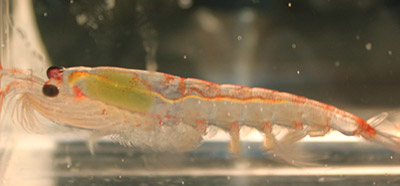
- Krill: Krill is highly similar to shrimps when it comes to nutritional value and even appearance or size. Krill is great for Plecos because of their high Carotenoids, or pigments that are beneficial to the pleco’s skin color.
- Worms: Worms are great sources of protein, and they are easy to digest as well.
- Whole Fish: Whole fish offers both omega-3 fatty aside and high protein content that is beneficial for fish’s health.
- Black soldier fly larvae: This is an excellent protein source.
- Spirulina: As a blue-green alga, spirulina is jam-packed with vitamins and protein, which helps in enhancing the colors of Plecos.
There are also some ingredients to avoid when purchasing already packed food for Plecos.
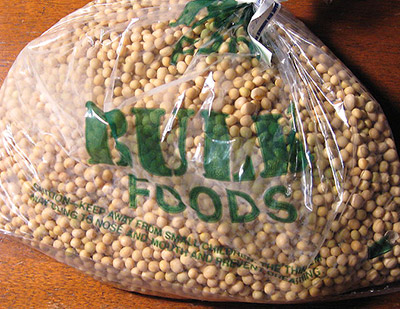
- Fillers: These are ingredients such as wheat and other non-aquatic products that are basically of little to no nutritional value to Plecos.
- Fish meal: These are usually a blend of fish waste such as guts, scales, eyes, and skin and should be avoided by Pleco owners at all costs. Aside from their close to zero nutritional value, feeding plecos with the fish meal can cause them to become ill.
- Soy: Soy is like fillers as it is an ingredient that can harm Plecos. Soy may contain protein but plecos are not adapted to eat this ingredient. Like fillers, they can cause considerable weight gain and even hamper their growth if they consume soy in big quantities regularly.
Conclusion
In the end, the health of your plecos and generally any other fish in your tank depends on good nutrition. Feeding Plecos with food that is nourishing and their digestive system can adapt to is necessary. Aquarium owners must be well versed on what to feed Pleco fish to ensure their good health and long life while under their care.
The post What to Feed Pleco Fish? appeared first on Aquatic Eden.
]]>The post What Human Food Can Goldfish Eat (Alternative to Fish Food) appeared first on Aquatic Eden.
]]>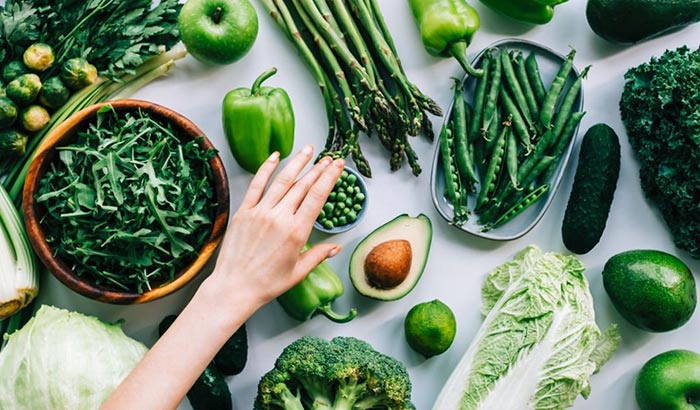
The goldfish is a well-known occupant of fish tanks and home ponds. One of the many reasons for their copious presence in this hobby is their vast food choices; the goldfish is an omnivore, after all. Yes, aside from fish food, domestic goldfish can eat a wide variety of food. “Aside from fish food, what can a goldfish consume?” you might wonder. Or, more specifically, “what human food can goldfish eat?”
Below is a list of human food you can give your goldfish that you can easily find in your home.
What Can Goldfish Eat Instead of Fish Food?
| Vegetables | Fruits | Meat and Seafood | Grain |
| Peas | Grapes | Chicken | Popcorn |
| Carrots | Apple | Beef | Oatmeal |
| Lettuce | Watermelon | Squid bits | Rice |
| Garlic | Orange | Shrimp | Corn |
| Cucumbers | Raspberry | Crustacean bits | |
| Chard | Strawberry | ||
| Cabbage | Pear | ||
| Kale | Mango | ||
| Spinach | Banana | ||
| Broccoli | |||
| Zucchini | |||
| Potato | |||
| Cauliflower | |||
| Pumpkin |
Your goldfish will definitely appreciate the fish food you give, but they most certainly would love a fresher alternative from time to time.
If you want to know what can goldfish eat instead of fish food, then let’s take into consideration that in its natural habitat, the goldfish would eat algae, aquatic plants, bugs, tiny crustaceans, and smaller fish. While the adult goldfish may also feed on little toads, insects, and other smaller creatures.
So if you run out of fish food and you happen, for some reason, to have some of these available, then you have a happy goldfish with a satisfied palate.
Not only can such food satisfy their cravings, but it also has nutritional values that processed food simply cannot provide, or at least to the amount that can make your goldfish look more vibrant and lively.
What Human Food Can You Feed A Goldfish?
Now onto the more helpful details, what human food can you feed a goldfish? It ranges from vegetables to fruits to meat and grain. You must remember to stick with low-fat food options such as protein and carbs.
Feed Your Goldfish Vegetables
The first one on our list is vegetables. Vegetables are the safest food group that you can feed them. Containing many necessary nutrients, certain vegetables add vibrancy to the color of the goldfish, help with quick healing and get rid of parasites and bacteria. While some, such as the cucumber, do not necessarily hold much nutritional value, the goldfish indeed enjoys them.
You can feed your goldfish peas, lettuce, kale, cucumber, and more (a list below is provided). Now, the goldfish do not have teeth in the front of its mouth, so you want to feed it with small, soft bits. You can boil the vegetables and mince them nicely, especially the legumes, root crops, and meat.
With serving your goldfish certain vegetables, here are some reminders.
- Boil hard vegetables such as carrots, broccoli, and potatoes
- Peel off the skin of peas, cucumbers, and zucchini
- Mince the vegetables into small pieces your goldfish can eat
- Feed in moderation
Feed Your Goldfish Fruits

Fruits are a favorite snack of not only humans but of goldfish too. Fruits are great to feed your goldfish every once in a while; they should not be used as an alternative altogether. You can definitely add this to other human food such as vegetables or meat.
Here are reminders when feeding your goldfish fruits:
- Cut the fruits into smaller pieces. Not necessarily tiny as the goldfish will enjoy nibbling on them
- Peel the skin off apples, pears, and mangoes
- Completely remove the seeds of the watermelon and grapes
- Feed in moderation
Feed Your Goldfish Meat

As mentioned above, goldfish are omnivores; they will eat almost anything. But just because they eat what you give does not mean those foods suit them.
Still answering the question, “what human food can goldfish eat?” Feed it chicken bits, beef, and shrimp that come off your table. Be wary of giving them food from the wild as those can carry bacteria and parasites.
Some reminders when feeding meat to goldfish:
- Give only little amounts of chicken and beef. It is not natural for the goldfish to eat chicken or beef in its natural habitat, so it is better if you keep its intake of meat very limited.
- Whether live form or frozen, drop in shrimp in the tank that is smaller than the goldfish.
- Boil and chop the squid into pieces.
- Feed in moderation
Feed Your Goldfish Grain

Last on our list of human food a goldfish can eat is grain. Goldfish not only enjoy grain, but they are healthy for them. The goldfish has high-calorie needs, and grain definitely can fill that up.
A few reminders when feeding grain to goldfish:
- Make sure the rice and corn are cooked soft
- Do not give them bread or crackers (however much the grain content is) as these can swell in the goldfish block the digestive tract.
- Feed in moderation
Use this list to give your goldfish a variety of diets just to change things up a bit. A balanced mixture of these human foods can be your alternative when you run out of fish food.
Last Words
As the saying goes, “you are what you eat” this is true for our pets too. Feed it healthy food, and you get a happy, healthy pet but feed it food not ideal for their dietary needs, then you plunge your pet into a rabbit hole of health problems. Now that we’ve answered the question, “what human food can goldfish eat?” I would assume that your goldfish will be getting its most deserved treat soon, in a moderate amount, of course.
The post What Human Food Can Goldfish Eat (Alternative to Fish Food) appeared first on Aquatic Eden.
]]>The post How to Feed Fish while on Vacation appeared first on Aquatic Eden.
]]>
When you start fish keeping as a hobby, the responsibility of feeding the fish and making them happy inside the aquarium is always a priority. And this responsibility will always be there even if you are away from your home for a much-needed vacation. What will you do to the fish while you are away?
As a responsible hobbyist, you must learn how to feed fish while on vacation. Even if you are far away from home for a few days, there are still various ways to feed your precious fish, even if you are on holiday.
A Fish Sitter Can Help
One way to feed your fish while you are on vacation is to ask the help of a fish sitter. If there is a babysitter, a fish sitter can also take care of your fish while you are away. A fish sitter is someone that will have to attend to your fish needs while you are away from your house.
The possibility of having someone to check on the fish and your aquarium is always an option for you. The fish setter will be responsible for feeding the fish, provided they will be trained before you leave. They can also check the filtration system of your aquarium and the overall health and water quality of the aquarium.
It is also essential to tell and remind the fish sitter not to overfeed your fish. Inform them that any excess amount of food that the fish will not eat can contaminate the water. If you can, you can measure each meal into small containers and instruct the fish sitter to use one single container per meal.
Another option is to use a plastic dispenser that comes with a compartment for the food allocation each day of the week. You can actually put the food requirements before you leave so that the responsibility of the fish sitter is only to give it to the fish. Doing this step will prevent overfeeding since the right amount of food is already allocated per compartment.
Use Vacation Feeders
The simplest way to feed your fish while you are on vacation is to use vacation feeders. Vacation feeders usually come in two types: the first one has the fish food in gel form, while the second type has the fish food built in a calcium block.
These vacation feeders usually come in 2-day, 7-days, and 14-day sizes. So, depending on the days you will be away from your home, you can use the right size that fits your fish’s needs.
But how do vacation feeders work? Each block will slowly dissolve in water to release particles of food that the fish will eat. The best thing about this food is it includes natural ingredients which should meet all the nutritional requirements of the fish while you are away.
However, the vacation feeder only works in an aquarium with a filtration system. Water circulation is vital to dissolve the calcium block into food particles for the fish to eat. Never use this method if you only have a fish bowl or a non-filtered aquarium.
Lastly, when using the vacation feeder to feed the fish, you need to ensure that you put enough for all the fish in your aquarium. However, I prefer to underfeed the ish while I am away instead of overfeeding them, which is a more significant issue without your presence in the house.
Using Automatic Feeders
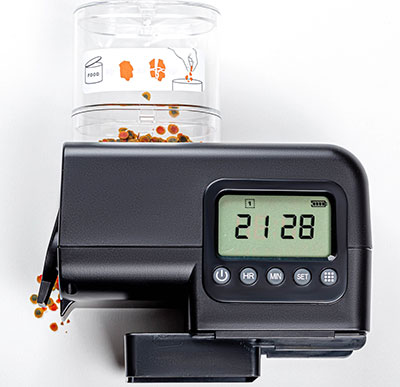
When learning what to do with fish when you go on vacation, you also need to be familiar with automatic feeders. An automatic feeder is a device that automatically feeds the fish using a predetermined time. They usually come in battery-operated or electric plug-in models.
The common thing about these automatic feeders is the presence of timers which will be set to dispense the right amount of fish food throughout the day. There is a part in the opening of the food dispenser that will be adjusted to provide the needed amount of fish food per meal time.
Automatic feeders are programmable so that they can feed the fish once or twice a day, depending on your preference. It can also be set up to work for up to two weeks, depending on how many days you will be away from home.
When you are on vacation, you can easily adjust the timing and the amount of food that will be dispensed. But make sure that the food dispenser of the feeder is complete and enough or the number of days you will be away.
How Long Can Fish Survive Without Food
Another option is not to feed the fish while you are away. But how long? In most cases, the fish in your aquarium will be just fine, especially if the aquarium has been running for quite some time. Fortunately, freshwater fishes can survive for several days without a meal.
Please note that an adult fish can survive a week or two without eating a meal. But the young fish do not have enough fat storage to survive several days without eating. They need to be fed to survive.
However, that does not mean you can skip this fish’s meals while you are away. Again, it is your responsibility that the fish is still well-feed while you are away on a long holiday. Food is not the only concern because you will also need to check on the filtration, the water heater, and the aquarium’s lighting.
Conclusion
You don’t need to starve the fish in your aquarium when you are on vacation. In fact, there are many ways how to feed fish while on vacation, and the methods we presented are very easy to do and follow. The most important thing is to keep feeding your fish while away. They do not need to suffer while you are enjoying your vacation.
The post How to Feed Fish while on Vacation appeared first on Aquatic Eden.
]]>The post Why Do Fish Spit Out Food appeared first on Aquatic Eden.
]]>
Do you ever wonder why do fish spit out food? As pet owners, we often worry about our beloved fish spitting out the foods we give them. It may feel that they are sick or not feeling well, but whatever the reasons behind it are difficult to determine. In this article, we take a look at various reasons why fish are spitting their food. Please check out below.
The Fish are Full
If you are asking why does my betta fish spit out food, there are various reasons for it. It is natural for the fish not to eat or spit out their food if they are not hungry. Once a fish is already full, they will likely still eat but eventually spit their food after. Some fish are very harsh eaters who always eat food even if they are full but eventually spit out the food because they are not hungry.
Having a schedule of eating will help in minimizing overfeeding of fish. It will also help give the fish an idea of their feeding time. When you do this timing schedule, the fish will eventually wait for their time to eat. The plan will also allow them to have enough time to digest the food properly.
The Fish Dislike the Food
Just like humans, fish are also picky when it comes to the food they eat. It is understable that they will not eat or spit out the food if they do not like it. These animals also will choose which is delicious and tasty.
If they do not enjoy the fish you give them, they will likely spit them out. If it happens, this situation needs your intervention as a fish tank owner. You might find ways to change the meals you give to them by providing something different.
Food Boredom
If you are giving the same food over and over again, your precious fish will experience food boredom and will likely spit the food you are giving to them. Fish will feel bored with the foods they eat, especially if it is not tasty and delicious or you tend to repeat the same food for a long time.
Food boredom only happens if you are not changing your meals. This situation is why they need to change their meals from time to time. There are so many varieties of fish foods available, and it is up to you to find the food they like to prevent boredom.
Rotten Food
If you are overfeeding your fish, there is a chance that some excess foods will remain in the water. After some time, this food will become rotten under the water. The moment the fish eat the food again, it will definitely not taste good, and they will spit it out eventually.
The bacteria will start decomposing these excess foods, which makes them become soggy and rotten. And these foods will not taste the same as the fresh food and will eventually be disliked by the fish. For this reason, it is highly recommended not to overfeed the fish to prevent rotten foods inside the aquarium.
The Fish Having Mouth-Related Issues
Any issues that may happen related to the mouth can bring problems with the eating habits of the fish. When their mouth starts to develop tumors, ulcers, and any deformities, they will have a hard time eating, making them spit out some of the food they eat.
There are also times that there is gravel stuck in their mouth, making it challenging to indulge in their meals. If it feels like this situation happens, it is advised for you to check on the fish’s mouth to make sure of its condition. If it is, I advise you to give more delicious and tasty food.
The Fish Comes with Gill Issues
In case you do not know, gills are an integral part of the fish during the eating process. Actually, the fish needs to flex their gills when they eat. It closes out when fish will try to swallow the food they are eating so that it does not come into the air passage.
However, the presence of parasites on the gills will prevent the fish from flexing this part of the body, leading them to spit out their food. There are signs that the gills are infested with parasites, such as the presence of spots, slimy coats, and of course, the parasite.
The Fish is Infected with Illness
The moment you see your beloved fish stop consuming the food you are giving to them, it is likely that they are infected or having a serious illness. But some sick fish will also be tired of chewing their food, which leads them to spit it out.
If you feel that they are spitting their food because of an immediate illness, medication is necessary for treating the fish. You may also look for other symptoms such as very lethargic behavior and slowly swimming.
Poor Water Quality in the Fish Tank
As an aquarium owner, you need to maintain the water quality of your fish tank. Failure to do so will mean causing a lot of stress and even illness to your pets. When the fish is feeling stressed, it tends to affect their eating habits and sometimes make them spit their food.
Just Playing
Not all spitting of the fish’s food indicates that some issues are happening to the fish or its surroundings. There is also a possibility that the fish is only playing with the food, the reason for spitting it.
When the fish is only playing, they will take the food in or out of their mouth. If you see it from happening, it is normal for you to think that it has to have some issues, but the fish is actually fine. Just check if the fish are showing some symptoms of illness and infection; if not, the fish is only just playing.
Conclusion
If you ask why do fish spit out food, there are various reasons for this situation from happening. Some of these reasons include physical issues, water quality issues, and poor food quality. The fish also tends to play with the food, which makes them appear spitting it out from their mouth.
The post Why Do Fish Spit Out Food appeared first on Aquatic Eden.
]]>The post How to Feed Frozen Bloodworms appeared first on Aquatic Eden.
]]>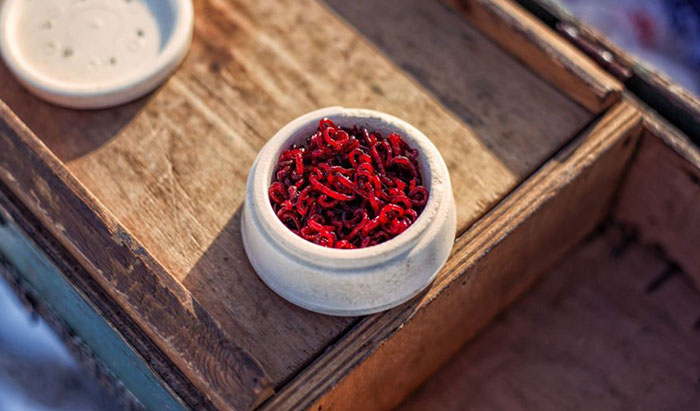
Bloodworms are considered one of the primary foods that meat-eating fish will consume inside the aquarium. This fish food usually comes live, frozen, or freeze-dried and brings nutritional benefits to the fish. Many hobbyists have opted to feed their fish with frozen bloodworm as they are more convenient and last longer, especially when kept in the freezer.
But how to feed frozen bloodworms? You can either mass feed or target feed those bloodworms when feeding to all of your fish. The number of bloodworms and the type of preparation you will do in feeding bloodworms to your fish will be discussed below.
What to Prepare:
- Frozen Bloodworm
- Hand Gloves
- Container
- Tweezers
- Net (For Cleaning)
Step 1: Determining the Correct Amount of Bloodworms
The initial step is to determine the amount of bloodworms you will give your fish in the aquarium. The actual amount will largely depend on the size of the aquarium and the number of fish you own. Although, a good guide is to give not more than anything that the fish can eat in a span of 3 minutes.
The correct amount is crucial because giving more will make the fish overeat, or excess food will remain in the water. This extra amount can contaminate and harm the fish in the future. There are many ways to determine the right amount of food you will give, such as following the instructions in the product packaging or asking advice from fish-keeping professionals.
Doing a Feeding Test
Another way to determine the correct amount of bloodworms to give to your fish is to do a feeding test. This test can be done by feeding your fish in small increments using a plastic spoon or a fork. Keep on feeding the fish until you feel satisfied with the amount of bloodworms you give.
After feeding the fish, you need to keep track of the amount of bloodworms given to the fish. You can check on the remaining frozen bloodworms to determine the amount you have provided. This amount will be the basis for your next feeding activity.
Step 2: Determining the Frequency of the Feeding
After determining the correct amount of bloodworms to be given, the next thing to know is to determine the frequency of your feeding activity with bloodworms. Again, the frequency will largely depend on the type of fish inside the aquarium.
If you own cold water fish, they have the tendency to eat more foods than they need in their body. Nocturnal fish also has different requirements, which should be considered if you own one.
Check the water quality to check if you are giving too much food to the fish. Suppose the quality of the water has deteriorated. In that case, that is a signal for you to reduce your feeding frenzy since it is a sign o uneaten foods that accumulate inside the aquarium.
Step 3: Food Preparation
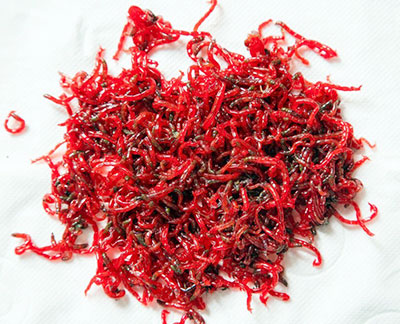
When learning how to feed axolotl frozen bloodworms or any other type of bloodworms, you should know that Bloodworms need to be prepared before it is served to the fish. I heard other hobbyists directly serving frozen bloodworms to the fish, but this way is not applicable to all, especially to those fish species that are sensitive to temperature changes. Unfortunately, frozen bloodworms can change the water’s temperature when put in the aquarium water directly.
The best step is to prepare the frozen bloodworm by thawing it before serving it to the fish. You can use a container filled with aquarium water to thaw the frozen bloodworm. It will only take a few minutes to unfroze the bloodworms and should be ready to be given to the fish.
Step 4: Feeding the Fish
Once the frozen bloodworm is already prepared, you can now start feeding it to your fish. Depending on your feeding goals, you can do mass feeding or target feeding. If you are confident that the bloodworm you prepared will be fully consumed, the entire amount of bloodworm can be poured across the tank.
This step must be done to get equal distribution inside the aquarium. However, if you feel that some fish are not getting their fair share of food, then target feeding can be done. You can use tweezers or any other tools to feed a fish separately.
Step 5: Cleaning After Feeding
After feeding the fish, you must clean your aquarium of all the uneaten bloodworms. Wait for about 5 minutes before starting the cleaning process. This step is crucial as that uneaten food can contaminate the water if not removed. As for those extra bloodworms, keep them in the fridge for future use.
How Long Do Bloodworms Last in the Fridge
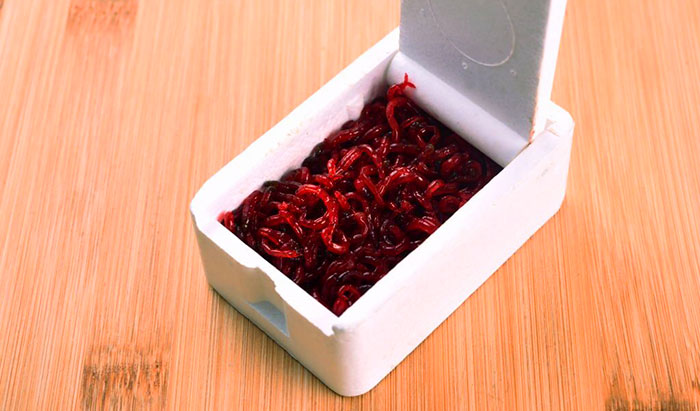
Many fish tank owners like to feed frozen bloodworms with the food’s ability to last for a long time. But how long? A bloodworm will last for about three months if they stay in the freezer. If they are only inside the fridge, they should last around 3 to 4 days.
The longevity of the bloodworms also depends on the type of cold storage you will use in your fridge. If you own a freezer with an auto defrost cycle feature, try to feed the bloodworms within one month. The bloodworm should last for about three months or probably more for freezers without an auto defrost cycle, such as a chest freezer.
Conclusion
Bloodworm is an excellent food option for your fish but learning how to feed frozen bloodworm is a must should you decide to use it for your fish. This fish food is popular because o its convenience and longevity, but you must have the proper storage for this food to last longer.
The post How to Feed Frozen Bloodworms appeared first on Aquatic Eden.
]]>The post The Best Food for Corydoras in 2022 appeared first on Aquatic Eden.
]]>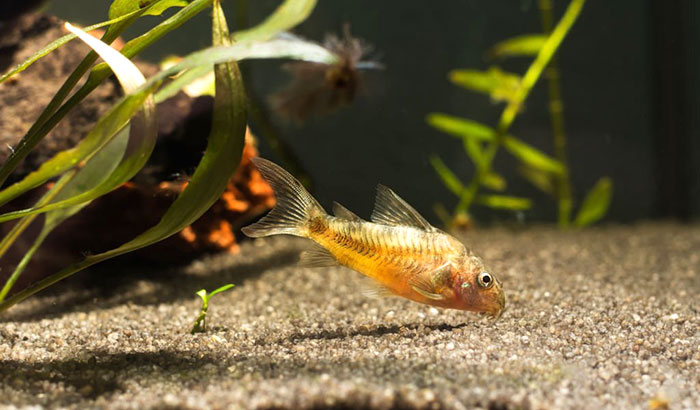
The Corydoras, also known as cory catfish, is a freshwater bottom feeder fish. Most people keep cory catfish to help keep their tanks clean, but that is a disservice to this beautiful fish. If you keep one or two of them in your aquarium, feed them the best food for Corydoras to make them happy and healthy members of your tank family.
The cory catfish are some of the smallest catfish in the world, often not growing longer than 3 inches in length. Their compact size makes them the ideal choice for smaller aquariums, which is why more people love keeping them. As mentioned earlier, most aquarium keepers keep cory catfish to keep algae at bay.
However, cory catfish are quite beautiful fish, and that makes them a good addition to any tank. This article will teach you what to look for when you are shopping for the best cory catfish food so that your fish will always be healthy and happy while getting the chance to live for as long as possible.
Best Food for Corydoras Reviews
1. Hikari Fish Corydoras Catfish Food
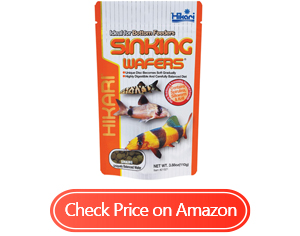
I did not know this when I was starting and I thought my cory catfish was fine with just eating the algae. However, a friend advised me to try the Hikari sinking wafers. I was surprised at the amount of improvement my catfish got. The wafers sink to the bottom of the tank, making it easier for my cory catfish to eat despite being bottom feeders.
My two cory catfish are great at their job, which is keeping the tank free from algae, but they are almost too good. This means that they do not have anything to eat most of the time.
This is why my friend suggested I try this Corydoras catfish food. Not only does this sink to the bottom, but it also contains natural algae and other plant matter that cory catfish need for optimum health.
This fish food also contains spirulina, a superfood known to contain lots of vitamins and minerals. It also has color-enhancing effects on fish. After just two weeks, my cory catfishes’ colors have gotten more vibrant and the patterns on their scales more distinct.
Aside from vegetable matter, this fish food also contains a lot of protein, mainly coming from krill and silkworm. Besides helping fish grow and build more muscle tissue, protein also plays a role in boosting the immune system. Although cory catfish can only grow to about 2 ½ inches in length, this food helped it get there in almost record time.
This food is also easy to digest and it is all thanks to the specific formulation of ingredients. This fish food is not just easy to break down but also contains nutrients and vitamins that promote gut health. In other words, most of the food get digested and absorbed into the fish’s body, so there is not that much waste produced.
However, even though I like this product, I do have some issues in terms of feeding Corydoras in a community tank. This does not sink fast enough. The other fish in the community tank also love this food and they would swarm these wafers before they can reach the bottom. This means only a little bit is left for the cory catfish.
- Sinks to the bottom of the tank
- Contains essential vegetable matter
- Has a lot of protein, like krill and silkworm larvae
- Easy to digest, thereby decreasing the amount of waste fish produce
- Dissolves quickly and clouds the water
- Does not sink fast enough – It gets eaten before it hits the bottom
This product is one of the tastiest fish foods I have ever fed my fish. I notice that they would immediately swarm over these wafers. However, it also plays against my cory catfish as the wafers would sometimes not reach the bottom.
2. API Tropical PELLETS Sinking Fish Food
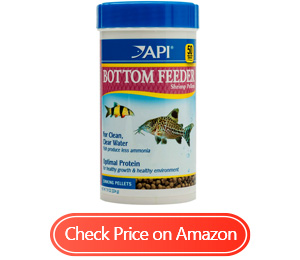
One of the best qualities of this fish food is how fast these pellets sink in the water. These will float for a second or two but will then start quickly sinking to the bottom. This is great for my Corydoras as they are not as quick as the other fish in their tank. When the pellets reach the bottom, they can dine in peace.
These pellets are formulated in such a way that they are easy to digest, so even a sick or young Corydoras can eat them. Because they are easy to digest, the fish can absorb the nutrients contained in them. I have been feeding these pellets to a sick fish and it seems like it will be ready to rejoin the other fish in just a couple of days.
The fact that this product is so easy to digest means that the fish won’t produce quite as much waste as they usually do. This means that the water will remain quite clean without sudden spikes in ammonia and nitrates.
I monitor the water condition of my aquarium weekly and do partial water changes to lower the ammonia and nitrate levels. After using this product, I only needed to change the water every three weeks or so.
This fish food also contains a lot of protein, primarily from freeze-dried shrimp. It helps the cory catfish grow quickly and produce more muscle mass. Even though my fish did not grow longer than 2 ½ inches, they are quite fatter now but still very active.
Now, I am not entirely happy with this fish food because these pellets would quickly get soggy and disintegrate. This food would make the water cloudy for a couple of hours, longer if I have not cleaned the filters yet. This is why I would only feed my Corydoras after the other fish have eaten and I would just put two pellets at a time.
- Immediately sinks to the bottom
- Formulated for easier digestion and nutrient absorption
- Less waste means less ammonia and nitrates
- Promotes fast growth and development
- Clouds the water
- A bit small for full-grown Cory catfish
API once was the name that you can trust when it came to fish food and supplies but their quality has declined as of late. However, this does not mean that this fish food is not any good anymore. It still provided my cory catfish with all the nutrients they needed but I just wish that this did not cloud the water too much.
3. Tetra Algae Corydoras Wafers
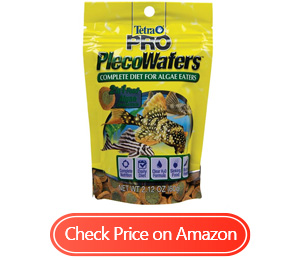
This fish food is specifically for bottom feeders like Corydoras. They are roughly a third of an inch in diameter, which promotes the natural feeding habits of bottom feeders.
My catfish would place their mouth over the wafers and gnaw on them for a couple of minutes. A cory catfish can probably finish a wafer in three minutes, and sometimes faster if they are really hungry.
These wafers contain a lot of algae, which is the green-colored part in the middle. This product also comes fortified with additional vitamins and minerals so that Corydoras and other bottom feeders get all the nutrients needed for optimum health and a stronger immune system. It also has protein to promote healthy growth and development.
Although these wafers come in yellow and green colors, these are not the result of artificial colors. Green is the natural color of the algae and yellow is from the other ingredients. These are safe for your fish, and will not cause any negative reactions. This fish food helps improve the immune systems of my catfish.
Another reason why this is one of the most common foods for cory catfish is that the wafers do not break apart, even after half an hour has passed. Unlike other fish food I have tried before, it would disintegrate after just a minute or two of being submerged.
They would retain their shape up until the fish finished eating them. However, you should fish out any leftovers as they will break apart after an hour or so and will make the water cloudy.
Now, my Corydoras are not picky eaters but they will only eat the green centers of these wafers. I would constantly be fishing out the yellow outer rings after every feeding, so I can safely guess that they are not tasty.
I think that the outer rings are made from extender ingredients. If you check the ingredients list, you will find that there are many extenders.
- Just the right size for Corydoras
- Contains lots of algae for optimum nutrition
- Does not contain artificial colors
- Does not disintegrate easily nor cloud the water
- Not for picky eaters
- Contains a lot of extender ingredients
This would have been much better if it did not contain quite as many extender ingredients. My Corydoras are not that picky when it comes to food but they would usually just eat the algae center and leave the outer rings. This means I have to fish out the leftovers or else they will make the water cloudy.
4. Sera Catfish Chips Wafers Wood Fish Food
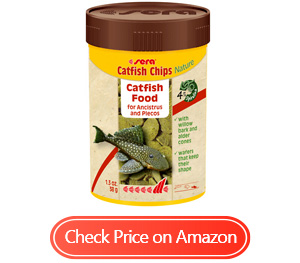
In their natural habitats, bottom feeder fishes like Corydoras would rasp the bark off driftwood. This is important because this is their main source of roughage, which they do not get enough of in most aquarium settings. If you don’t have driftwood in your setup, this is the next best thing for your cory catfish.
With that said, the wood content of this product (willow bark and alder cones) provides the cory catfish with their much-needed fiber. Just like humans, fish need fiber to help make their digestive systems more efficient.
The fiber cleanses the digestive tract and the cleaner it is, the more efficient it is at absorbing nutrients from food. In addition, efficient digestion means the fish will prevent too much waste production.
These wafers sink immediately to the bottom and once there, they will not break apart even after an hour has passed. I have used other algae wafers for bottom feeders and some of them would immediately discolor the water.
Some have made the water so murky that I needed to change the water afterward. This product, even when the fish are gnawing at it, does not cloud the water at all.
I originally intended to feed this just for my cory catfish but I did not expect that the other denizens of my community tank would love this too. I keep my cory cats with a group of tetras and mollies and they would go into a feeding frenzy once they see a wafer hit the water.
Most of the time, the wafers would not even reach the bottom. The reason is that the little fishes would finish them in seconds.
The fact that these wafers do not sink to the bottom fast enough is a problem for my cory catfish. Because of the positioning of their mouths and the fact that they usually stay at the bottom, cory cats could not join the feeding frenzy. I have to wait until the other fish have finished eating before I put another wafer for the cory catfish.
- Contains wood, which is important for bottom feeders
- Does not break apart easily
- Even picky eaters love this food
- Supports the healthy digestion of fish
- Does not sink to the bottom fast enough
- Hard to change to another brand if needed
This is like an addictive drug for all the fish in my aquarium. They could not get enough of this stuff. This was originally quite a problem since I bought the first jar for my Corydoras and this is quite pricey. However, with all the benefits that this product provides, it is a very worthwhile investment.
5. Fluval Bug Bites Tropical Fish Food
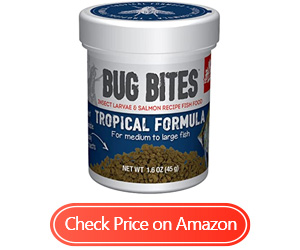
If you are a beginner at fish keeping, then you probably have not encountered a product quite like this before. Unlike traditional fish food, these are not in pellet or flake form. This fish food consists entirely of freeze-dried black soldier fly larvae, which is a good source of animal protein.
Pound-for-pound, this product contains more protein than beef. All your fish, not just the Corydoras, will benefit a lot from eating this.
Aside from high amounts of protein, this product comes fortified with Omega-3 and 6 fatty acids. These nutrients are essential for preventing the oxidation of the cells of your fish.
My cory catfish now have shiny scales, vibrant colors, and distinct markings. They almost look nothing like they did a couple of weeks ago when I first started feeding them this product.
These black soldier fly larvae are not just for bottom feeders. All the fish in your community tank will love them. This fish food sinks slowly, so the other fish will have time to grab them while in the middle of the tank. This always causes feeding frenzies among the small fishes in my tank, and usually, none reach the bottom.
Don’t worry about where this product came from. The manufacturers did not go out looking for carcasses of dead animals to harvest the larvae. These black soldier fly larvae were all grown and cultivated inside a clean and controlled environment. This means there is no risk of parasites and other types of contaminants ever harming your fish.
As much as I do love this product, it is not without faults. For starters, these are small, so you have to feed your cory cats quite a lot for them to feel full. Also, because they sink so slowly, the other fish in the tank would eat them all, leaving nothing for the bottom feeders. Feed these to your Corydoras at night when the other fish are not as active.
- Contains protein-rich black soldier fly larvae
- Has Omega-3 and 6 fatty acids for healthier skin and scales
- Sinks slowly so all kinds of fish can eat it
- The black soldier fly larvae are cultivated in a controlled and renewable manner
- A bit small
- Needs to be manually placed at the bottom for cory catfish
Although not meant for bottom feeders, my cory catfish did benefit a lot from all the nutrients from these little bug bites. It might take a bit of effort to make sure that this slow-sinking food reaches the bottom, but it will be worth it. My cory cats have grown so much since I started feeding them this product and they haven’t been sick since.
6. Repashy Community Plus Supper Foods
You do not need to buy separate foods for your bottom feeders, it is definitely one of the most suitable foods for Corydoras and other community fish. First, it sinks to the bottom and adjusts its density by adding or decreasing the amount of water used in its preparation.
I have a rather big community tank and once this hits the bottom, it is everyone for himself. All the fish, including the snails and shrimps, would flock to the gel block to get a piece.
My Corydoras just love eating this fish food and it may have been the reason why they suddenly grew in length. I have been feeding this product to my community tank for a couple of weeks and the Corydoras were maybe a month old around the time.
Now, the catfishes seem like they reached their maximum length even though they are not technically mature yet, which is impressive, to say the least.
As mentioned earlier, you are the one who is in charge of what this product will look like. This fish food comes in a powder form and you prepare it like how you would “cook” Jell-O.
Only you can dictate how much water you want to put in it. It can be as firm or soft as you want it to be. I like to make my gel fish food a bit firm because it will remain submerged in the tank anyway so it will get softer.
The thing that I liked the most about this product is, unlike dry fish food, this does not cloud the water. Even if you leave a gel block in the tank for hours, it will not disintegrate and make the water cloudy. However, in my experience so far, this food does not last more than five minutes before the community fish would gobble it all up.
Now, if you are a newbie, then you would probably want to skip this product until you gained a bit of experience. First, this is not usable straight out of the box. You will need to cook this first, and not that many people are willing to do that. Also, if you have a weak stomach, the smell might seem a bit repulsive (it smells like bad wet dog food).
- This is food for all the members of a community tank
- Provides a lot of protein and nutrients
- Firmness is adjustable
- Does not cloud the water
- Needs a bit of preparation
- Smells disgusting when you “cook” it
I had my doubts about this product at first but once the fish knew this was food, there was no stopping them from eating. Although this product needs a bit of prep work, the resulting “gel” food does have a lot of advantages compared to dry fish food. One is that it induces a feeding frenzy in the tank the moment that it touches the water.
7. Invert Aquatics Corys Micro Mix
This product is a mix of wafers and pellets, both of them sink to the bottom of the aquarium. This makes it ideal for bottom feeders like cory catfish, plecos, shrimps, and snails.
I keep a couple of shrimps with my cory catfish and the little ones love this fish food, especially the pellets. The Corydoras, on the other hand, love the wafers, meaning they do not need to fight over the food.
The wafers are fortified with spirulina. Spirulina is a superfood mainly because it contains a lot of beneficial vitamins and nutrients. This ingredient specifically helps improve the overall health of the immune system, making the Corydoras more resistant to illnesses. It also helped enhance the color and vibrancy of the Corydoras.
Speaking of nutrition, this product contains all the vital vitamins and nutrients that Corydoras need. Not only does this product serve as nourishment but it is also like a food supplement, providing all the things that the fish are not getting from their usual food. If you are keeping shrimps and/or snails, you should still feed them with fresh vegetables most of the time.
Another nice thing about this product is that it provides a lot of value. You are getting quite a lot of pellets and wafers for the price, so you can be sure that one package can last for a long time. I have been using the same bag of fish food for almost two months and my fish have consumed just roughly half of the contents.
Now, here are my issues with this product. First, you should fish out the leftovers right after the Corydoras finish eating, or else it will cloud the water.
Secondly, the pellets tend to settle to the bottom of the bag, so whenever I grab some food for the fish, I would only get wafers. I have to turn the bag over if I want to get pellets. This would have been much better if they were sold separately.
- Designed specifically for bottom feeders
- Fortified with spirulina
- Contains all the nutrients that cory catfish will need
- Great value for money
- Clouds the water
- The pellets settle at the bottom of the bag
This is a treat that your cory catfish rightfully deserve. However, you should only treat this as a supplement and still feed your fish with fresh vegetables occasionally. Although this contains all the nutrients my cory catfish needs, it does not seem to go beyond that. However, considering the price, this product does provide a lot of value.
8. HARTZ WARDLEY Shrimp Pellets
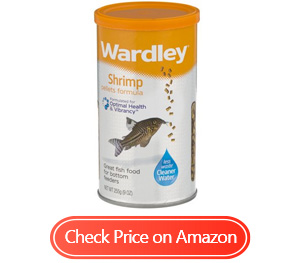
The biggest selling point of this product is that it contains real shrimp meat and lots of it. The main protein source of this fish food is freeze-dried shrimp, and according to the ingredients list, this composes 40% of the product.
It also contains fish meals, so this product is rich in protein. You will be surprised at how much your Corydoras can grow after just a couple of weeks of eating this stuff.
Another thing that makes this ideal for bottom feeders like Corydoras is that it sinks immediately to the bottom as soon as you drop these pellets in the water. This means the Corydoras do not have to compete with the other fish in the tank, although my tetras would also pick on the pellets that settled on the bottom of the tank.
Once the pellets reach the aquarium floor, my Corydoras would immediately pounce on them.
As mentioned earlier, this is not just for bottom feeders. I keep a couple of mollies and tetras with my two cory catfish, and they all love eating this product. I think it is the smell that makes them go into a feeding frenzy. Even my mystery snails and shrimps love this (yes, shrimps are cannibals), so there are rarely any leftovers to clean.
What I liked the most about this product is that it does not cloud or discolor the water. I have had a couple of pellets remain in the tank for well over an hour and they remained intact. However, most of the time, there are no leftovers to clean anyway. My cory catfish would finish eating this in just a couple of minutes leaving nary a trace.
I would have loved this product better if it came in a bigger can. The small can that this product comes in would usually just last me a month or so. It might also be a bit cheaper if the can was a bit bigger. The smell is also a slight issue, but it is not that much of a deal-breaker.
- Contains freeze-dried shrimp
- Sinks immediately in water
- Even picky eaters love this
- The pellets retain their shape and do not cloud the water
- Small packaging
- It kind of smells, but not too strong
The smell is not too overbearing, and you can kind of get used to it after a while. Although I do hope that this came in a bigger can since my fish love this product quite a lot. The protein content of this food is so high that my cory catfish almost doubled in size way before they should have.
What to Look For When Buying a Food for Corydoras
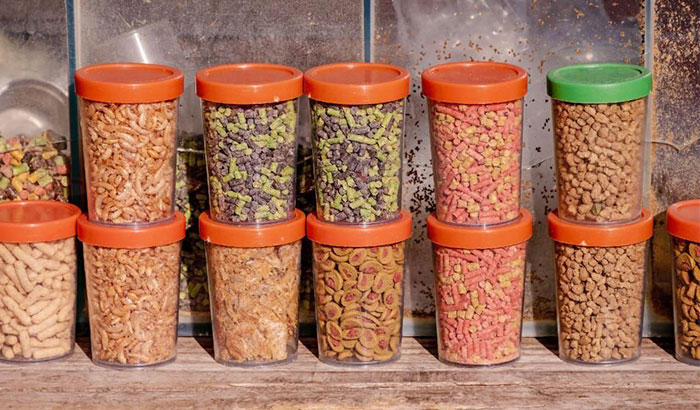
If you are worried that you will not be getting the top food for your cory catfish, you can use this as a guide while you are shopping.
Immediately Sinks
Corydoras are bottom feeders, which means their mouths are at the bottom of their bodies. Because of that, they cannot eat floating food. Also, bottom feeders cannot swim upside down and they usually just stay at the bottom of the tank.
You should buy the best sinking pellets for Corydoras that will immediately settle on the bottom of the tank. This will prevent the other fish in the community tank from eating the food before it can reach the bottom. The Corydoras will be able to eat without competing with the other fish this way.
Does not Disintegrate
Most Corydoras are slow eaters, so you should get a product that does not break apart in the water. The fish food you get should at least be able to hold the shape up until your cory catfish finishes its meal.
You would not want fish food that leaves your tank cloudy after every feeding. Not only does this make the tank look unhealthy but it will also cause serious algae bloom.
Easy to Digest
Although cory catfish and other bottom feeders, you should still give them food that is easy to digest. This is especially true if there is not any driftwood in your tank. Cory catfish need to gnaw on driftwood so they can get enough fiber in their diet.
When shopping for fish food, look at the ingredients list. Make sure that the product contains at least some form of vegetable matter. This will help improve the efficiency of their digestive system. This means they can absorb more nutrients from the food and they will also create less waste.
Contains lots of Protein
Protein is important because it will help repair the damaged muscle cells in the fish’s body and help make new ones. This means protein will help your fish grow and recover from injuries and sickness.
Most fish foods contain fish meal as the main source of protein but if you want the best for your fish, go with a product that contains shrimp or fly larvae. Those ingredients are just chock-full of protein that your fish will grow at a staggering rate.
Color Enhancing
Unlike plecos, some cory catfish have brighter colors, like panda cory catfish. You can enhance their look by choosing food for cory catfish that contains color-enhancing ingredients. Some of the ingredients that you need to keep an eye out for include spirulina, ascorbic acid, and shrimp.
Frequently Asked Questions
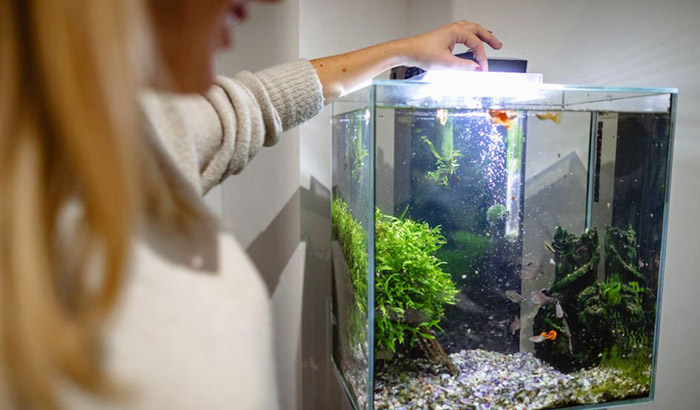
Do Cory Catfish eat Algae Wafers?
Yes, they do. Cory catfish are bottom feeders, so their diet mainly consists of algae, but they can also eat tree bark, mealworms, and anything else the other fish eat.
How Often do you Need to feed Cory Catfish?
You only need to feed cory catfish and other bottom-feeding fish one or two times a day. Also, make sure to only feed them with enough food that they can finish in just five minutes.
Conclusion
Corydoras, also known as cory catfish, are among the most beautiful breeds in the catfish family. Although they are quite small as they typically do not grow more than three inches, Corydoras can eat a lot of algae. This means that they can keep the glass and water in your aquarium clean.
However, you should not just expect the Corydoras to eat algae all the time. You should give your cory catfish the best food for Corydoras so that they can live for as long as they can and remain as healthy as they can be.
The post The Best Food for Corydoras in 2022 appeared first on Aquatic Eden.
]]>The post What are Fish Flakes Made of (Their Nutritional Benefits) appeared first on Aquatic Eden.
]]>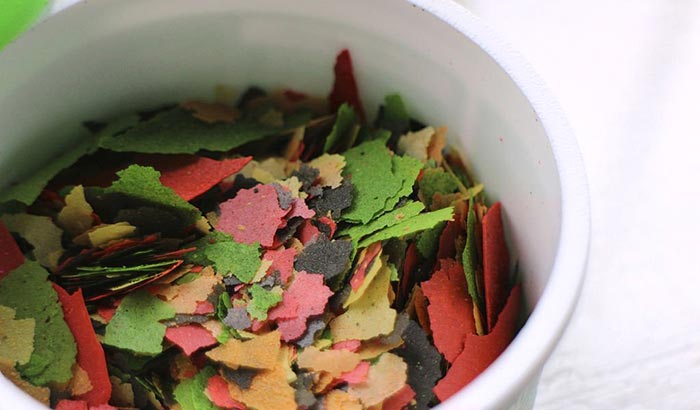
Have you ever wondered what are fish flakes made of? Did you ever stop to ask what’s in the fish flakes before dropping them into the tank? As a fish keeper, you should know the best food to give your fish. Know what benefits it has for your fish, or maybe learn how to make it yourself.
Common Ingredients
To give your fish the necessary food for growth, learn to choose the food. The critical nourishment for the fish’s growth is amino acids and fatty acids. You can find these, along with many other vitamins and minerals in fish flakes.
Fish flakes are generally made of smaller marine animals with high bone density and oil content. These fishes are not what you see in the market. Fish used to make fish flakes are not usually consumed by humans.
Initially, the manufacturers dried the marine animals out in the sun. Once dry enough, they were pounded down then cut into flakes. However, this old process fails to provide quality on par with modern methods.
The modern method uses machines that cook the fish first. Then, they are pressed to remove the excess oil and dried. Lastly, they are grounded up and are turned into flakes by the machine.
Today, with the advent of technology, more and more aquatic life is used to make fish flakes. If you look for fish flakes or other fish foods in the market, you might notice that they have shellfish or plants in the ingredients.
Nutritional Content
The amino acids that make up protein from fish are an essential nutritional value of fish flakes. Protein provides your fish.
The carbohydrates and fatty acids, on the other hand, give your fish their required energy. And vitamin B boosts their immune system.
The other vitamins and minerals in fish flakes also include but are not limited to Vitamins B1, B2, B6 and B12, Iodine, Zinc, Niacin, Manganese, Biotin, Calcium, Potassium, and Magnesium.
Fish flakes made partially or wholly of plants can offer similar nutritional content but at lower levels. Though these have dietary values of their own, they are insufficient to provide your fish with the necessary vitamins and minerals for growth.
They are okay to feed your fish for a time, but eventually, your fish will need fish flakes with high nutritional content. However, keep in mind that there are herbivore fish that can only intake vegetables.
Additionally, keep in mind that fish flakes are for fish that swim near the surface and in the middle of the water. They become nutritionally worthless as they slowly sink and dissolve in water.
Understand the needs of each of your fish before deciding which fish flakes to feed them. As a responsible fish owner, you should prioritize the health of your fish.
How to Make Fish Flakes at Home
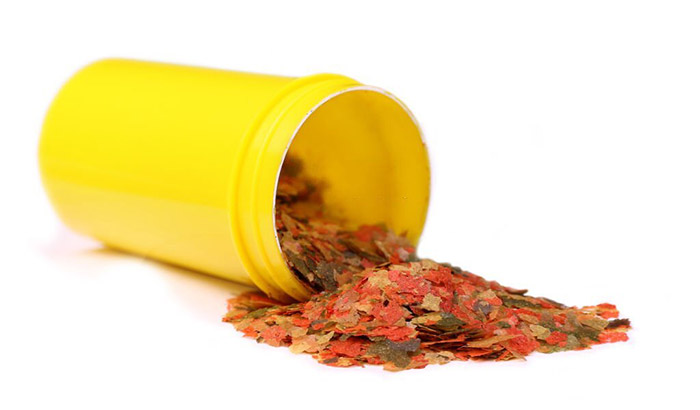
If you want to be extra sure on what are fish flakes made of. You can try making them yourself.
Ingredients Needed
You can make fish food using various methods, such as using gelatin or turning them into ice cubes. To make fish flakes specifically at home, you can use ingredients you will find in the market.
- Fish and/or shrimp
- Vegetables use any 2 – 4 of your choice (optional)
- Oatmeal (optional)
- Fruits (optional)
Process
Basically, try to replicate the process the machines use to make fish flakes. Steam the fish and hard vegetables to soften. Press them gently using a paper towel or a clean cloth. Then dry them out in the sun along with the fruits.
Make sure they all get dry enough for grounding. (Skip to the cutting of the fish into flakes if it is the only ingredient you used). Put them in a blender and grind them all. To make them stick together, take the oatmeal, put it in the blender, and add some water.
Carefully add the water so the mixture will not get runny. You want a thick but spreadable consistency. Next, get a tray and layer it with baking paper. Then, spread a thin sheet of the mixture onto it. You can now bake it at low heat for a couple of minutes, just enough to remove the moisture.
Finally, you can cut them into flakes and feed them to your fish.
Conclusion
Give a lot of thought to what you feed your fish. Know what are fish flakes made of and their nutritional benefits to your fish. It is especially hard to tell if a fish is sick or in need of nourishment.
You don’t want to find that they are sick when the illness is too far gone. Feeding your aquatic friends with fish flakes containing proper nutritional values can quench their hunger and add to their robust health.
The post What are Fish Flakes Made of (Their Nutritional Benefits) appeared first on Aquatic Eden.
]]>The post Do Snails Eat Fish Poop? appeared first on Aquatic Eden.
]]>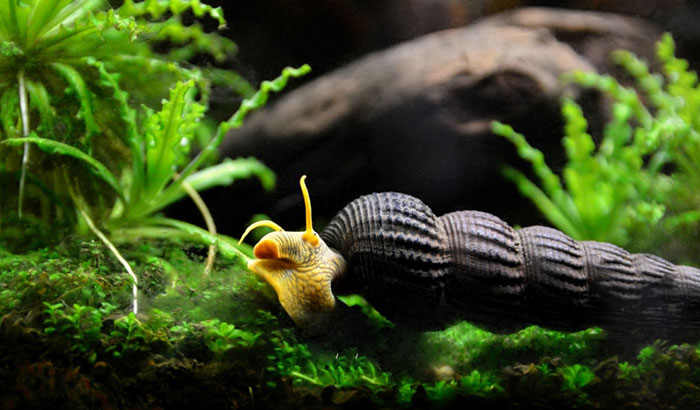
There are some misconceptions about taking care of your pet fish. Some of them are outrageous. Some are perfectly plausible but do not have any actual basis on fact. Some of them are scientifically baseless.
These kinds of things are expected. Fish-keeping, as an activity and a hobby, has been around for over a millennium, even earlier. People are having fish as their pet even before the advent of science and scientific knowledge. It is thus expected that people rely heavily more on experience and anecdotal evidence than scientific facts. This is true not only of fish-keeping but any other activity.
The idea that snails eat fish poop is a popular idea among fish-keepers. Most people observe that snails eat what seems to be poop and other impurities that could be found in a fish tank.
There is a great deal of testimonial evidence to this idea. Nowadays, however, information and “facts” can easily spread and be verified. We ask now the question: Do snails eat fish poop?
Do Snails Eat Fish Poop? Dispelling the myth
That most people and fish-keepers believe that snails do eat fish poop arises from the observation that indeed, snails do eat some “impurities” that abound in a fish tank. Snails, though, do not eat fish poop. It is also questionable whether other marine animals and organisms, such as shrimps, other fish, and the like, actually do.
This popular misconception can be attributed to the way snails move inside an aquarium. It seems that they are eating fish poop. What the snails do eat, are other organisms such as algae, that somehow found their way into the fish tank. They are also eating leftover foods that are for the consumption of your pet fish.
What Snails Do in a Fish Tank?
Those algae and leftover foods are the “impurities” you see when you look at the aquarium. Those are the things that snails look for, or scavenge from the gravels, rocks, and sand. They are looking for those things to eat. They are not looking for fish poop. Sometimes, they do consume dead fish, especially those who are very small and already decomposing in the water.
This is not to say, however, that fish poop does not find its way to the snail. In a way they do, but only as a consequence of eating those things mentioned above. As a matter of course, snails do not look or scavenge for fish poop to eat them. Snails probably consume them only in the process of consuming other organisms or materials.
By eating those things and “impurities”, snails contribute to the overall balance and equilibrium of the fish tank. It helps clean the aquarium of those things and helps in slowing down the process of water hardening. Though they do not eat fish poop, snails help in clearing the aquarium water of some waste that may disturb the balance of the aquarium’s ecosystem.
What Happens to The Fish Poop in The Fish Tank?
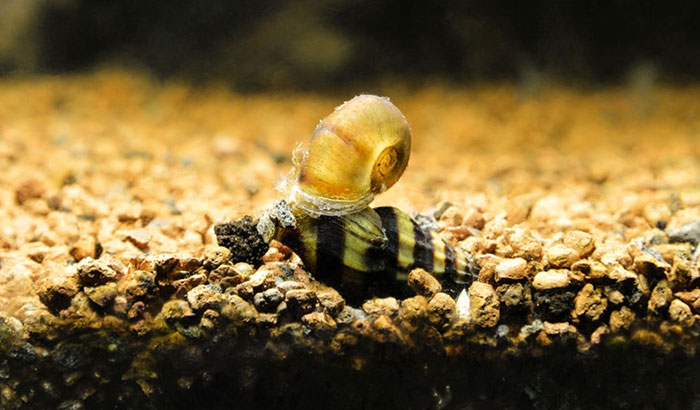
Fish poop is undigested food, composed of organic and inorganic matter. They are composed of carbons and other minerals. Those fish poop eventually mix with aquarium water. The poop will eventually be dissolved into smaller particles. These particles will contribute, eventually to water hardness. The more particles dissolve into water, the faster the process of water hardening.
That is why, for most fish-keepers and enthusiasts, you must keep a tab on both the ph level and water hardness. Since your pet fish, as a living organism, will release organic and inorganic matter into the aquarium water, water hardness will eventually increase, sooner or later. How fast, and when, is the only question, and it depends on other factors as well.
How do You Remove Fish Poop from Your Aquarium?
Organic waste does not dissolve easily into the aquarium water. As such, it may stay in the aquarium water for days. Those fish poop may be trapped in the gravel, rocks, and sand on the aquarium. Or they may also be trapped in some ornaments or décor.
The amount, volume, and thickness of fish poop will eventually vary. Overall, however, they may contribute eventually to water hardness, so you must clear the aquarium of fish poop and other waste, organic or inorganic.
You can use a vacuum to siphon the fish poop and other waste materials from the gravel, sand, or ornaments. You can directly put the vacuum into those objects to clear them of waste products. Just make sure that the vacuum does not contain any chemicals that might harm the fish, or may cause an imbalance in water hardness and ph level.
If the fish poop and other waste materials are hidden deep into the gravel, rock, and sand, you can rake those objects, to make the fish poop and waste materials go to the surface water. Then you use a vacuum to siphon those waste products.
An even better, but more meticulous way of removing waste materials from your aquarium, is to clean the aquarium directly. Remove the fish and put them in a temporary, but, safe tank. Then remove all the ornaments, the big gravels, and rocks, and scrape and remove the fish poop. Rake the sand to make the waste products and fish poop float on the surface, then siphon them.
To save time, you can do the removing of fish poop and waste products while cleaning the fish tank. You can also do the same if you decide to replace the water due to issues of water hardness or ph level.
Conclusion
Do snails eat fish poop? The idea snails eat fish poop is a popular misconception. It does not mean though, that the snails are not beneficial to the aquarium as a whole. By eating algae and other organisms, snails do contribute to the overall balance and equilibrium of the environment in your fish tank.
Instead of relying on snails and other popular misconceptions, the best thing you can do to clear your aquarium of fish poop, waste products, and other ‘impurities”, is to clean it. It is not that difficult and time-consuming. All fish-keeping enthusiasts must have the time to clean and take care of their aquarium every once in a while, all for the benefit of the pet fish.
The post Do Snails Eat Fish Poop? appeared first on Aquatic Eden.
]]>