The post Why is my Fish Tank Filter So Loud appeared first on Aquatic Eden.
]]>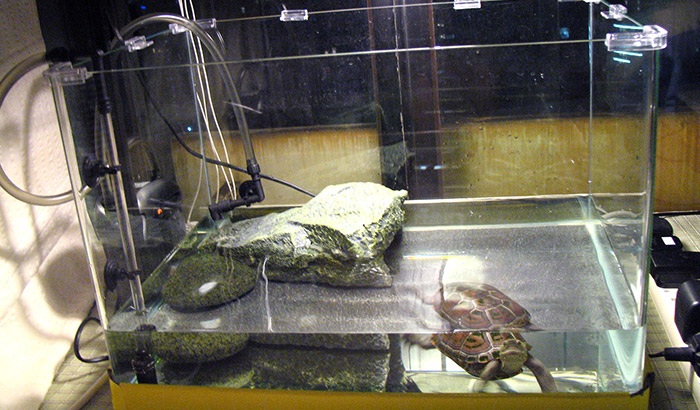
An aquarium filter plays a vital role in maintaining the cleanliness of the aquarium water. However, there will be moments when the fish tank filter produces a sound that is so loud, making it annoying to hear.
So, why is my fish tank filter so loud? The primary reason behind it is that too much dirt accumulates inside, resulting in the filter creating a loud noise. The filter can also generate a sound when the water level is insufficient. Other things that cause that tank filter to produce a loud noise are listed below.
Fish Tank Filter is Dirty
The primary reason the filter is so loud is the accumulation of dirt inside. When the filter is dirty, it will start producing loud noises that may be irritable to any fish tank owner. When you fail to clean the filter for a long time, there is a tendency for the dirt to accumulate inside, which causes noise.
What you will do is unplug the filter and take it out of the aquarium. Then, you can remove the filtration media and remove all the dirt that accumulates inside. You can rinse it with clean water to remove all the dirt.
Since there are various types of aquarium filters, cleaning it will all depend on the type of filter you own. So, you will check the product guide and follow how to clean the filter you are using in the aquarium.
However, when cleaning is not enough and your filter is too old, there are other options that you can do aside from cleaning. The best thing to do is replace your old filter with a new one. This situation applies when your filter is still noisy despite the cleaning you have done. The filter is probably too old, which means replacement is essential for the filter to work efficiently without noise.
The Water Level Has Dropped
Another reason for the fish tank filter to become so noisy is when the water level has dropped. The primary reason behind the water level dropping is evaporation. The high evaporation rate usually happens when the temperature is high during the summer.
When the water falls to an undesired level, it can cause the fish tank filter to get noisy. What you can do to eliminate the issue is to raise the water level immediately. The most efficient way is to make the water level barely touch the output of your fish tank filter.
Defective Impeller
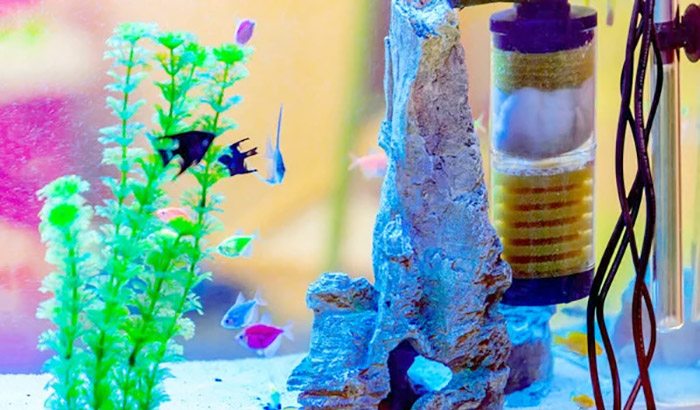
A fish tank filter is basically composed of a pump, canister, and filter media. When you check where the water is brought in inside the canister, you will see an impeller responsible for moving the water to and from the filter using a centrifugal force.
Sometimes the impeller can be broken because of the presence of too much sand causing it to rot over time. Another way for the impeller to get broken is when a fish unintentionally swims inside because the filter screen fell off accidentally. This situation can also cause the impeller to be broken, which usually creates noise coming from the tank filter.
To rectify the issue, you will need to check the impeller’s status. If the impeller is not broken, then you can actually clean it while applying a lubricant to eliminate the noise. Vaseline and silicone oil are used to lubricate the impeller to make it work perfectly again.
If it is broken, the best way is to look for a similar impeller online as a possible replacement. However, this part of the fish tank filter is very difficult to find, which means it is possible that you will be unable to find a replacement. If it happens, the next best thing to do is replace your filter entirely.
The Fish Tank Filter Has a High Flow Rate
Another reason why the fish tank filter is so loud is when it is set to a high flow rate. If it is, the fish tank filter will produce a loud sound because it will require all the parts of the filter to move quickly, resulting in loud noise.
The solution to this issue is to lower the flow rate setting. But you must set it properly because it can also affect the quality of its cleaning. During the adjustment, it will be better for you to put it slightly lower but not too low. The desired setting is the higher setting that will not produce any sounds once the filter works.
The Fish Tank Filter is Vibrating
Another reason why the fish tank filter is so loud is when it is constantly vibrating. Now, there are many reasons why it happens. First, when a part inside the filter is broken, it will result in its efficiency and sudden vibration.
Another reason for the vibration is the filtration media is clogged up, causing the filter to vibrate because it is not working well. Also, when the filter is rattling the wall, it can produce a vibration which will result in loud noises.
When a part is broken, it should be replaced immediately. When the filter media is clogged up, which results in vibration, the best way to eliminate the issue is to clean it. You can remove any debris or particle that is stuck inside the filter media for it to work efficiently again.
Conclusion
Why is my fish tank filter so loud? There are many reasons why it usually happens. But the primary reason is when the filter gets dirty, especially in the filter media. The fish tank filter will also be noisy if some parts are broken, making it not work efficiently. A high flow rate and low water level can also make the fish tank filter loud.
The post Why is my Fish Tank Filter So Loud appeared first on Aquatic Eden.
]]>The post The Best Aquarium Vacuum Cleaners for 2022 appeared first on Aquatic Eden.
]]>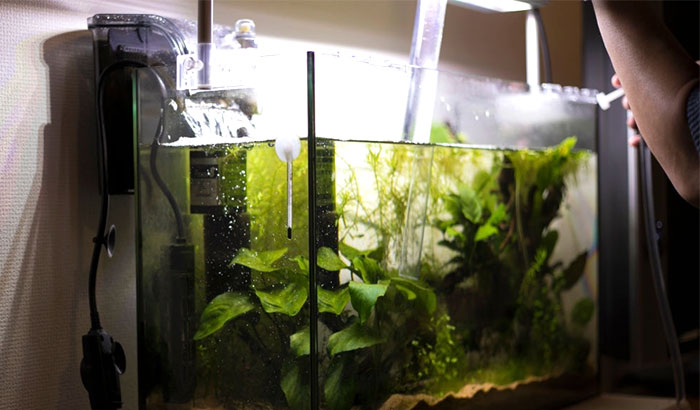
Having a good aquarium filter is just one of the components that you will need to keep your aquarium clean. To remove the dirt and debris sitting on the bottom of the tank, you will need the best aquarium vacuum cleaner. This type of vacuum cleaner is different from its electronic appliance counterpart.
An aquarium vacuum for sand is not technically a “vacuum” cleaner since it does not use a vacuum to create suction. It uses a siphon to suck up the water and the gunk at the bottom of the tank and in between the gravel and remove it from the tank.
Aquarium vacuum cleaners are not new. They have been around for many years. This means you will have a large variety of brands of top aquarium gravel vacuum cleaners to choose from, which is a difficult task in itself.
However, this article will try to make it easier for you to choose an aquarium vacuum cleaner by teaching you what to look for.
Best Aquarium Vacuum Cleaner Reviews
1. Laifoo Aquarium Siphon Vacuum Cleaner
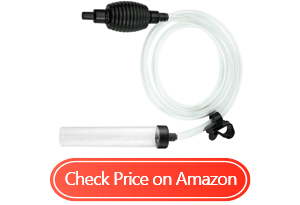
If you have been keeping aquariums for as long as I have, then you probably hated using rubber hoses to siphon water from the tank into buckets. This is most likely because you hate getting a mouthful of disgusting tank water in your mouth when you are trying to get the water to flow.
This will not be an issue with this option for the most well-known aquarium vacuum for sand. The reason is that you only need to pump a rubber ball to start the water flow.
Even if you own a large tank, you will have plenty of hose to work with. This siphon has a 7-ft long rubber hose so you can reach the bottom of 100-gallon tanks easily. It also comes with a handy clip that secures the outlet onto the edge of the bucket. This prevents the other end from accidentally spraying water all over your floor.
I always use this whenever I am doing partial water changes. This helps clean the tank and removes some of the water in it. The cleaning attachment also helps clean the gravel without kicking up the sand and clouding up the water. Moreover, it prevents the small fish from getting sucked up into the hose.
This device is made from high-grade elastic plastic, which is perfectly safe for fish and aquatic plants. However, I highly recommend rinsing the hose under running tap water to get rid of any mineral oils that might have remained on the surface after the manufacturing process.
Although this device is quite handy, I did not like the filter attachment. I have a tank that holds a couple of goldfish and the filter gets clogged easily whenever I try to clean up the mess that my fish made. The filter is simply too fine to let the solid waste created by bigger fish.
- Easy to use
- Has a long 7-ft hose
- Cleans gravel without disturbing the fish
- Durable and safe for fish
- The filter is too fine and clogs easily
Although this best fish tank vacuum is technically a siphon that has a sieve to catch gravel and other coarse aquarium substrates, it still did a good job of cleaning most of the dirt and waste that settled at the bottom of my tank.
2. KASAN Aquarium Gravel Cleaner
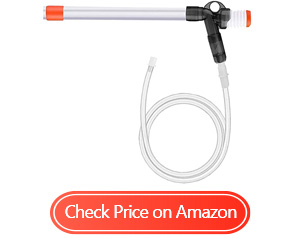
The thing that I hated the most when using some battery-operated aquarium vacuum cleaners is that you will need to dip your hands in the water (an entire arm for bigger tanks) to reach the corners of the tank. This device has a long handle that enables you to clean your tank thoroughly but with the added benefit of keeping your hands dry.
This is one of the easiest to use of all the battery-operated fish tank vacuum cleaners I have tested these past couple of years. You can see the priming pump at the handle of the gravel cleaner so you can immediately start cleaning once the water starts flowing. The pump is efficient as it would only take a couple of pumps to get the water going.
Another nice touch is the inclusion of additional attachments that come with the set. There is an extension tube for when you need to clean a large tank. There is also another one that you can use for sucking up general debris. Moreover, there is a wide one that is for finishing cleaning.
Aside from cleaning, you can also use this fish tank gravel cleaner vacuum for doing water changes. Just using the siphon without the end attachments is ideal for doing partial or full water changes. This is a great way to empty a fish tank.
However, if you are going to fill it back again, you will need to elevate the buckets to well above the top of the aquarium. If you don’t, then the siphon would not work.
I would have loved using this tool more often if only the priming pump was a bit more durable. After using it just one time, I can already tell that the pump uses flimsy plastic for its construction.
In addition, after using it for a month (partial water changes every week), the pump had a small tear, which made it worthless. Thankfully, I was able to repair it temporarily using a bit of tape.
- Has a long handle to help keep your hands dry
- Easy to use
- Comes with several attachments for added versatility
- Useful for water changes
- The pump is not that durable
This is the perfect aquarium vacuum cleaner for those who do not like submerging their entire arm into their tanks. With this device, aquarium cleaning is much easier and more enjoyable.
3. COODIA Vacuum Gravel Cleaner
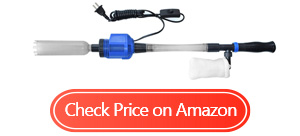
This product is a 3-in-1 aquarium cleaning solution. First, it is an electric gravel cleaner, a sludge remover, and a handy submersible pump for water changes. I have to admit, I was not expecting to like this product as much as I do right now. It has a kind of versatility that made it one of the most used tools in my arsenal.
Another nice attachment that this tool has is the water filter. This attaches to the water outlet and forces the water through several layers of filter media. With that, it helps prevent the water from getting cloudy. Unlike other gravel cleaners, it can circulate the water instead of removing it from the tank.
Another thing that I liked is that this tool uses a powerful submersible pump to provide the suction instead of just relying on a siphon to get the water flowing. This means that you can also use this tool to refill aquariums and not just empty them. I just place the pump in the bucket of clean water and attach a hose going back into the tank.
Even though a solid submersible pump powers up this cleaner, it was surprisingly gentle when it was cleaning the gravel. The gravel in my tank was cleaned but the fish inside the tank hardly even noticed that I was cleaning their home. This cleaner did not startle even the small fish in my tank.
You can also use this tank cleaner effectively on larger tanks because the pump needs to be submerged in the water. Because of its size, you cannot use this effectively on tanks smaller than 30-gallons. There won’t be enough water to go over the pump, which, in turn, will result in the pump motor overheating.
- Has several different uses
- Can also filter the water
- Does not require priming – It comes with a submersible pump, too
- Cleans the tank without disturbing the fish
- Cannot be used on small tanks
This is probably the closest that aquarium vacuum cleaners can come to real vacuum cleaners. The main reason is that this one is electricity-powered as well. However, if you only have small aquariums, it might not work for what you have, so keep that in mind when you are shopping.
4. Hygger Automatic Fish Tank Vacuum Cleaner
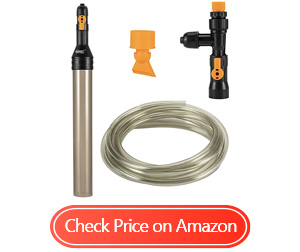
The nice thing about this aquarium cleaner is that it can clean the gravel efficiently without the need for an external pump. You connect the other end on your faucet and when you turn on the water, it will create a siphon effect that will provide suction on the inlet. The stronger the water pressure, the stronger the suction it produces.
This set also comes with all the fittings needed to connect the aquarium cleaner to any faucet in your home. This means that even if you do not have a threaded faucet, you will still be able to use this tool.
Moreover, this set came with a good length of rubber tubing, which allowed me to use any faucet in the house. I usually use the one in the downstairs bathroom because it has the highest water pressure.
Aside from cleaning the gravel, this tool also comes in handy when it comes time for partial or complete water changes. You just need to twist the valves in the direction you want the water to go. For instance, you can open the outlet valve to siphon water out, and then close it and turn on the faucet to put water back into the tank.
This is also quite easy to use. Not only is operating this aquarium vacuum cleaner easy, but assembly and installation were also a breeze. Since I am quite familiar with these kinds of products, I did not even need to look at the instructions to build and install the device. I did not even need to use any tools to set it up properly.
The only gripe I have with this tool is that the plastic fittings, especially the threaded ones, were not as durable as I would have wanted them to be. The threaded plastic adapter for the hose got stripped after just a month of use.
Luckily, there was an identical one made of metal in my local hardware store so I could still use this nifty product.
- Works without using electricity
- Can use any tap in the house
- Useful for partial/complete water changes
- Easy to use – There are no special tools needed for installation
- The plastic connector used on the faucet is quite fragile
This might not seem like much but if you want to, you can use this tool to do several different jobs. I usually just use this for cleaning the gravel without making the water cloudy. However, I noticed that it also has other uses that make it more than worth the price.
5. Fortune-Star Fish Tank Cleaner

With the help of simple physics, you can keep your aquarium clean and healthy. This may look complicated, but it is nothing more than a siphon system, albeit you no longer need to suck on one end of the hose using your mouth. I liked the trigger design of the priming pump. It makes it a lot easier to get the water flowing.
This device comes with several attachments that add a lot of uses. I like the extension tubing because I have a 50-gallon tank, and this add-on helps me reach the corners without getting my arm wet. If you have a large tank, then you would like the additional reach this tank cleaner comes with.
As mentioned earlier, this aquarium cleaner will let you clean the gravel and also scrape off the algae at the sides of the tank, all without getting your arm wet. I liked the pistol grip of the handle. It feels comfortable. It is like you are using an actual vacuum cleaner and the trigger-shaped priming pump is also easy to use.
Aside from cleaning the tank, I also use this for partial and complete water changes. I liked that I could fix the inlet pipe to the side of the tank so I did not need to hold it until the tank was empty. Not needing to gradually ladle water out of the tank makes water changes no longer such a chore.
The only problem I had with this device is that the hose that came with it is a bit too big. The hose felt loose when connected to the outlet tube. I had to put a bit of Teflon tape on the outlet to make the hose fit snug. This is not that much of an issue, but it would have been better if I did not need to fix it myself.
- Designed in a way that the siphon can get started without using electricity
- Has various attachments for added versatility
- Ergonomic design that won’t get your arm wet
- Convenient for emptying tank
- The rubber tubing is too big for the outlet
Although this needs a bit of tweaking to make it work right, it is still a solid tool for aquarium maintenance. I no longer dread water changes since I started using this device. It has become rather enjoyable somehow.
6. Enomol Gravel Aquarium Vacuum Cleaning
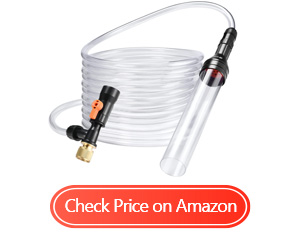
I have had the misfortune of having sucked more than one small fish through a gravel cleaner but this is not a possibility with this product. For starters, the inlet tube is large and clear, so I could see if any small fish or shrimp accidentally swam into it.
There is also a small grate that prevents gravel and fish from going through the tube. It is a failsafe that works quite well.
This best electric gravel vacuum comes with a complete set of adapters so you can attach the outlet part to any faucet you might have in your house. This kit also comes with a long rubber hose that can reach the faucet in my front yard.
This promotes ease in dumping out the dirty tank water. It is much better than lugging buckets full of water and spilling a good amount of them on my living room floor.
Aside from removing water from the tank, you can also use this to easily refill it. I just need to shut off the faucet, close the outlet valve, and turn on the water again. This time, the water goes into the tank instead of out. Before I used this tool, it took an entire weekend afternoon to do 50% water changes but now, it only takes me an hour at most.
The nice thing about this device is that if you have decent water pressure in your house, the suction will be strong enough to remove all the gunk stuck in between the gravel in the substrate. I use this tool for weekly water changes and for cleaning the tank at the same time.
However, even though I have decent water pressure, this still could not drain water quite as fast as I would have wanted it to. It is most likely because of the small diameter of the rubber hose that came with the kit. If it was a bit wider, then more water should be able to flow through it.
- Completely safe for fish
- Can attach to almost all kinds of faucets
- Can remove and refill water into the tank
- Makes water changes easier and less messy
- Does not drain water quite as fast as I wanted it to
Although this is not the fastest way to drain water out of your aquarium, it is much cleaner and hassle-free. Not needing to carry buckets of dirty water across my living room, all the while spilling a few of their contents on the floor, makes this product more than worth its price.
7. AQQA Aquarium Gravel Cleaner
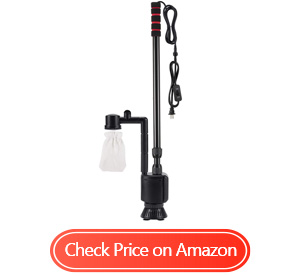
This is not just a gravel cleaner but a tool that comes with different attachments, allowing it to have different functions. For instance, a personal favorite is the corner suction inlet. This attachment is shaped just right so that it can fit into corners easily.
You can also use it for cleaning bigger tanks, thanks to the extending handle. I have two aquariums at home – one is a 30-gallon tank that is somewhat shallow and a deeper 50-gallon tank. I use this device not extended on the 30-gallon and fully extended for the 50-gallon one.
Aside from cleaning the tank, I also use this device for water changes. I just need to connect the rubber hose that came with the kit and put the other end into a bucket to drain the tank and reverse the positions when refilling the tank. I prefer using this pump for refilling because it is gentler than pouring water directly from buckets.
I do not have any issues with siphon gravel cleaners but this electric-powered one is much easier to use and more efficient. The electric submersible pump is capable of moving 320 gallons per hour, which is quite strong. This creates a suction force that is strong enough to lift all of the dirt and waste at the bottom of the tank.
Now, here’s the problem. This cleaner is not ideal for smaller tanks. The submersible pump needs to be completely submerged to work and if there are attachments installed, the pump might peek out of the surface of the water. This is why I still use the old-fashioned siphon when I am dealing with my smaller aquariums.
- Has multiple uses
- Comes with an extendable handle for larger tanks
- Useful for draining and filling the aquarium
- Electric powered, which means there is no need to pump manually
- Not ideal for smaller tanks
This product is the ideal aquarium cleaner if you have a large aquarium, like something over 30-gallons capacity. With that, changing the water will be a lot easier than manually scooping out water into buckets. Moreover, you get to clean the gravel and tank at the same time.
8. Piosoo Fish Tank Gravel Cleaner Tube
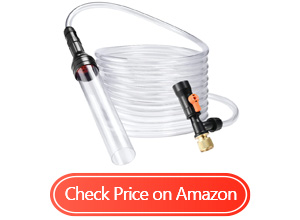
I am not hating on siphon aquarium cleaning kits but this best electric aquarium vacuum is vastly superior on all accounts. You do not need to pump anything to get the water flowing (just turn on the faucet).
Moreover, you can direct the dirty water straight to the drain instead of filling buckets. I have two 50-gallon tanks and this device made water changes a whole lot easier.
This device works by connecting the outlet to any faucet. When you turn on the water, it will suck out the water from the inlet inside the aquarium due to Bernoulli’s effect. It does not matter what faucet you choose to use as this kit comes with the right adapter for it. I use the faucet in my garden since I use the tank water to feed my flower bed.
Another neat feature of this device is that after I have drained enough water from the tank, I can start refilling it with just a flick of a valve switch. A ball valve in the outlet shuts off the draining process and the water coming from the faucet will go directly into the tank. I could seamlessly go from draining to refilling in a second.
I love this device because aside from doing a great job at cleaning the gravel substrate of my tanks, it also made the once tedious chore of water changing easy. I no longer need to lug around heavy buckets of stinky water across the house to my garden.
I attached my garden hose to the outlet so I can directly water my plants using the water from my aquarium.
Now, I do have an issue with the valve switch. It is not at all durable. After a couple of uses, I managed to break the switch of the ball valve. It is made entirely of fragile plastic. Fortunately, I was able to find a replacement part entirely made of metal.
- Much easier to use and more efficient compared to siphons
- Comes with a faucet adapter with a quick-release connector
- Can switch from draining to refilling with a flick of a switch
- Makes water change faster and a lot less messy
- The valve is not durable
Although it might seem like it is complex to install, which it isn’t, I still highly recommend that you check it out. This will not only help you keep your fish tank clean, but will also make short work of the once tedious task of replacing your aquarium’s water.
9. ATPWONZ Aquarium Gravel Cleaner
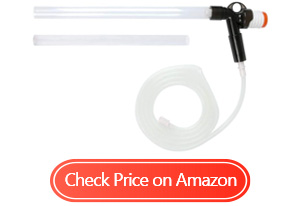
If you are the type who is nervous about using electricity around water, then you would love this aquarium cleaner. It works entirely on the siphoning effect. If the outlet is lower than the inlet, the water will continue draining. I enjoy using it just based on how cool it works and because it works well in cleaning the gravel substrate of my aquarium.
Aside from cleaning the gravel, I also use this when I need to drain my aquariums for weekly partial water changes. I used to remove water by hand, which gets tedious rather quickly because I have three large tanks. However, with the use of this tool, draining water has become almost effortless.
As I mentioned earlier, I have large aquariums (one is 100 gallons), which is why I liked that the cleaning tube is extendable. This helped me clean the bottom of my larger tanks without getting my arms wet. I also liked the included algae scraper. It made cleaning my fish tanks a whole lot easier.
One of my tanks contains a school of small fish (tetras, mollies, etc.) and I haven’t accidentally sucked up any of them when I use this gravel cleaner. Aside from being very careful, there is also a sort of strainer attached inside the gravel cleaner that prevents bits of gravel and small fish from getting through.
I do have an issue with the pump that starts the water flowing through the siphon – that is the fact that it is not that sturdy. I have been using mine for almost a month of weekly water changes for three tanks, and the pump already has a small hole in it. I managed to patch it up using duct tape but I kind of wished that it was a bit sturdier.
- No need for electricity
- Helps with water changes
- Extendable tube for larger tanks
- Perfectly safe for small fish and crustaceans
- The priming pump is not sturdy at all
Even though I had some issues with the priming pump after a couple of weeks of use, I did manage to salvage it somehow. For the price, this has been quite a useful tool, and hopefully, the manufacturers would implement quality improvements soon.
10. Bedee Aquarium Automatic Cleaner Vacuum
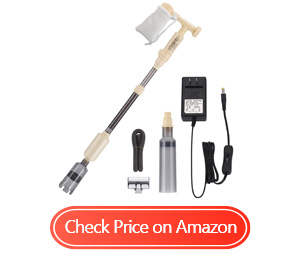
The nice thing about this product is that it is a 4-in-1 product. It is not just a gravel cleaner but it can also remove fish waste suspended in the water and scrape off algae from the sides of the tank. It is also a pump that you can use to drain and fill the tank.
I was surprised at how powerful the built-in water pump is given its small size. Even though it is a built-in pump, it has 18 watts of power, allowing it to move a lot of water. This pump provides more than enough power to suck out the fish poop stuck in between the gravel and settled at the bottom of the tank.
Unlike other gravel cleaners with pumps, this is one of the best gravel vacuums for small tanks. I use this on my 20-gallon tank, and the pump still stays submerged in the water because it is set so low on the device. However, I do have to keep a close eye on it when cleaning small tanks as the water level tends to go down quicker.
Speaking of the size of the tanks, you can still use this small fish tank gravel vacuum for tanks up to 200-gallons. I have a 150-gallon tank and cleaning it is quite easy using this device (with the extension tube). It could even reach the bottom corners easily. I also noticed that it does everything without stressing out my fish.
I did have an issue with the outlet hose connection as it was not as tight as I wanted it to be. It is also leaking air, which significantly reduces the amount of suction this device produces. However, I was able to remedy it easily using a hose clamp, which should have been included in the set.
- Has 4 functions in one compact product
- Features a powerful pump
- Useful on tanks with low water levels
- Suitable for use on tanks up to 200 gallons
- The hose connector is not as tight as it needs to be
For the price, you are getting a decent submersible pump gravel cleaner. This does a great job at removing most, if not all, solid waste that’s in the gravel and on the bottom of the tank. I highly recommend this for those who own at least a 30-gallon tank. Although you can use this on a shallow tank, you risk burning out the pump motor.
What to Look For When Buying a Aquarium Vacuum Cleaner

Beginners at keeping aquariums might find it difficult to shop for a good aquarium vacuum cleaner, so here’s a quick guide to make this task a bit easier. You should check out these crucial factors:
Tank Size
When you are looking for a manual or electric aquarium vacuum for your aquarium, you need to consider the size of your tank first and foremost. You would not want to waste your money on an electric aquarium gravel vacuum if the tank is not even big enough to keep it submerged.
On the other hand, you would not want to use a dinky siphon if you are cleaning a 100-gallon tank. You have to consider the size of your aquarium and then search for a vacuum cleaner that is capable of the required kind of flow rate.
Attachments Included
The nice thing about aquarium vacuum cleaners is that most of them come with attachments that give them more functionality. The most common attachments you will find are gravel cleaners. However, some brands come with algae scrapers and also extended hoses for water changes.
Ease of Use
In the past, we had to use simple rubber hoses to remove water from our aquariums and it usually involved getting a mouthful of disgusting tank water. Nowadays, gravel cleaner siphons already come with hand pumps to get the water flowing.
This is a lot easier and less messy. There are even products that have built-in water pumps that help a lot with tanks with huge bio loads.
Cost
I would like to say that you are getting what you paid for when it comes to aquarium vacuum cleaners, but there are many affordable ones out there that perform at par with the expensive brands.
However, you will need to wade through a lot of customer reviews to figure out which ones are worth your money.
Frequently Asked Questions
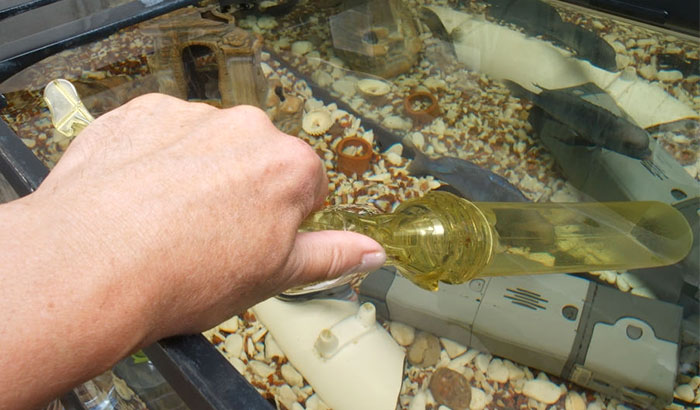
Where to Buy an Aquarium Vacuum Cleaner?
You can find lots of aquarium vacuum brands in most pet supplies stores and aquariums. However, if you want even more choices, then you should go online shopping.
How big Should my Gravel Vacuum be?
Most gravel cleaners are relatively the same size. However, you should consider the size of your tank when shopping for the best gravel vacuum for sand. It is even important to check the actual depth of your tank in particular. The gravel cleaner should be long enough that it can reach the bottom without you getting your hands wet.
Conclusion
The best aquarium vacuum cleaner will prove to be one of the most used tools you will have in your aquarium maintenance closet. The reason is that most gravel cleaners do more than one job. Most of them are also water siphons that you can use for water changes.
Now that you reached the end of this article, you may have learned everything that you need to know when shopping for aquarium gravel cleaners.
The post The Best Aquarium Vacuum Cleaners for 2022 appeared first on Aquatic Eden.
]]>The post The Best Aquarium Sump Pumps for 2022 appeared first on Aquatic Eden.
]]>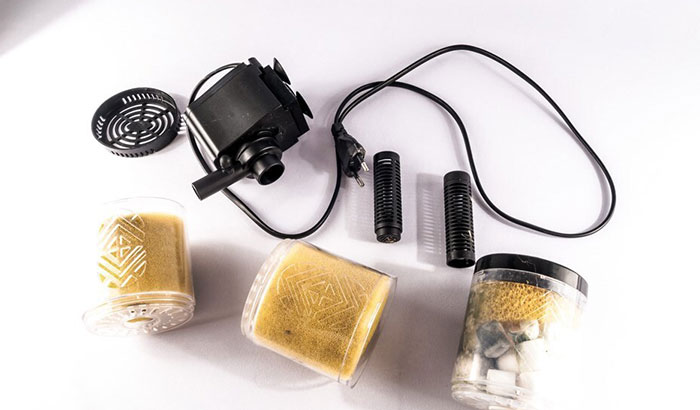
If you have an aquarium, then you must buy the best aquarium sump pump that you can afford. The reason is that it is the literal heart of your aquarium. Just like the heart of any living creature, the sump pump is responsible for circulating the water in the tank.
It should be strong enough to push the water back up to the tank from the sump placed underneath. However, it should not be to the point that it will blast away the substrate and stress the fish.
Many different brands offer their take on the aquarium sump pump, but not all of them deliver on their promises. Some may even be considered overpriced. This article will show you the features and qualities you need to keep an eye out for when you are out shopping for the best aquarium return pump.
Best Aquarium Sump Pump Reivews
1. Hygger Submersible Aquarium Pump
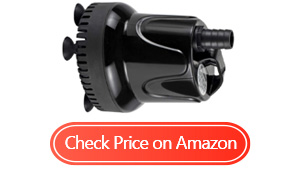
This small submersible quiet sump pump aquarium has quite a lot of uses. I primarily use it as a return pump for my sump and it moves quite a decent amount of water for its size. Other times, I use it for partial water changes or cleaning the gravel. I put a plastic mesh in front of the intake to catch the larger bits of debris.
This pump will start working when the water level is around an inch high. It will also automatically turn off when the motor gets a bit too hot. However, since this pump does not have an automatic shutoff feature, it will start running again once the motor cools down enough.
For something that is this small, I was surprised that it could move that much water. This pump is rated for 660 gallons per hour, which is more than enough even for a 100-gallon tank. This little pump can effectively circulate the water to provide a clean and healthy environment for the fish.
This pump runs on a silent, yet powerful magnetic motor. I positioned my 100-gallon tank in our living room and you can hardly hear the pump working. It would be hard to hear the sump over the regular noises coming from the street outside.
The only real thing that I could complain about is that the pump did not come with its own tubing. I had to run out to the hardware store to buy a rubber hose after opening the package. I ended up having to buy twice the amount of rubber tubing because that is the minimum amount I am allowed to buy.
- Has multiple uses
- Features an overheat protection switch
- Has a decent flow rate and max lift height
- Works quietly
- Can be used in sumps, ponds, and more
- The pump does not come with tubing
The nice thing about this product is that it is more than just a sump pump. You can also use it for partial water changes or draining the entire tank completely. However, it is sort of like a jack-of-all-trades in that it does not excel in just one particular area.
2. VIVOSUN Submersible Pump
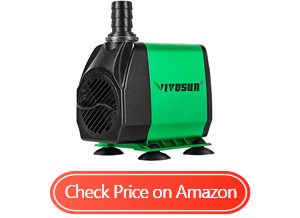
I have a small 20-gallon sump, which means that there is not much room in the return compartment for a larger pump. However, I had no trouble fitting this pump into that cramped space. In fact, it still had a bit of wiggle room, which is great.
There might have been a typo in the Amazon listing because it is physically impossible for such a small pump to have an 800 gallons per hour rate. The actual number is anywhere between 250 and 280 gallons per hour, which is still an impressive value for something this small.
Another neat thing about this submersible return pump for sump is that it is easy to disassemble and clean. The plastic shell is easy to remove, promoting ease in cleaning the plastic impeller. Putting the parts back together is almost as easy as taking them apart, and you also do not need to lubricate anything.
This pump is also quiet. I almost thought I got a defective product when I first used it. I could not hear the pump through the cabinet door, so I thought it was not working at all then I noticed the water was moving. I highly recommend this pump if you are very particular about noise.
This would have been much better if only the power cord was a little bit longer. The Amazon listing said that it had a five-foot power cord, which is already short, but the actual length is just four feet. You will surely need an extension cord. It is also important to provide some sort of waterproof cover for it.
- Small and compact
- Has decent flow rate for a pump its size
- Easy to clean and maintain
- Silent when working
- Has a wide range of applications
- The power cord is too short
This is an affordable submersible sump pump for a freshwater aquarium that has plenty of power to spare. Although the details on the Amazon listing are erroneous, you will be getting a pump that will live up to your expectations for the price.
3. Aquastation Silent Swirl DC aquarium Pump
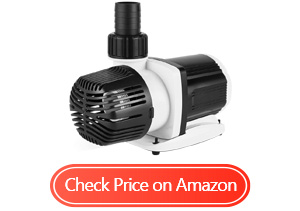
For such a compact device, this pump sure does move a lot of water. This can pump water at a rate of 1,320 gallons per hour and it has a maximum lift head of more than 13 feet high. I use it on my 150-gallon tank and it does a good job of circulating the water between the tank and the sump.
Another thing I liked about this submersible saltwater aquarium sump pump is that it has a variable speed controller. It also has a sine wave mode, which is ideal for reef tanks as it simulates the movements of the current. I use this setting for my live rock growing tank and it has done wonders for the inhabitants.
Although I use this pump as a submersible, it is also useful as an inline or external pump. You can remove the inlet grill and you will find a threaded pipe where you can connect the inlet pipe. I haven’t tried using this configuration before, but I have heard a couple of stories about how this pump leaks a bit when used this way.
You do not have to worry about the pump motor burning out when the pump gets clogged. This pump has an automatic cutoff switch that turns on when the motor reaches a certain temperature. Moreover, the inlet has a removable mesh cover that prevents large pieces of debris from getting inside the pump.
For something so powerful, this pump is surprisingly quiet. If your sump is in a cabinet under the aquarium, then you probably will not even hear it working when you close the cabinet doors. I can hardly hear the one I am using over the light traffic noises outside my window.
As mentioned earlier, this pump leaks quite a bit when used as an inline pump. This means that it would not be a good idea to use it for your aquarium sump or else your floor will permanently be wet.
- High pumping rate and lift head
- Controllable speed
- Ideal for use as a submersible or an inline external pump
- Ultra-quiet and smooth operation
- Auto-shutoff when clogged
- Leaks when used as an external pump
It is a shame that the inline pump feature is not as good as I hoped it would be, but then again, using it as a submersible tank makes the sump a bit more compact and efficient. It also means less cleanup.
4. PROSTORMER Submersible Sump Pump

This handheld pump is ideal for emptying pools, flooded basements, and small-scale crop irrigation. This pump has a maximum pump rate of 3,700 gallons per hour and a delivery head of 26 feet, which means it is much too powerful for regular aquarium sumps. If you have an outdoor pump, though, then this might be an ideal choice.
This pump also comes with an automatic float switch. The pump will automatically shut off when the float is lower than the pump, which will leave you with about a foot of water. By then, you can switch over to always-on, so you can finish the job.
This pump comes with three different adapters so you can use different-sized hoses for it. You can use 1-inch diameter hoses or go bigger and use 1-1/2-inch diameter hoses. Using the 1-1/2-inch hose will provide you with a maximum rate of 3,700 GPH. If you need to dial down the rate a bit, use the smaller hose sizes.
This pump felt solid when I held it. Even though it has mostly plastic construction, it is put together well. There is no rattling and the seams are all watertight, as any high-quality submersible pump should be. This pump can handle a significant amount of abuse.
The reason why I do not use this in my sump pump for aquariums is that it is too big for it. There is also no option to use it as an inline pump. In addition, this pump is simply too powerful for regular household aquariums. If I were to use it in my aquarium, the current would be too strong for the fish and live plants.
- Extremely powerful
- Comes with an automatic float switch
- Can accommodate different sizes of hoses
- Top-notch build quality
- Can remove water until around 2.5 inches deep
- Much too powerful for aquarium sumps
This pump is much too powerful for regular household aquariums. However, if you have a substantially-sized pond that has a sump, then it would be a good choice for a return pump.
5. Boxtech Submersible Water Pump
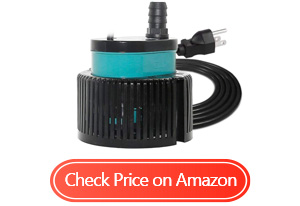
When I opened the box that this pump came in, I was pleasantly surprised at how small it was. It was barely four inches high and four inches wide, so it easily fits inside my DIY aquarium sump with a lot of room to spare. The 360-degree suction base also meant I do not need to position the pump in any specific way.
Because this aquarium sump pump is so affordable, I bought three of them. One of the pumps I use for emptying tanks and making partial water changes. I also do not doubt that you can use this pump if you want to make a small waterfall grotto in your garden. It has enough power and it is easy to hide.
This pump, despite its size and looks, boasts of a solid built. It uses a resin to seal its housing completely, so you can be sure that there will not be any water getting into the electric motor. The shaft and impeller are both made of corrosion-resistant ceramic, which means they will not rust or corrode in any way.
The thing that surprised me the most is the amount of power packed into such a small pump. The 35-watt model has a maximum flow rate of 528 gallons per hour, which is more than respectable for a pump this size. It also has a maximum delivery height of almost six feet, so it is more than enough as an aquarium sump pump.
The only issue that I found is that it is kind of difficult to clean the impeller due to the base cover. There is no discernible way that you can remove the protective cover without disassembling the entire thing, which is a challenge in itself. This will not be much of a problem if used as a return sump pump, though.
- Small and compact design
- Has multiple uses
- Solid and high-quality construction
- Has a surprisingly high flow rate and delivery head
- Silent and does not vibrate too much
- Does not have a way to clean the impeller without forcing the grate off
This product is one of the most cost-effective submersible sump pumps that you can buy. This sump pump marine tank is so compact that you can easily fit even small aquarium sumps. If you want to try using a sump filtration system for your aquarium but you do not have a sizable budget, then this pump is perfect for you.
6. Current USA eFlux DC Flow Pump
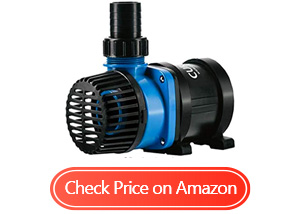
Aside from the power of this pump, I am glad that it has its own flow controller. Many other sump pumps are as powerful, if not more powerful than this product, but that is not the only important quality of a sump pump. A good quality sump pump should allow you to control the flow rate so it will not disturb or stress the fish in the aquarium.
Although I used the one I had as a submersible pump, I do appreciate that I can also use it as an external, inline water pump. Having this option opens up a lot of possible uses for this pump. For instance, you can use it to irrigate a small vegetable garden or for the filtration system of a small above-ground pool.
For something this powerful (1,050 GPH), this submersible pump runs quietly. This is thanks to it having a ceramic shaft and impeller. Even without lubrication, these parts can spin fast without stressing the motor. Even at full power, you will hardly hear this pump when it is working.
Another thing that I liked about this pump is how easy it is to clean and maintain. You will need to clean the pump once every eight months, more frequent when used in a saltwater setup. It is nice that you can easily disassemble it, so you can clean the shaft, impeller, and pump cavity.
I do have an issue with the length of the power cord. You will need to use an extension cord (and have the connection waterproofed) if you have to position the return sump pump at the far corner of the sump.
- Comes with a flow controller
- Ideal for use as an inline or submersible pump
- The ceramic impeller and shaft ensure quiet operation
- Highly efficient and powerful
- Easy to clean and maintain
- The power cord is not that long
Although this pump is a bit on the expensive side, you will be getting your money’s worth. It is small and compact, making it easy to fit into any aquarium sump. It is also deceptively powerful for its size. The flow controller is a nice touch, too, as it removes the need for flow-controlling fixtures.
7. KEDSUM Submersible Pump
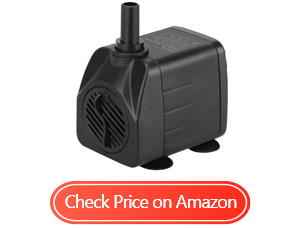
This tank is barely two cubic inches in size, so finding space for it in any aquarium sump setup will not be a problem. I am using a rather small sump and the return tank is a bit narrower than average to raise the water level. This pump easily fits inside that confined space.
Even though this was such a small submersible pump, it can achieve a maximum flow rate of 100 gallons per hour. It has the perfect flow rate for 30-gallon to around 60-gallon tanks. It is also an ideal return sump pump because it has a maximum delivery head of up to 4 feet.
A neat feature that I liked about this minuscule pump is the manual flow rate adjustment. You just need to turn the “faceplate” of the inlet to lower or raise the flow rate as you deem fit. There are no markings that will tell you how much the flow rate is. You just need to wing it until you get the flow rate you desired.
This is also easy to clean and maintain. The entire pump is easy to disassemble for easier and more thorough cleaning, and putting them back together is a cinch as well. This is a great feature because you do need to give this pump a good cleaning every couple of months or so to keep it running smoothly.
Now, what I think the manufacturer could have added to make this even better is an automatic emergency shutoff switch, which trips when the water level is too low. Also, it would have been even more convenient if there is an inline manual switch so you do not have to pull the plug.
- Small and compact design
- Respectable flow rate and delivery head
- Adjustable flow rate
- Easy to clean and maintain
- Budget-friendly
- Does not have an automatic shutoff
This is one of the most budget-friendly yet reliable sump pumps that I have tested so far. For such a small pump, it is quite a workhorse. It can move a decent amount of water and you would barely hear a whine from the motor. If this is your first time using an aquarium sump, this product is highly recommended.
8. Superior Pump Thermoplastic Utility Pump
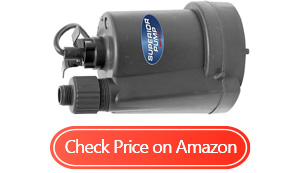
Despite its size, this sump pump for a fish tank can produce up to ¼ horsepower. A powerful copper-winded motor, coupled with an impeller designed for efficiency, allows this pump to move water at a maximum rate of 1,800 gallons per hour and a maximum delivery head of 25 feet.
A feature this pump has that I wish was in other pumps is the split capacitor. This system essentially works like a gearbox for an electric motor. The 1st gear, which uses a higher wattage, is for starting the pump. Once the water starts flowing, it switches gears to use just enough power to keep the flow going.
The full copper-winded motor is encased in thick and durable thermoplastic, and the engine plate has double O-ring seals that will prevent water from getting into the motor. I have used this pump maybe once or twice to remove floodwater from my basement, and it did a fine job. It emptied around two feet of water in just around two hours.
This pump is also easy to clean. After using it to get rid of floodwater, I only had to remove the intake mesh screen and I had easy access to the impeller, which I proceeded to clean. Unlike other submersible pumps that I have used in the past, this one was much easier to maintain.
Do I recommend that you use this for an aquarium sump? No. First, it is much too large at almost a foot high and 7-inches wide. It is also too powerful for that purpose. Unless you have a tremendously large reef tank, you do not need to use a ¼ horsepower sump pump.
- Very strong pump
- Has split capacitors for more efficiency
- Double seals for improved waterproofing
- Easy to clean and maintain
- Multiple fittings for different sized hoses
- Way too strong for a regular aquarium sump pump
The main use of this submersible pump is for moving large volumes of water quickly, so using it as an aquarium sump pump will be overkill. On the other hand, if you have an outdoor pond that also uses a sump to clean the water, then you should check out this product.
9. Uniclife Submersible Water Pump
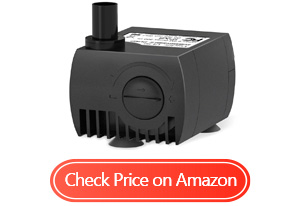
This pump is barely 2 cubic inches in size, so positioning and hiding it inside an aquarium will not be that difficult. I use this minuscule pump in one of my smaller aquariums (a 15-gallon), specifically for circulating water through a box filter and it does an excellent job.
This tiny pump is rated for up to 20,000 hours of continuous use with proper cleaning and maintenance, of course. Fortunately, Uniclife made it so that it is easy to disassemble this pump without the need for any tools. With that, you can deep clean the internal parts using soap and warm water.
This pump is also quiet that you will not even notice it when it is working. The motor barely creates any vibrations, which is why there are only three suction cups at the bottom for mounting the pump.
I mounted my pump at around 4 inches below the surface of the water. With that, I can guarantee that the suction cups can hold on tightly to the glass surface.
As I mentioned earlier, I use this pump for circulating water through a box filter, and I liked how you can dial down the flow rate of the pump. I needed to weaken the flow so that the box filter can more efficiently take out the dirt and debris from the water.
This pump manages to provide a respectable 80 gallons per hour flow rate and around 2.5 feet of delivery head. However, it is much too weak to be of any use as a sump pump. Aquarium sumps are usually placed underneath the main aquarium tank, meaning this pump does not have enough power to push the water that high.
- Small and compact design
- Easy to disassemble and maintain
- Can be mounted anywhere using suction cups
- Ideal for small aquarium setups
- Adjustable flow rate
- Too weak to use as an aquarium sump pump
Although this pump is not strong enough for use as a sump pump, it is ideal for doing partial water changes or maintaining a mild current inside the tank.
10. AQQA Submersible Aquarium Water Pump
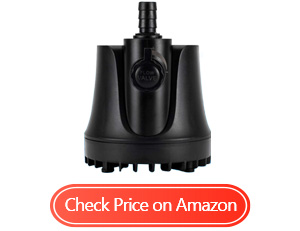
I use this tiny pump to push water through an overhead box filter for my betta tank, and this had more than enough power for the task. What is even better is that this pump has an adjustable flow rate, which allows me to slow the flow so the box filter will not overflow.
This pump is also quite small and compact, which made it the perfect size for my 15-gallon betta tank. It is roughly just the size of my hand, so it was easy to hide behind some of the tank decorations. A couple of suction cups also holds it in place.
Since this pump is inexpensive, I bought two. The other one I use for cleaning the gravel substrate and for partial/complete water changes. Using this pump makes transferring water to and from my aquarium a lot easier and gentler for the fish.
The Aqqa submersible pump is also quiet and does not vibrate that much. If it weren’t for the sound of the water trickling in my aquarium, I would not even believe that the pump is not working at all. This makes it ideal for betta fish as they are quite jittery and easily stressed.
Would this be ideal as an aquarium sump pump? Running at full capacity, this little pump might do the trick for small sump setups, like a 10- to 15-gallon tank. However, it is necessary to position the sump somewhat close to the aquarium as the delivery head of this pump is not that high.
- Adjustable water flow rate
- Compact and space-saving design
- Has an automatic shutoff switch
- Multiple uses
- Energy-efficient and quiet
- Has barely enough power to push water back into the main tank
This product is ideal for smaller aquarium sumps for 10-to-15-gallon tanks. This might not have enough power for use as a return pump for bigger aquariums (this pump only has a maximum head of supposedly 6-feet), but for smaller setups, this should be powerful enough.
What to Look For When Buying a Aquarium Sump Pump
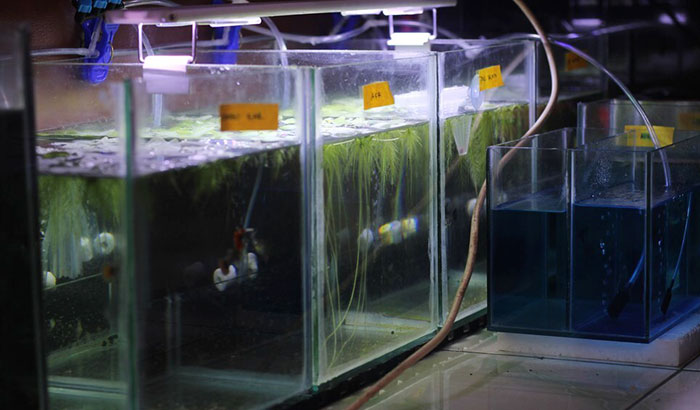
When you are shopping for an aquarium sump pump, there are a couple of important factors that you need to consider before making your purchase. Here are some of them:
Flow Rate
The flow rate of pumps is typically measured in gallons per hour (GPH), and this is the rate at which a pump can move water. The ideal flow rate will depend on the size of your aquarium and sump.
It should not be so strong that it lowers the water level of the sump too much. However, it should not also be so weak that the water in the aquarium is hardly moving. It is better if you get a sump pump that has a high enough flow rate but also provides you with the ability to control the flow of water in case it is a bit too strong.
Delivery Head
The delivery head is the maximum height that sump pumps for saltwater aquariums can push water through a pipe. It would depend on the power of the pump and the diameter of the pipe you will be using.
To figure out if a pump provides enough delivery head for your sump, measure the distance between the bottom of the sump and the top of the aquarium. The delivery head of the pump should at least be the same height.
Size
The size of the pump you should get will depend on the size of the return compartment of the sump if you are getting a submersible model. If you want an external inline pump, then it will depend on the amount of space in the storage space with the sump tank.
If you have a relatively small tank, like a 30-gallon or so, and your sump capacity is 10-gallons, then you should probably get a small submersible pump.
Ease of Use and Maintenance
You will need to clean the pump at least once a month, so you should get a pump that is not a hassle to clean and maintain. Get one that is easy to disassemble so that you can deeply clean the impeller, the impeller shaft, and the pump cavity. It assures you that it can last for as long as the manufacturer intended.
Durability
When it comes to submersible pumps, you will often get what you paid for. Although some brands of pumps are both affordable and reliable, they are few and far in between. However, it does not mean that you need to buy the most expensive pump that you can find.
You need to find the happy medium between price and build quality. However, without testing the products yourself, the best way to somewhat ensure that you get a pump that is worth the price is to check customer reviews.
Safety
This is the most important quality that you need to consider. Make sure that the pump you will be getting is properly sealed and completely waterproof. The motor housing should be watertight and if possible, sealed using a resin.
The cord should also be thick enough that it can handle the amount of current that will be passing through it. There is nothing worse than having a submersible pump short circuit while submerged in water.
Frequently Asked Questions
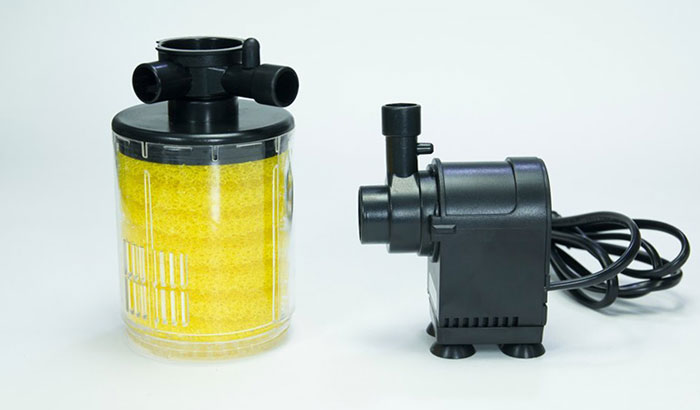
What Size Aquarium Sump Pump do I need?
When it comes to physical size, the pump should be small enough to fit inside the return compartment of the sump if it is submersible. If you will be using an external or inline pump, the size does not matter much if you have room for it in the compartment under the tank.
The important thing that you need to keep in mind when shopping for sump pumps for fish tanks is if it is strong enough to push the water back into the aquarium. Check if the maximum delivery head indicated on the pump is greater than the height between the bottom of the sump to the top of the aquarium.
How to Install a Sump Pump for an Aquarium?
The simplest way to install a sump pump is to use a submersible pump. With this, you just need to drop the pump into the return compartment of the sump and plug it into the nearest power outlet.
Installing an external inline will be a bit more complicated. First, there should be plumbing coming from the sump, which will then connect to the inlet of the pump, and another pipe coming from the outlet and into the aquarium.
Conclusion
If you have an aquarium sump, then you will also need a good pump to make the water circulate properly. You can now use the things that you learned about shopping for the best aquarium sump pump so you can get a product that is worth your money. It should be one that will work flawlessly and reliably.
The post The Best Aquarium Sump Pumps for 2022 appeared first on Aquatic Eden.
]]>The post Growing Plants Emersed appeared first on Aquatic Eden.
]]>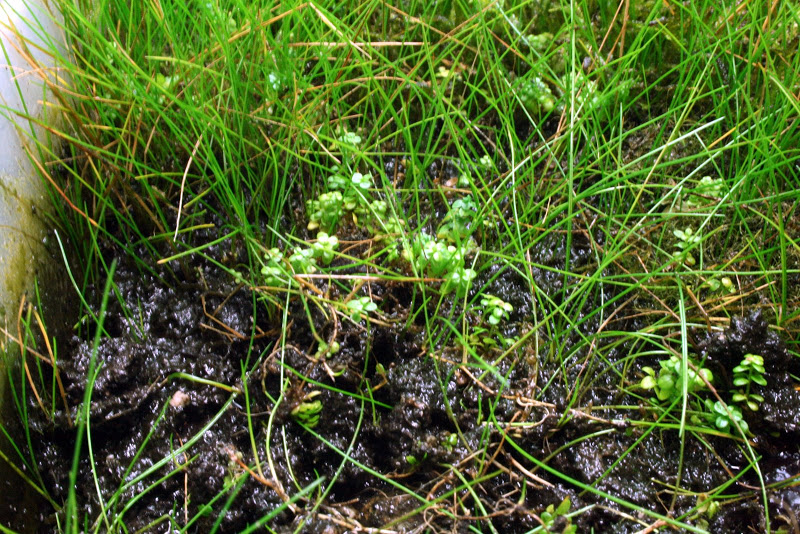
In a previous article, I discussed what the difference was between submersed and emersed growth. Now, I’ll show you how to set up your own emersed growth pots so you can experiment on your own. I’ve been growing HC, dwarf hairgrass, and moss emersed without problems. Stem plants probably won’t do so well using this method, as they are much harder to convert. For quickly growing pre-made carpets though, this method can’t be beat.
First, you’ll need a shallow container. I use plastic Rubbermaid shoe-boxes available at most big stores like Target or Wal-Mart. They are the perfect size, since you’ll want to cover your container with plastic wrap. Larger containers will also work, but may be harder to cover and keep sealed. Fill the container with about 1 inch deep of regular potting soil. Pour water in until the soil is just submerged but thoroughly wet. Then, take your plants and just put them gently in the soil. Once you have all of your plants planted, use plastic wrap to cover the container. You’ll want a tight seal so the moisture doesn’t evaporate. It might be necessary to use some tape to keep the plastic wrap from coming off. This will create a nice humid environment for your plants to transition to emersed growth so they don’t dry out.
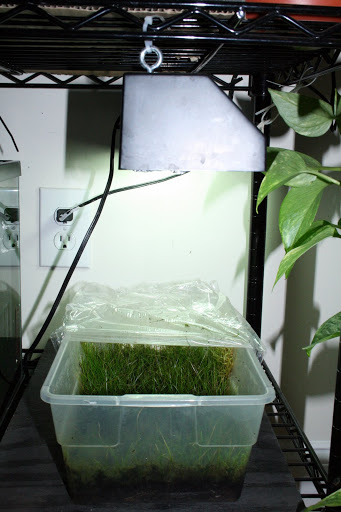
Once you have your container all set up, you can either put it in a sunny window or underneath some full-spectrum lighting. I chose to put it under a strip of lights (see above). Each week, just lift the plastic wrap up and using a spray-mister, mist the plants to replenish any lost water. Lifting up the plastic also allows new air to enter, replenishing any CO2 the plants have used. No fertilization is necessary, since all nutrients should be present in the potting soil.
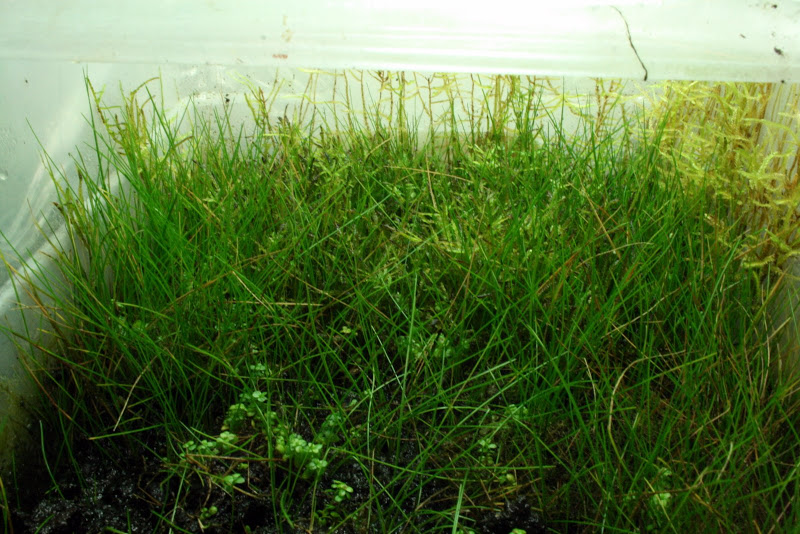
Once your carpet has grown in, just gently lift the plants out of the potting soil, rinse them off to remove any extra soil in the roots, and plant them in your aquarium. It might be best to stick with one type of plant per container, since I tried HC, hairgrass, and moss all in one and they all grew together (see above). It makes it a bit difficult to separate, but very cool looking!
This method should work well for all mosses, most grasses, and most other carpet plants, like Hemianthus callitrichoides and Glossostigma elatinoides. Mosses in particular have very different emersed structures and can be quite cool looking. It’s almost tempted me to start a palaudarium! Good luck.
The post Growing Plants Emersed appeared first on Aquatic Eden.
]]>The post The Best Pool Filter Sand for Aquariums in 2022 appeared first on Aquatic Eden.
]]>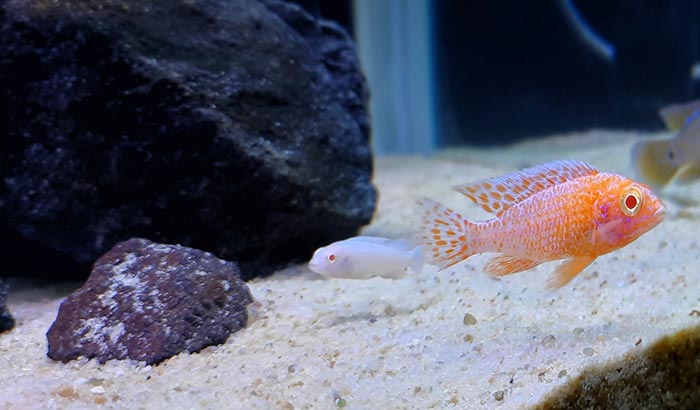
One of the best ways to filter out nitrates, ammonia, and small bits of debris out of the water in your aquarium is by using a fluidized bed filter. It is a device that either hangs at the back or side of your aquarium or underneath it if you are using a sump.
It forces the water through a fluidized medium, like sand or plastic resin beads, thereby leaving the bad stuff stuck on them, and letting clean water through. If you plan on using this kind of filter, then it is best to get the best pool filter sand for aquariums.
Although you can find several brands that use real and treated sand, most pool filter sand is based on fine silica particles, making them last longer and perform much better, like the Quikrete pool filter sand for aquariums.
During your search for a quality one, you will likely discover that there are many brands of filter sand in the market today. Finding the best one can, therefore, be tough. Here is a quick buying guide and a couple of samples of products so you can get an idea of what you should look out for.
Best Pool Filter Sand for Aquarium Reviews
1. FairmountSantrol AquaQuartz Filter Sand
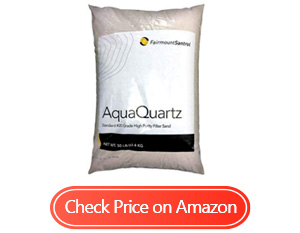
I have used a fair number of filter sand for my aquariums at home, and the AquaQuartz is certainly among the top 10 easily. I use hanging fluidized filters and some of them use this sand. Unlike some of the other products that I tested, this one remained suspended and did not clump together.
Another nice thing about Aquaquartz pool filter sand is that it does not discolor the water. I had a few unfortunate experiences with other brands that made the water cloudy even after I rinsed the sand multiple times before putting it in the filter. This product hardly needed rinsing and it kept the water clear.
Another remarkable thing about this product is that it takes very little effort to make it tumble in the fluidized filter. The sand particles are so light that they would suspend themselves in the canister almost immediately after turning on the pump. There is no need to shake nor tap the canister.
I have one tank planted and I used to use aquarium gravel as a substrate for it. When I restarted the tank, I used this pool filter sand for the planted aquarium, and it was many times better than the regular gravel. The plants had no problem taking root. I also noticed that the white color brightened up the tank quite a lot.
Another thing that surprised me about this pool filter sand is that it is all-natural. I have used other natural filter sand, but they were not as clean and easy to use as this one. This is odorless and only needed two rinse cycles before using (it might have needed only one, but I did two just to be safe).
Now, there is one issue with this filter sand. If you use it as a substrate, you might have a problem with it blowing around if you are using a high-flow filter. It might cause the sand to clog up your filter, so you may want to install a pre-filter to prevent it from happening.
- Does not clump up
- Will not discolor the water
- Easy to suspend in a fluidized filter
- Works great as an aquarium substrate
- All-natural and odorless
- A bit too fine for high-flow aquariums
Whether you are using this as a filter medium or a substrate for your aquarium, this product works well for both. Check it out the next time you will be setting up a new tank.
2. HTH 67074 Filter Sand

Although this product is mainly designed as a pool filter media, it also works great as a medium for aquarium filters. HTH did such a great job creating this sand that you can use it for both saltwater and freshwater aquariums. It also works well as an aquarium substrate.
I also used this pool filter sand for aquarium substrate, so I had to rinse it in a bucket of water first before pouring it inside the tank. I was quite surprised at how clear the water was in the first rinse. The second rinse was not really needed but I still did it out of habit.
I also have no complaints about this sand as a filter medium. I use it in a fluidized filter and it works quite well in filtering nitrates, ammonia, and small debris in the water. It kept the water clean and clear for a longer time compared to when I used another one. I only needed to change the water once a month since I started using this product.
This filter also worked great at preventing algae bloom in my aquarium. I used to have a serious problem with algae turning the water and glass of my tank green. The main reason is that the tank gets exposed to an hour or so of sunlight. It is no longer a problem with this filter sand.
In the past, I needed to replace half the tank of water, which is quite tedious because I have several 100-gallon tanks. When I switched to this filter medium, the water can go for several weeks without a partial water change. This pool filter sand is so efficient that I highly recommend it for aquarists.
Here is the problem with this product, though. It only comes in 50-pound bags. This is fine if you will be using it as a substrate, but it is a bit too much if you will only be using it as a filter medium. On the other hand, you will not need to purchase additional filter sand for a year or two.
- Perfectly safe for aquariums
- Easy to clean – It only requires minimal rinsing
- Efficiently filters debris, nitrates, ammonia, etc
- Prevents algae bloom
- Greatly reduces water replacement
- Only comes in 50-pound bags
If you will be using this product as a filter medium, you will have more than a year’s supply. However, if you will be using it as a substrate, then the entire bag might be enough for your tank.
3. Zeo Inc ZeoSand Swimming Pool Sand

Once prepared properly, ZeoSand does work quite well. The manufacturer said that it works twice as well as regular pool sand but I will not go that far. However, I can tell that it is significantly more efficient than regular pool sand when it comes to filtering particulates from the water.
Another neat thing about it is that it is half the density of pool filter sand. This promotes ease in using it in a reactor filter. This pool sand replacement is so light that it does not take much to make it tumble and move around in the reactor. I do not need to shake or tap the filter anymore. I just turn the pump on and the sand already starts tumbling.
The reason why ZeoSand pool filter sand for freshwater aquariums is better than regular pool sand is that each particle has an irregular shape. Looking closely at each particle, they look like jagged crystalline bits. This gives them more surface area where dirt and other impurities in the water stick onto.
Pool sand filters are already pretty efficient, but this product is significantly much better. I have been checking my water conditions religiously since the first time I used this product. I noticed that the water is still clean even when it has been almost a month since I last did a partial water change.
Aside from saving a lot of water, it is also quite an economical product as it can last for up to five years. You just need to give the sand a good washing every month or so. This will somewhat “recharge” the sand and make it work almost like new. You can probably do this around three to five times before you need to replace the sand altogether.
Now, the problem that I have with this is that it can be very tedious to prepare. It is a good thing that I will only be using this product in my reactor filter, and not as a substrate. Even a small amount of ZeoSand takes a lot of time to wash. It took me 7 rinsings to get the water to come clean.
- Twice as effective as sand
- Less dense than sand
- Has more surface area
- Lasts up to five years
- Saves a lot of energy and water
- Requires a lot of backwashing
Although it is a bit more expensive and requires a lot of prep work, ZeoSand does work like a charm. If you will be using this in a fluidized reactor, make sure that you wash it at least 6 times or until the water runs clear; otherwise, it will turn your tank green.
4. HTH 67079 Pool Filter Sand

One thing that makes this product nicer compared to the other pool sand filter media is that it is already pretty clean right out of the bag. When I used it in my aquarium, I only needed to wash it two times. The second washing may not even be needed but I just wanted to be sure.
I was a bit hesitant to use this pool sand as an aquarium substrate for the first time, but it did a good job so far. It settled on the bottom of the tank almost immediately and did not cloud the water even one bit. It also provided better anchoring for my live plants, unlike the loose aquarium gravel I used to use.
Aside from using it as a substrate, I am also using this product as a filter medium in my fluidized bed filter. The sand particles are just the right density that they are easy to make them tumble in the reactor. This makes it different from the other reactor beads and pool sand products.
Because each particle has such a large surface area, it makes them very efficient as a filter medium. More surface area means they can attract more dirt, debris, and all the nasty stuff that floats in the water of your tank. Pool sand is more than twice as efficient at filtering compared to reactor beads.
Because of the highly efficient pool sand as a filter medium, it keeps the water in the aquarium crystal clear for weeks. I have saved so much water and even more of my time by not having to replace the water in my tank as often as I used to. Instead of having to do it weekly, I now need to replace half of the water every month.
I have a word of warning, though, if you plan to use this pool filter sand in the aquarium as a substrate. Because it is lighter than regular aquarium gravel, it might get blown off by your water flow. You might need to dial down the flow a bit to prevent the sand from getting everywhere.
- Already comes pre-washed
- Ideal for aquarium substrate
- Great for fluidized bed filters
- Lots of surface area per particle
- Keeps water clear and clean longer
- Might get blown up in high-flow aquariums
If you will only be using it as a filter medium for your aquarium, then you might be stuck with the 50-pound bag for a while. On the other hand, if you will be using it as an aggregate for your 50-gallon or 100-gallon tank, you will discover that it is the right amount.
5. HARSCO METALS & MINERALS Filter Glass
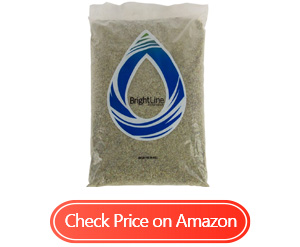
The thing that I liked the most about this product is that it works significantly better than regular pool sand. This product has particles that have almost twice as much surface area compared to regular pool sand, making it more efficient at filtering even microscopic debris.
From the moment I changed out the filter media in my fluidized bed filter with this product, in less than half an hour, there was a noticeable improvement in the water quality. Not only did the water get a whole lot clearer, but the nitrate and ammonia levels dropped significantly.
As mentioned earlier, this filter medium does more than catching the solid waste floating in the water. It also works great as a natural chemical filter. It helped me get the ammonia level in my goldfish tank under control. It is a safe and completely natural alternative to chemical solutions.
Another reason why this medium is ideal for fluidized bed filters is that it is less dense than sand, which makes them easier to tumble in the reactor. Also, because they move constantly, they are less likely to clump up even when they get a bit dirty.
Speaking of the sand getting dirty, when the medium does get “full” of dirt and impurities, you can “recharge” it by giving it a good rinse under running water until the water runs clear. You can get several uses from one batch of this filter medium, making it quite economical.
Now, if you are thinking that this might make a good aquarium substrate, then you better think again. Note that it might not be a healthy choice of a substrate as these are mostly made of glass, which might rip up the insides of your fish if they were to ingest it, and they will.
- Works better than sand but needs less cleaning
- Makes the water clear 25% faster than sand
- Traps not just solid wastes but also chemicals
- Ideal for fluidized bed reactors
- Can be cleaned and reused several times
- The included scoop is not very precise
It is a shame that this sand does not come in smaller packages. This filter medium works so well that it might not go back to using other products again. With that said, it may be a good thing that you will be getting a 40-pound bag. This way, you will have more than a couple of years’ worth of filter medium.
What to Look For When Buying a Pool Filter Sand for Aquarium
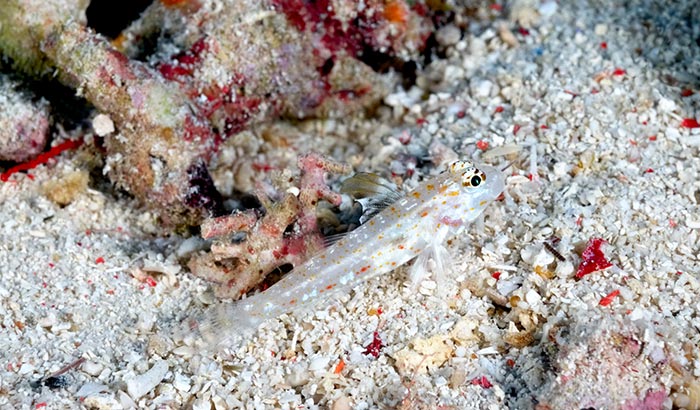
There are so many different options when it comes to pool filter sand that choosing just one can be difficult. And yes, you will be choosing just one because they come in large bags – at least 40 pounds each. This means that unless you want expensive sandbags lying around your home, you need to pick the best right away.
To help make shopping for pool filter sand a bit easier, here are some of the factors that you need to consider:
Filtering Capacity
Almost all pool filter sand is better than most of the other aquarium filter media out there. You will pretty much end up with a good filter medium whichever one you choose. However, you should not just choose filter sand based on how good it is at catching solid debris.
You know you have a good pool filter sand if you notice that you are not scraping algae off the sides of the tank as much as you used to. Pool filter sand is supposed to prevent algae bloom, which is why well-kept swimming pools do not have green water.
Good filter sand should also be able to catch chemical impurities in the water. Your filter should not just be able to keep your aquarium water clear but also remove nitrates, ammonium, chlorine, and other nasty chemical stuff. This will keep the water healthy and your fish happy.
Ease of Use
It is very likely that you will be using the pool filter sand in a bioreactor/fluidized bed filter, so an important thing that you need to consider is the ease through which you can make the sand move in the reactor. Fluidized bed reactors need to have the filter medium moving for them to work.
The pool filter sand should not be so dense that it would just settle at the bottom. It will only cause the filter to clog and the water to stagnate. The sand should also not be so light that it makes the water cloudy. It should be the right density that acts like a fluid when you pump water through it.
With that said, the sand should readily “tumble” when you turn on the water pump. You do not have to help it along by swirling the sand. Also, the sand should not clump together while the filter is working. It will cut its efficiency by quite a lot.
Easy Preparation
One important thing about the pool filter sand that you should know is that you will need to rinse it several times or more before you put it in your aquarium filter. If you pour it in straight from the bag, the dust will mix with the water and turn the tank foggy. Some brands will even discolor the water.
If you do not have that much free time on your hands, get a bag of pre-washed filter sand. These products have most of the sand washed out of them before packaging. However, you should still rinse them one or two times before use just to be on the safe side.
Ideal as an Aquarium Substrate
The great thing about pool filter sand is that most of them are great for use as aquarium substrates. Because of their finer consistency compared to regular aquarium gravel, they provide a more natural-looking surface if that is what you are looking for.
Moreover, if you want to place live plants in your tank, filter sand is a better planting medium as it allows the roots to hold on better. Now, not all filter sand is ideal as an aquarium substrate.
Some use recycled glass as the aggregate material, which means that they will tear up the insides of the fish when they swallow them. It is best to get natural pool filter sand as they are not as jagged as glass.
Lifespan
The nice thing about pool filter sand is that it can last significantly longer compared to other filter media. However, different brands last different lengths of time. It can be hard to simply trust the word of the manufacturer regarding this, so you will need to read through pool filter sand reviews.
See what other customers had to say about the product. If the reviews are mostly negative, then you need to steer clear of that particular product. Now, if you find that the reviews are mostly positive and unique (there might be some shenanigans going on), then you can trust that brand.
Cost
Prices of pool filter sand can widely vary from one brand to the next. It is mainly due to the composition of the filter media. Some brands use all-natural but treated sand while others use other materials like borosilicate crystals, recycled glass and plastics, and sometimes, even resin.
Here is another problem. If you will only be using the filter sand as a filter medium, you will be stuck with a large bag of the stuff for a long time. Pool filter sand typically comes in large 50-pound bags, so if you will not be using the stuff as substrate, I suggest looking for smaller bags if there are any.
Keep in mind that you will only be using around a cup of filter sand in your fluidized bed filter. This means you will be stuck with a large bag of filter sand for quite a long time. If you are lucky and you got a good product on the first try, then you are set for more than a year.
You may have thought that choosing a pool filter sand is going to be easy. It is just sand anyway. However, this product is not as simple as regular sand. They have other qualities that make them the ideal filter medium, which means that ordinary sand will not work.
Frequently Asked Questions
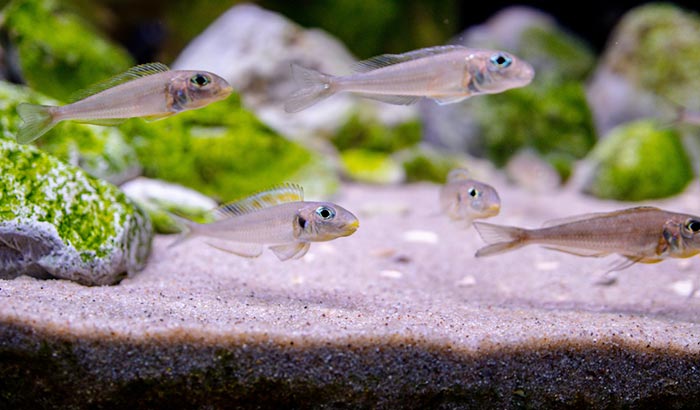
Is pool Filter Sand Safe for Aquariums?
Yes. If used as a filter medium, any kind of pool filter sand is safe for use. However, if you will be using the sand as a substrate material, use only natural or silica sand. You should never use glass media as they are not good for the fish.
How to Clean pool Filter Sand for the Aquarium?
The only time that you will need to clean pool filter sand is the first time that you use it. Ideally, you will need to put the filter sand in a large bucket. After that, you have to rinse it until the water runs clear. This usually takes around 4-5 rinse cycles. However, some pre-rinsed products require only 1-2 times.
Conclusion
Pool filter sand has many different applications, especially if you use it on aquariums. You can use the sand as a filter media for a fluidized bed filter, or if you are setting up a new tank, you can use this product as a substrate to line the bottom.
However, not all pool filter sand media are made equal. They can also be quite expensive. If you want to get the most out of your money while guaranteeing the safety and well-being of your fish, you need to get the best pool filter sand for aquariums that you can find in the market.
The post The Best Pool Filter Sand for Aquariums in 2022 appeared first on Aquatic Eden.
]]>The post Do I Need Carbon in My Aquarium Filter? appeared first on Aquatic Eden.
]]>
Maintaining the cleanliness of my aquarium is a HUGE priority. I want my fish to live long and healthy. I take every precaution and necessary maintenance task as well as I can. However, do I need carbon in my aquarium filter?
In my research on keeping my aquarium clean, I noticed that many hobbyists fanatically think that carbon in the filter is a must. On the other hand, another group feels just as fanatically that carbon is not essential and is actually a waste of resources.
So, I did my research. I examined what carbon does to water. I checked if I can keep my aquarium clean even without it. And I looked for other ways to keep my aquarium pristine more effectively.
What is Carbon in Aquarium Filters?
The type of carbon used in aquarium filters for decades is actually technically called activated carbon. It is a popular filtration media product.
Activated carbon can be made from any carbonaceous materials which are processed to improve their absorption capabilities. In aquariums, the most popular form is granular activated carbon (GAC). The most common material used to create activated carbon for aquariums is bituminous coal, also known as black coal.
Benefits of Having Carbon in My Aquarium Filter
Activated carbon absorbs and adsorbs contaminants in the water such as chlorine, phenols, and tannins (all of which are causes of headaches for aquarium hobbyists). Absorption is the process of trapping contaminants in the pores of the filter. Adsorption, on the other hand, is a chemical bonding process. Activated carbon traps pollutants by chemically bonding them to the many bonding sites within itself.
Activated carbon reduces the fishy odor and yellowish color that naturally develops in an aquarium. So far, carbon seems like a good option for filtration media in my aquarium.
Disadvantages of Having Carbon in My Aquarium Filter
But there are toxins that carbon does not filter out. And these toxins are a big deal because they are prevalent within an aquarium ecosystem. Ammonia, nitrite, and nitrate naturally develop due to the inhabitants of an aquarium.
The fish excrete wastes from their bodies in the form of ammonia. Ammonia is toxic to the fish. Thankfully, certain bacteria grow in aquarium substrates (sand or gravel) that consume ammonia and transform them into nitrite. Then, another kind of bacteria consumes nitrite and converts it to nitrate. Nitrate is not as toxic to fish as either ammonia and nitrite. However, a large amount of nitrate in an aquarium is still dangerous to the fish.
The fact that activated carbon does not filter ammonia, nitrite, and nitrate means that it’s not the solution that solves all problems. However, the same bacteria that convert ammonia into nitrite and nitrite into nitrate can also live in activated carbon. So it can indirectly filter out ammonia and nitrite.
But if I already have gravel, I don’t need carbon. Furthermore, activated carbon filters out most fish medication. It will take the extra work of removing the carbon from the filter before giving the entire course of medications to the fish.
Lastly, activated carbon gets exhausted. It does not last a long time before it reaches its maximum absorbing and adsorbing potential. After a month, carbon will no longer filter contaminants and pollutants. The aquarium will smell and look yellow again. It requires monthly replacement.
My Verdict
After looking at the pros and cons of having activated carbon as a filtration media in my aquarium, carbon seems like an added cost. I would have liked it better if it can filter out ALL toxic contaminants and pollutants if I had to change it every month.
Since I have aquarium gravel, which can provide a home to bacteria that can remove ammonia and nitrite, I don’t see the point of carbon. “What about the nitrate, phenols, tannins, and chorine? How will I take care of those?” I hear you ask.
Regular cleaning of the aquarium and replacing its water is a necessity, with or without activated carbon. Cleaning the aquarium and replacing its water is essential – this is the one maintenance issue against which no aquarium hobbyist argues.
Since cleaning the aquarium and replacing its water regularly effectively removes chlorine, phenols, tannins, and nitrate, I say that carbon is unnecessary.
Conclusion
Carbon filters out chlorine, tannins, phenols, and medication – but it can’t filter out ammonia, nitrite, and nitrate. It requires to be replaced monthly and yet doesn’t eliminate the need to clean and replace the aquarium’s water. On the other hand, gravel and regularly cleaning and replacing the aquarium’s water does what carbon can and more, for less the cost. Do I need carbon in my aquarium? I don’t think so.
The post Do I Need Carbon in My Aquarium Filter? appeared first on Aquatic Eden.
]]>The post How to Add CO2 to Aquarium appeared first on Aquatic Eden.
]]>
Let’s start by clarifying that you only need to add CO2 (Carbon Dioxide) to your aquarium if you have aquatic plants that require more carbon dioxide than your aquatic animals are capable of producing and sustaining constantly.
Now, if you have a heavily planted aquarium then there are various ways to add CO2 to your tank, you can either choose the natural or what they call “low-tech” tanks or by using CO2 injections. Both can be effective depending on the size of your tank, the type of aquatic plants that you have, and the overall aquascaping process that you follow.
Different ways to add CO2 to the aquarium
The role that CO2 plays in the aquarium ecosystem is important not only for aquatic plants but to the cycle of the environment in general. In the natural habitat, the circulation and supply of carbon dioxide are plenty because they have multiple natural sources unlike in the planted aquarium where there is almost no natural source except the inhabitants.
Some people opted for the low-tech tank process while others chose to use CO2 supplements or CO2 injections, whichever method you decide to apply for your aquarium, just make sure that you keep the CO2 level at a safe level.
Even though it still depends upon the size and volume of your tank, the safest carbon dioxide level is 30ppm per litre, this works for most aquatic life.
How to add CO2 to aquarium naturally
Choose plants purposely – if you intentionally choose the type of aquatic plants that don’t require high carbon dioxide you shouldn’t have to worry about adding more CO2 since the inhabitants are producing the supply of carbon dioxide for the ecosystem.
It is also worth considering adding more fish to your aquarium if you do have enough space, to increase the natural source of carbon dioxide that would circulate in their ecosystem. Here are some plants that don’t need a high amount of carbon dioxide:
- Anubias species
- Water wisteria (Hygrophila difformis)
- Dwarf sagittaria (Sagittaria subulata)
- Vallisneria species
- Ludwigia Repens
- Java moss/fern
- Marsilea species
- Rotala rotundifolia
- Pearl weed ( Hemianthus micranthemoides)
- Sword plants
- Red/green lotuses (Nymphaea Zenkeri)
- Water sprite (Ceratopteris thalictroides)
Go for soil: aquariums that are soil-based substrates have proven to provide better results compared to those aquariums that use sand or gravel substrates, the natural decomposition of soil serves as an additional source of carbon that promotes growth and a long-term supply of nutrients to the aquatic plants.
Using the commercial pellet aqua soil on top of the raw soil helps keep the fine particles under and it is easier to handle and plant in, producing more stable results because of its consistency.
Regular fertilisation: to ensure that your plants and other inhabitants are getting the right amount of nutrients that they need for optimal growth a weekly dose of controlled fertilisation is still recommended.
Be extra careful not to overdo it because too much dose of fertilisation might also be harmful not only to the aquatic plants but also to the aquatic animals in your aquarium.
How to add CO2 to aquariums using supplements and injections
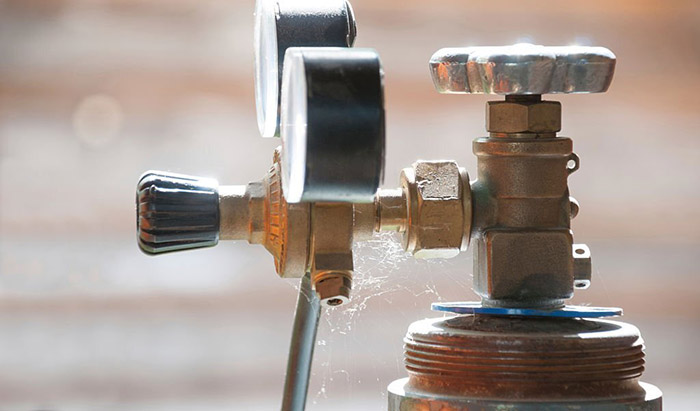
CO2 supplements: these are carbon-based substances that act like a booster that you measure and you pour into your tank. Clearly one of the easiest ways to make sure that your aquarium is getting the carbon dioxide supply for the growth of the aquatic plants.
Here are some of the recommended brands that you could try to work with:
- API CO2 booster
- Fluval Mini Pressurized CO2 Kit
- Seachem Flourish Freshwater Plant Supplement
- Aqueon Leafy Green Liquid CO2
- API Leaf Zone Freshwater Aquarium Plant Fertilizer
CO2 injections: these come in different sizes depending on your aquarium needs, it uses a pressurized vessel to inject CO2 into the tank. You will only need to install CO2 injections if your aquarium is getting a high amount of light, low-light aquariums don’t usually require an extra amount of CO2 because the naturally available level of CO2 is enough to match the light.
Here are some of the top-rated CO2 systems for planted aquariums:
- CO2 Art Pro-Elite Series CO2 Regulator
- CO2 Art Pro-SE CO2 Regulator
- FZone Aquarium CO2 Regulator
- NilocG Aquatics CO2 Regulator
- CO2 Art Diffusor
Why add CO2 to aquariums?
As I’ve mentioned above, you only need to if you have aquatic plants growing in your tank, plants, in general, need water, light and carbon dioxide to produce glucose and oxygen, which they will be using to grow, repair, and continuously survive.
Having enough carbon dioxide will ensure that photosynthesis would be easier for your plants, which will then guarantee that they are producing their food and oxygen which are vital for your aquarium’s overall environment.
Having healthy aquatic plants is also beneficial for all aquatic animals because these plants naturally absorb harmful parameters that may cause harm to the aquarium’s inhabitants.
Conclusion
There are a few things to consider before deciding how to add CO2 to your aquarium, first is the type of plants that you have, do they require more carbon dioxide? The second is the size and volume of your tank, and the third is which method can you maintain and sustain.
By asking these basic questions, you should be able to determine what exactly are your aquarium needs and how to provide it properly by equally considering all inhabitants’ welfare.
The post How to Add CO2 to Aquarium appeared first on Aquatic Eden.
]]>The post Air Stone vs Bubble Wall appeared first on Aquatic Eden.
]]>
If you are an avid aquarist, you should know the importance of providing dissolved air to the aquarium’s inhabitants. Several devices can achieve such results, but the general population doesn’t know what those devices are and which is the best in an aquarium setting. This air stone vs. bubble wall post settles the differences between these two devices. We will tackle their differences in function, looks, features, and more.
Air Stone vs Bubble Wall – Not a Competition
The first thing you have to understand about these two devices is that they don’t have the same function. It is not right to compare them to one another because one serves as an aquarium accessory while the other as a decoration.
The air stone is a tiny aquarium accessory that primarily helps in the critical exchange of gas underwater. On the other hand, a bubble wall is an enclosed body of water that features dancing bubbles within itself. A bubble wall is more of a decoration piece; it can have features such as LED lightings, uniquely shaped structures, custom logos, and more.
The Functions of an Air Stone and a Bubble Wall
Let’s go into further details regarding the functions of these two devices.
Air Stone
Gas Exchange
The air stone has several functions. Its primary function is to promote the exchange of gasses within the aquarium by circulating the water.
Circulating the water inside an aquarium promotes the rapid exchange of dissolved gasses like carbon dioxide, methane, nitrogen, and oxygen.
When there is no water movement, the water and the dissolved gasses at the bottom of the tank remain there. This setup is comparable to a room with no ventilation system in place. All the stuffy air remains in the room instead of getting released out. Water circulation ensures that all dissolved gasses like carbon dioxide, nitrogen, and methane get released into the atmosphere, and oxygen enters the water.
Moving water transports tiny oxygen bubbles throughout the aquarium and releases unwanted glasses. Furthermore, moving water also mixes the different layers of water in the aquarium. The bottom of the aquarium usually has the least amount of oxygen because most of the fish live there. But with water circulation, the oxygen-rich top layers of water get transported to the bottom, and the bottom layer gets moved to the top.
Physical Activity for the Fishes
In environments such as small aquariums, fishes get restricted movements because they don’t have enough room for active swimming. But with water circulation, there is constant resistance that makes the fishes exert effort and use their muscles. The opposition may not be much, but it’s better than nothing.
The water circulation that an air stone can provide can help fishes get the physical activity that develops their muscles and promotes growth.
Filtration
Lastly, an air stone somewhat assists in the filtration of an aquarium. Another side effect of water circulation is that it never allows organic wastes to settle on the bottom of the tank. Wastes such as toxins, mucus, and metabolic feces will not set on the corals usually found in aquariums if the water keeps moving.
Bubble Wall
Decor
The primary purpose of a bubble wall is to serve as decor. It looks nice, it’s unique, and it is an artistic addition to any room or office. But unlike other forms of art, the look of a bubble wall constantly changes because the water and the bubbles within it perpetually move. It is a lovely view for anyone in the office or room.
Distraction
A bubble wall is an excellent way to distract anxious or nervous patients in a doctor’s waiting room because of its unique aesthetics. Plus, you can customize a bubble wall to have a relaxing sensory and therapeutic appearance.
The Features of an Air Stone and a Bubble Wall
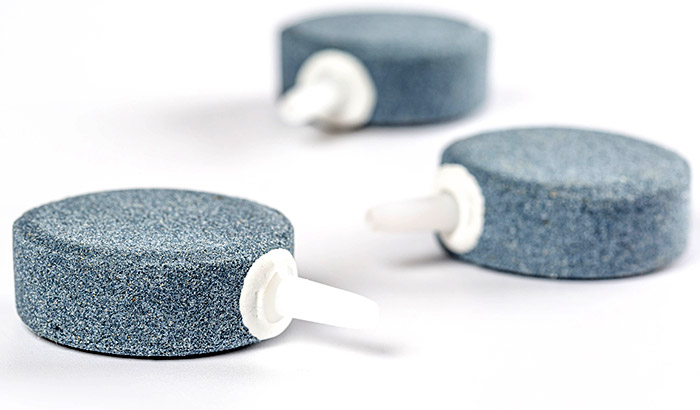
Now let’s discuss how these devices look differently.
Air Stone Looks and Features
The airstone is a tiny, porous device that comes in many shapes and sizes. It does not necessarily need to be made of stone; a few varieties of air stones are made of limewood. Most of the time, these devices are colored gray or blue. They can be round, cylindrical, domed, rectangular, or shaped like a coaster. In other words, they come in many shapes and sizes, depending on what you need for your aquarium.
A tube goes through the center of the air stone. This tube connects to a pump and transports the air from the pump to the porous stone or limewood. Then, the air disperses through the many pores or holes of the air stone, creating innumerable oxygen bubbles.
Bubble Wall Looks and Features
On the other hand, a bubble wall is usually a large decoration piece. Bubble walls also come in many shapes and sizes, just like air stones do. The maximum standard size of a bubble wall is 8 feet high and 4 feet wide. They are typically not very thick decorations, usually less than a foot in thickness.
At the bottom of the wall panel are holes through which a pump delivers air. The air becomes bubbles in the water encased in the wall and floats to the top. If the bubble wall has LED lights, it can set the mood or ambiance of the bubble wall uniquely.
Conclusion
An air stone and a bubble wall are two very different things. Their only similarity is they both produce bubbles. Other than that, they differ in functions, features, and looks.
This air stone vs. bubble wall post clarified the differences between the two devices. An air stone is an aquarium accessory that provides oxygen, circulates the water, and exchanges the gas in the tank. The bubble wall is a decorative piece that can set the mood in a room.
The post Air Stone vs Bubble Wall appeared first on Aquatic Eden.
]]>The post The Best Aquarium Water Changer for 2022 appeared first on Aquatic Eden.
]]>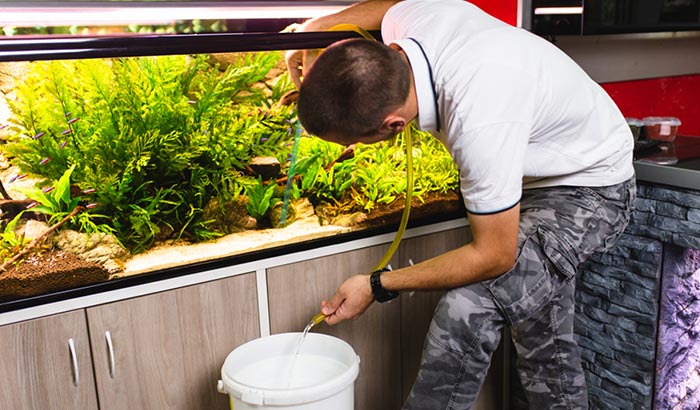
Ask any aquarist what they hate the most about the hobby aside from their fish dying, and they will tell you that it is the need for weekly water changes. Not only is lugging around buckets of water across your living room a pain, but having to ladle water from the tank can be quite tedious.
This is where having the best aquarium water changer comes in handy. I have been keeping a couple of aquariums for more than a decade. For most of that time, I have been changing the water of my tank the old-fashioned way. When I got my first good automatic water changer, it made my life better.
Believe me when I tell you that having a quality aquarium water changer will make the hobby much more enjoyable. To help you pick out the one that is right for you, here is a quick guide and a couple of recommendations.
Best Aquarium Water Changer Reviews
1. Hygger Aquarium Water Changer

Back in the day, you needed to use a rubber hose to siphon the water from the aquarium and into a bucket. The problem with that is that you usually end up with a mouthful of tank water. This aquarium automatic water changer works on the same principle but in a much easier and a lot less disgusting way.
Aside from siphoning the water from the aquarium, it also serves as a gravel vacuum. This product comes with a coarse gravel filter, so gravel can go up the inlet without going any further than the end of the inlet tube. I liked how you are essentially killing two birds with one stone.
I also liked that Hygger included a 79-inch rubber hose in the package. This made it easier for me to clean and remove water from my 100-gallon tank without having to move the drain bucket often. I pretty much use this product like a vacuum cleaner, which made it quite convenient to use.
Aside from the hose, I also liked how the inlet hose can extend from 16-inches to 32-inches. The package comes with an extra extension tube that connects to the end of the inlet tube. This doubles the length of the tube. Again, it made cleaning my somewhat large tank much easier.
Most people think that you just need to pull the trigger a couple of times to get the water flowing and they are wrong. You need to squeeze the trigger rapidly 10-15 times to get the water flowing fast enough so that the siphon effect will kick in. This means you may get some sore hands from using it.
- Easy to use
- Cleans the gravel while removing the water
- Drains directly into a bucket
- The hose is of adequate length
- The inlet tube is extendable
- You need to pull the trigger rapidly to get the water to flow
This is a great improvement compared to the old-fashioned water changer hose that came with the ball. It may take a bit of getting used to. However, when you master how to use it, you will discover how great this product is.
2. Laifoo Aquarium Water Changer
The thing that I loved the most about this aquarium water change equipment is that it comes with a 50-foot rubber hose. This means that I no longer need to haul a bucket of stinky water across my living room. I just need to place the output end of the hose beside the storm drain outside the house. This is so convenient.
The gravel cleaning attachment works quite well. The flow of the water will pull up the dirt and debris from the gravel but will leave the pebbles at the bottom. The water flow is not so strong that it will kick up the dirt and cause the water to get cloudy. It is just strong enough to pick up dirt.
Unlike other aquarium water changers out there, this one is a lot easier to use. Just connect the one-way manual pump at the outlet end and give it around 10 quick squeezes. It is a lot easier to use compared to my old water changer that used the old valve and rubber ball.
Another thing I liked about this tap to tank water changer is that it consists of just a couple of parts and you can expect all of them to connect. This means that storing this product is quite easy. It also does not take up that much space.
The only issue that I have with this product is that the rubber hose’s diameter is a bit too small. If it was a bit bigger, then water would be flowing much faster. If you have a big tank, then you may have to wait a while until enough water is removed from your tank.
- Comes with a long hose
- Will not kick up dirt quite as much
- Features an easy to use one-way siphon ball valve
- Attaches to your faucet for easy refilling
- Contains only a couple of parts, making it easy to store
- The hose is a bit too small
This product is so much easier to use compared to siphoning the water out of the tank the old-fashioned way. The long rubber tube is a plus. I just wish that it was a bit bigger, though.
3. U-BCOO Fish Tank Siphon Water Changer
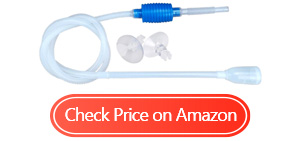
This aquarium water changer system is so simple to use that you do not even need to read the instructions that came with it (but you really should read it). I just gave it a couple of quick pumps and the water started flowing out on its own. This is such a welcome change compared to manually scooping out dirty water into a bucket.
The suction that this siphon has is just strong enough to lift away any dirt and debris stuck on the gravel and at the bottom of the fish tank. A bit of the gravel might get lifted, but not so much that it will make the water cloudy. It will disturb the gravel a bit, but will quickly suck up the dirt.
This product uses the natural siphon effect of U-shaped hoses to suck up the water from the tank into a bucket placed lower than the bottom of the tank. Just give the pump a couple of quick squeezes to get the water flowing and it will continue draining the water if you do not stop it.
This product is also made of BPA-free plastic, so there is no risk of any toxic chemicals leaching into the water. You can continue using this product and be assured that your fish will be perfectly safe and healthy.
I do wish that there is a way to extend the aquarium water changer hose. I have a big reef tank, and I need to move the bucket several times to clean the substrate. It would have been better if the hose was a bit longer so I only need to move the bucket once or twice.
- Easy to get the water flowing
- Made of BPA-free plastic so it is safe for your fish
- Will not kick up debris and cloud the water
- Can clean the gravel while removing water
- No batteries or additional pumps needed
- The hose is a bit too short for larger tanks
This is a handy tool to have if you have a small to medium-sized tank. The great thing about this is that you are essentially cleaning the tank while changing the water at the same time. This is truly a great time-saver.
4. SSRIVER Nozzle Water Changer
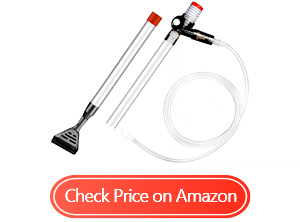
I find this water changer a great gadget that makes cleaning and replacing water in an aquarium less of a hassle. If you are only replacing the water, you can clip the inlet tube in place on the tank, and the outlet inside a drain bucket. This way, you will not disturb the fish too much because the water will gradually drain out.
If you need to slow down or completely stop the water flow, this product comes with a hose clamp. Clip the hose all the way to stop the water from flowing, or open it a bit to slow down the water flow, which is ideal when you are cleaning the gravel.
If you have a large capacity tank, you would be glad to know that this product has an extendable inlet pipe. You can attach another tube at the end to double the length of the inlet. This way, you can reach the bottom and every corner of your tank easily.
If you will be using this product as a gravel cleaner, then you need to make sure that you connect the included basket filter. It will allow you to clean the gravel without having them siphoned out of the tank with the water. The basket filter will also prevent your fish from accidentally getting sucked into the inlet pipe.
I am quite impressed with this automatic fish tank water changer, but it can still improve in some areas. One of the things that I wish was better is the diameter of the rubber hose. It needs to be a tad bigger to make the water drain out faster. If you have a large aquarium, it will take a while for this product to take out a third of its contents.
- Lightweight and easy to use
- Comes with a basket filter to prevent gravel from going through
- Has a clamp to control the water flow
- The inlet tube can be extended
- Comes with a glass scraper
- The rubber tube would be better if it is a bit bigger
If you have a large tank, then you might want to figure out a way to retrofit a slightly larger diameter rubber hose on this product to make it drain faster. On the other hand, the rate of flow is not all that horrible. Overall, it is still a great product.
5. AQUANEAT Aquarium Siphon Water Changer
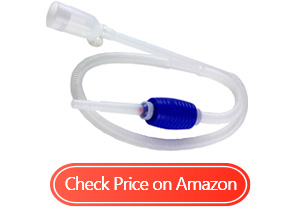
There are times when simple is best and this product is a great example of it. This siphon has no fancy mechanisms. It is just basically a flexible hose with a hand pump at the outlet end. It uses basic hydraulic concepts to drain the water from your aquarium, which makes water replacements much easier than before.
In the past, I used to use a large mug to ladle water out of the tank carefully and pour the water into a bucket. Not only is this process painfully slow, but I also typically need to mop up the floor afterward. This is no longer a problem with this product. I just prime the siphon and the water drains straight into a bucket.
Another neat thing about this product is that you do not just drain water from the tank. You can also use this same product to clean the gravel. Aside from dirty water, this siphon can suck out the debris and fish waste from the bottom of the tank. This means that you are hitting two birds with one stone.
To prevent your aquarium substrate and small fish from getting sucked into the inlet tube, this product comes with a filter screen. You just have to attach the filter at the end of the filter valve and it prevents the gravel and fish from getting into the inlet. This will also prevent the gravel from jamming up the siphon.
Although I did not expect this automatic water change saltwater aquarium to have the same build quality as the more expensive water changers, it would have been better if it was made using materials that are a bit more robust. I think that this product is good for a couple of months’ worth of water changes, after which, it will start to deteriorate.
- Easy to use
- Drains directly into a bucket, making it less likely to spill
- Cleans and drains the aquarium at the same time
- Comes with a filter screen
- Has an adequately long hose
- The plastic used for this product is a bit flimsy
Although it might not be as reliable as some of the other more expensive brands, for its price, you will be getting a lot of value. Although it may not last for an entire year, you can easily buy a new one to replace it and not hurt your budget.
6. MingDak Siphon Gravel Washer Water Changer
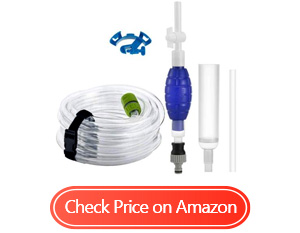
This product is not just for removing all the old water from the tank, but it also siphons out the dirt and debris from the bottom of the tank. This saves me a lot of time as this allows me to do two things at the same time. Although this does not clean as great as actual tank cleaners, it still does a good job.
This product is BPA-free, so there is no risk of harmful chemicals leaching into the water. This means it is safe to leave in the tank while you are waiting for it to drain the water. Even after a couple of months and the plastic starts to deteriorate, it will not contaminate the water and make your fish sick.
This tool is typically used for draining the tank when you are partially replacing the water, and this works well for that. You just need to squeeze the rubber pump a couple of times to get the water to start flowing. After that, you can leave it as it drains the tank.
Aside from draining the tank, you can also use this to refill it gently with clean water. I use this tool to refill my tank because using a bucket will disturb the substrate too much and make the water cloudy. This product gently refills the tank without disturbing anything inside it.
The problem that I have with this product is that it is made of very flimsy and cheap plastic. I have been using it for around four months or so and the hand pump started to develop leaks. The plastic became quite fragile and started to crack.
- Cleans the tank while taking out the old water
- Can effectively suction the dirt and fish waste from the bottom of the tank
- Made of BPA-free plastic
- Useful in refilling the tank
- Very budget-friendly
- Made of flimsy plastic – The hand pump will most likely break after just a couple of months
This is a great tool for beginners at the aquarium hobby. It will make water changes a lot easier and significantly less messy. Having this in your tool kit will make this hobby even more enjoyable.
7. STARROAD-TIM Gravel Cleaner Water Changer
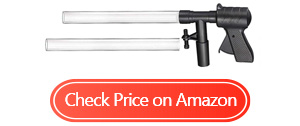
The thing I liked the most about this water changer is the design of the hand pump. This product has a pistol-styled handle, which promotes ease in priming the siphon. You still need to pump the trigger rapidly, but it is quite easier to do compared to using the old-fashioned ball pumps.
I also liked how long the outlet hose is. I have my aquarium set up quite high because I use the space underneath for storage. Having a long outlet hose allows it to reach a bucket set on the floor. Draining the tank this way is surely much easier and a lot less messy.
Moreover, it is possible to extend the inlet tube by attaching another tube at the end. This helps quite a bit with my 100-gallon tank, allowing me to reach the corners without getting my forearms wet. This water changer also doubles as a gravel cleaner and a good one at that.
After I finish cleaning the fish waste and uneaten pellets, I use the clamp on the handle to affix the inlet tube to the side of the tank. I also use the included clips to keep the outlet tube inside the drain bucket. This prevents the water from splashing about. Ever since I used this tool, I never needed to break out the mop after water changes.
The only thing that I wish was made better is the trigger. You will need to pump the trigger rapidly to get the water flowing out. However, the trigger is a bit too stiff and somewhat uncomfortable to squeeze while the product is still new. It does get easier once it is broken in.
- Ergonomic handle design
- Comes with a long flexible hose
- The inlet tube can be extended
- Comes with clips and a clamp to secure the siphon on the tank
- Has an algae scraper
- Needs to be pumped rather quickly to get it primed
This is a great tool that every aquarium hobbyist should have. It helps in replacing water and cleaning the tank. If you do not have that much time on your hands, it will be great for all your maintenance needs.
8. Aqueon Aquarium Water Changer
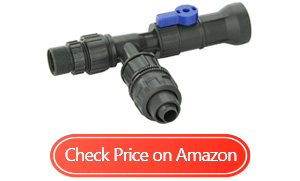
This electric aquarium water changer is a sort of Swiss Army knife of aquarium cleaners. This has a couple of attachments that allows this tool to do six different functions. These functions include a gravel and sand cleaner, come with a bag filter, and can clean inside the glass and even the corners.
This uses an electric submersible pump. This pump is compact and light, but it has a significant amount of power with a capacity of 1700L/hour. If you will be partially replacing the water of your aquarium, it will only take around 10 to 15 minutes to finish the task. You can also use it to refill the tank.
This tool is quite easy to set up. You do not need any additional tools to assemble. It will only take you a couple of minutes to put together right out of the box and you can start using it immediately. The long extendable handle allows me to use it like a vacuum cleaner.
It is also quite easy to maintain. You can disassemble the entire thing without using any tools, not even a screwdriver. I could even remove the pump motor by hand, which makes it easier for me to clean the impellers of the pump. Regular maintenance will provide you with many years of use.
The only problem that I have with this tool is that it is a bit awkward to use. The inlet port of the tool is bulky and a bit unwieldy. It takes a bit of maneuvering before you can get to the corners of the tank.
- Has 6 functions
- Small pump with a high flow-rate
- Easy to use
- Easy to clean
- Can extend the handle
- Not usable for full tank draining
This product is a sort of jack-of-all-trades when it comes to aquarium maintenance. It does a lot of things somewhat well, but not nearly as good as professional tools. Even though this tool has a couple of hang-ups, it will still lighten your workload significantly.
9. UPETTOOLS Automatic Vacuum Water Changer
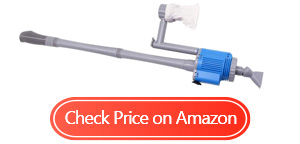
Unlike the other water changers in this article, this one has a higher-quality construction. This does not use flimsy plastic parts, and the squeeze pump is made of silicone instead of thin rubber. Even though this set is just a bit more expensive, it will last significantly
Also, unlike the other products in this list, this one has a real valve that helps in controlling the water flow. You can set the flow to just half of the capacity, so you can have enough time to clean the gravel using the vacuum attachment.
Speaking of the gravel cleaner, this one has a wide and tall chamber for cleaning the substrate. This tool has just the right amount of suction to lift the substrate but not siphon them up the inlet tube. In addition, the vacuum chamber has a substrate filter that does not permit gravel and your fish from getting through.
The included hose is a bit on the short side, so I was thankful that you can add more lengths of hose. The included hose is enough to reach a bucket placed on the floor near the tank, but I added even more hose so the water goes straight into the storm drain.
The hose that came with the tool is much thicker than what the other water replacement tools come with, but that also means that it is stiffer. I had a harder time using the gravel cleaner because the hose was a bit too stiff.
- Has an actual valve to control water flow
- Comes with a durable rubber hose
- The gravel cleaner is wide and rigid
- Has an option to increase hose length
- The package comes with a cleaning brush
- The hose is a bit too stiff
This product is a great basic aquarium siphon. However, some areas need improvement. Some of the things you can do would be using a softer, more flexible hose, improving the valve, and adding more hose length. Still, it is a very good beginner-level aquarium cleaning tool.
10. ZaneSun Gravel Cleaner Water Changer
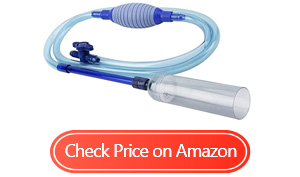
This is one of, if not the best, water-changing tools I have ever used. This tool connects directly to your kitchen faucet. You just need to run a length of hose from the tank to the sink and turn on the faucet. The running water from the faucet will create a vacuum in the valve, which will then suction water from the tank.
Speaking of this tool fitting your faucet, you only need to screw this onto the tip of your faucet and it should be good. If your faucet does not have threading, you can get fittings for it in your local hardware store.
I like using this product because it means I do not need to lug around a heavy bucket full of nasty-smelling water. The dirty water goes directly into the kitchen sink, so there is no risk of spilling stinking tank water on your carpet or upholstery.
If you have other water-changing tools, like the ones with the manual pumps, you can use their cleaning attachments on this product. You only need to get a hose that fits the attachments and you are ready to go. I love using this product for cleaning the gravel as it can provide more suction compared to siphons.
The obvious issue that I have with this product is that you have to buy the other parts separately. I first thought that this tool already came with the necessary parts but it does not. I had to order the parts separately, like the Aqueon aquarium water changer 25 feet and waited for a week or so before I could start using it to clean my aquarium.
- Easy and convenient to use
- Can fit on most kitchen and garden faucets
- A lot less messy to use
- Can be used in refilling the tank
- Compatible with other aquarium maintenance tools
- You will need to buy the other components separately
This is probably one of the most convenient water-changing tools that I have ever had the pleasure of using. This eliminates the use of buckets and just drains the dirty water into your sink.
What to Look For When Buying a Aquarium Water Changer
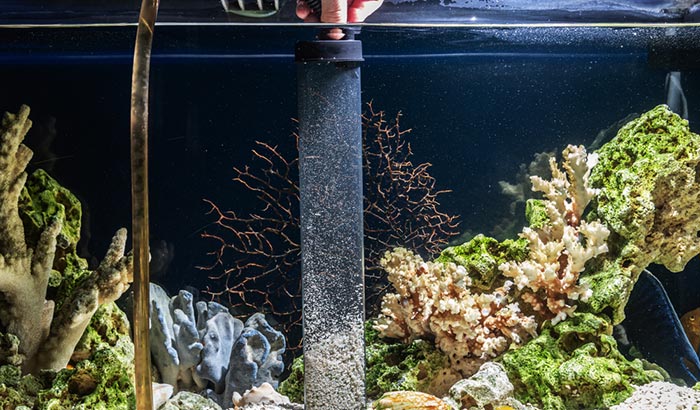
Here are some of the features and qualities that you need to look for when you are shopping for a new water changer for your aquarium.
Accessories Included
A good water changer would typically come with accessories that will help you maintain your aquarium. The product you buy should at least come with a gravel/sand cleaner and a glass scraper.
All these accessories will help you clean your tank while you are removing water at the same time.
Hose Length
You will need to measure the distance between the bottom of your tank and the top of the bucket you use for draining the water. Make sure that the product that you buy comes with a hose that can go from the bottom of your tank and into your drain bucket.
Even better, get a product with a hose that is long enough that you can place the outlet into a storm drain.
The Durability of Materials
You can easily tell just by holding something if it is made of durable materials or not. There are many water-changing products out there that are made of cheap plastics, and they usually do not last longer than two or three months.
Ease of Use
The pump and valve should be strong enough that you will only need a couple of squeezes to get the water flowing from the tank and into your drain bucket. Some have pistol grips and they look like they are easy to use. However, those are the ones that take the most work to get the water flowing.
If your budget allows, some come with a small submersible pump that you can use as a vacuum cleaner for your aquarium. Some connect directly to your kitchen faucet. Turning on the faucet will create the vacuum needed to draw out the water from the tank.
Budget
If you are a beginner at taking care of an aquarium, you will do well using the cheaper plastic water changers, especially if you have a small 10–20-gallon aquarium. If you will only be doing partial water changes, the amount of water you will need to take out won’t even fill halfway up an average-sized bucket.
If you have a larger tank, like say a 100-gallon tank, then you need to get one that has a faster flow rate and attachments that let you reach the corners of your tank.
Frequently Asked Questions
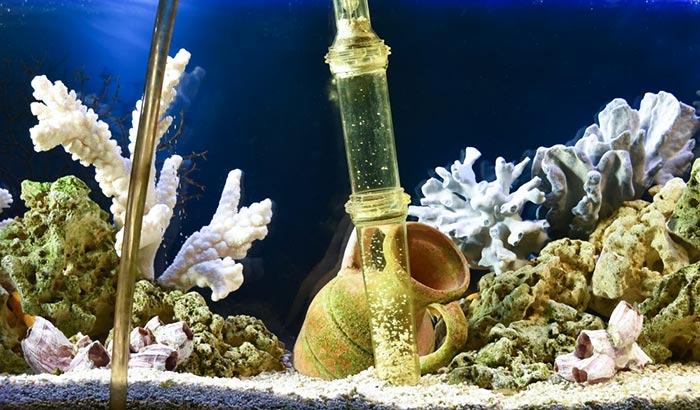
How to Dry Out Aquarium Water Changer Hose?
You just need to hang it on a hook that is high enough that both ends are off the ground. This will allow the water inside to drip out and eventually allow the hose to dry. Do not let your hose dry under the sun though, it will make your hose brittle.
How to Get Rid of the Smell of Plastic on the Tubing of the Aquarium Water Changer?
The only way you can get rid of the plastic smell is to put the tubing outside to air out the smell. In an hour or two, the strong plastic smell will be gone. Also, do not place the hose directly under the sun. Doing so will make the hose hard and brittle.
Conclusion
Just like what has been mentioned many times earlier, a water change tool can make aquarium-keeping a much more enjoyable and relaxing hobby. Aside from the fact that you no longer need to lug around heavy buckets of water, you will also be cleaning the inside of your tank at the same time.
Follow the tips mentioned above and you will surely be able to find the best aquarium water changer that fits your needs and budget.
The post The Best Aquarium Water Changer for 2022 appeared first on Aquatic Eden.
]]>The post The Best Filter for 55 Gallon Aquarium in 2022 appeared first on Aquatic Eden.
]]>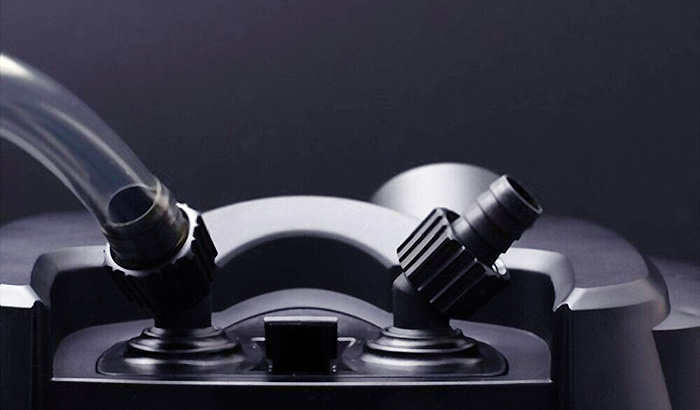
The best filter for a 55-gallon aquarium is one that can keep up with the biological load. If your tank is almost at the limit of its biological load, you will need a workhorse of a filter to get rid of all the waste that the fish will be creating.
On the other hand, you may not need a strong 55-gallon aquarium canister filter if you don’t have that many fish. You should concentrate more on water plants instead. You don’t necessarily need to have a larger capacity filter if you upgrade to a larger tank.
However, it is always good to err on the side of caution. Do not go overboard by getting the most expensive filter to control a very light biological load, too. It is just a waste of money.
So how do you figure out what is the best product for your aquarium? This article will teach you what to look for. You will also be getting a couple of recommendations for the best 55-gallon fish tank filter.
Best Filter for 55 Gallon Aquarium Reviews
1. Penn-Plax Cascade Aquarium Filter
I was surprised at how small this HOB (hang-on-back) 55-gallon fish tank filter system was when I first saw it. I thought back then that this would not be enough to keep a large 55-gallon tank clean.
However, when I primed it and turned it on, I was surprised at how fast it moved the water. This filter is small enough that I can hide it easily behind the tank, but it has a powerful motor that can move the water efficiently.
I like using a HOB Fluval filter for a 55-gallon tank like this because it is easy to set up and maintain. Unlike submersible filters, you don’t need to submerge your arm inside the tank. Whenever I need to thoroughly clean the water filter, I just lift it off the side and place it on an old towel. My hands would not even touch the tank water at all.
Another thing I liked about this filter that is not present in some of the others that I have tested is the flow rate adjustment valve. Despite its size, this filter can move water at a rate of 200 gallons per hour. If you are keeping small fish, strong water flow quickly agitates them. This filter allows you to dial the flow rate down so it won’t stress the fish.
A nice little addition to this filtration system is the activated carbon filter. Not only did it turn the water crystal clear, but it also eliminated a lot of the fishy smell that usually emanates from aquariums. This filter cartridge essentially purified the water as it passed through, thus keeping all the fish in the tank happy and healthy.
Although I liked the activated carbon filter, I was not a huge fan of the other included cartridges. In my opinion, they were a bit too fine. They filter a lot of waste but they also clog up quickly, thus reducing the flow rate considerably. I had to replace the filter cartridges almost immediately because the water was not flowing fast enough.
- Compact yet powerful
- Easy to set up and maintain
- Adjustable flow rate
- The set includes an activated carbon filter to reduce discoloration
- The filter cartridges are too fine
This is ideal for people who are looking for a quiet filter for a 55-gallon tank for their living spaces. You might even think that it is not working at times. What you will notice though, is that the water in your tank remains crystal clear even after months without complete water changes.
2. Polar 265GPH Aurora External Aquarium Filter
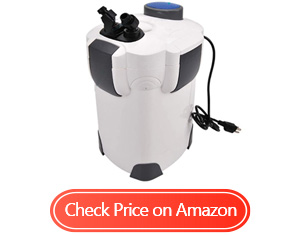
Compared to the other 55-gallon fish tank filter cartridge, this one is relatively easier to set up and use. This set already came with all the fittings and filter media, I just needed to connect the hoses and the output pipe then place the filter mediate inside the canister. I spent just a little over half an hour from opening the box to getting the filter going.
Speaking of the output pipe, I noticed that I can set this top fin filter 55-gallon aquarium to work in many configurations. There’s an option to submerge the pipe underwater, creating a slight undercurrent. However, I prefer to put it above the water line to agitate the surface. It prevents the formation of a thin film on top of the water.
I liked the large filter trays this canister filter has. I was able to put even more filter media, making it more efficient at mechanical filtration. Each tray has plenty of space containing the activated carbon and bio-spheres. It allowed me to put several more filter sponges. It helped keep the water clear for weeks even without partial water changes.
One reason why it is among the best power filter for a 55-gallon tank is that it operates quietly. I am now using it on a tank in my living room. I struggle to hear the water pump working even during the early morning when everyone is asleep. At times, I even thought that it stopped working until I heard the slight bubbling sound of the water.
The only issue I had with this filter is that the output bar clamps do not work that well on rimmed tanks. The rim would not let the plastic clamp hold onto the side of the tank securely. I had to use a couple of shims to give the clamp an even surface to latch onto.
- Fairly easy to set up and use
- Multiple output bar configurations
- Large filter trays
- The pump is so quiet
- The output bar is hard to attach to a rimmed tank
This is the best canister filter for a 55-gallon aquarium for people who want an external system but are not willing to shell out a lot of money for the more popular brands. However, even though this is relatively inexpensive, I have nothing but praises for it. It is durable and works efficiently.
3. NO.17 Submersible Aquarium Internal Filter
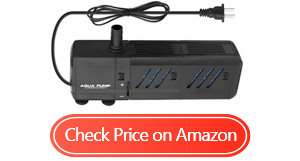
This is yet another small submersible filter that packs quite a lot of punch for its size. It has a water pump that is capable of 1000 liters per hour, ideal for aquariums from 55 gallons to around 100 gallons in size. However, I am also glad that I can adjust the flow rate because at maximum power, this filter disturbed the substrate of my aquarium.
Even if the filter for a 55-gallon freshwater tank can efficiently keep my aquarium clean, I would not like it if it is hard to clean. It is not the case for this one. I loved that I can tear it apart without tools. This allowed for thorough cleaning and maintenance. It is also easy to put back together. It took me less than 15 minutes to finish.
I also liked how this filter has a somewhat modular design. This system has two sets of sponge filters that are great for clearing up a cloudy tank. However, I found that for just maintaining the clarity of the water, it is enough to use one set of filters. This made it even more compact and easier to hide in the background while keeping the water clean.
Another nice thing about this filter is that I did not need to use a separate air stone to add oxygen into the water. I just attached the air hose onto the nub that is on the water outlet. This attachment is a lot better at aerating the water using an air stone because air is mixed with flowing water.
Now, I did say that this filter’s pump is powerful enough to circulate the water in a 55-gallon tank. However, the included filter media does not have enough surface area for beneficial bacteria to grow. Thankfully, I could fit a decent number of biospheres in the filter compartment after pulling out the included sponge media.
- Compact design while still being quite powerful
- Easy to disassemble for cleaning and maintenance
- Adjustable filter stages
- Can also add oxygen into the water
- Small filter surface area for essential bacteria growth
This all-in-one internal filter is not just great for large tanks up to 55 gallons. It also has a compact design that makes it suitable for smaller tanks. I was surprised at how simple it was to use this filter and yet it does its job well. It is not bad for such a small filter.
4. Hygger Replaceable Sponge Filter
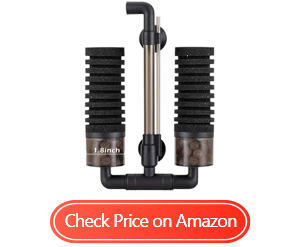
This product is probably the best sponge filter for a 55-gallon tank because it does not need a water pump to work. I only need to use a small air pump, which I already have because I used an air stone. The air creates a vacuum inside the filter that makes it draw through the sponge and bio media and then out through the outlet pipe.
I have used this type of filter before but this is the first one with a bio-filter. There are two compartments that I filled with ceramic biofilter balls, making it eventually a home for beneficial bacteria that will filter ammonia and nitrates from the water. I have been using it for a couple of months and so far, there have been no ammonia or nitrate spikes.
Other than circulating the water in the tank, because it uses an air pump to work, this filter also oxygenates the water at the same time. This means you do not need to use a separate air stone. This filter does the job of two attachments, so it saves a lot of space and keeps the aquarium looking clean and uncluttered.
I also liked that the output pipe can extend quite a bit over the surface of the water. This allows me to extend the output high enough to effectively agitate the surface of the water or set it low to give the water a bit of a current.
However, what I did not like about this filter is that the suction cups that were supposed to hold the filter in place are not that strong. I had to replace the ones that came with the filters with larger and stronger ones just to keep the filter from floating in the tank.
- Simple design does not need a water pump
- The two-stage design effectively removes solid and chemical waste
- Aerates and circulates the water
- Adjustable output
- Very quiet – The only noise you will hear is the slight sound of the bubbles
- The suction cups are not strong enough to keep the filter in place
I would recommend this filter for aquarists who do not need to deal with a large biological load in their tank. This is great for planted tanks populated with small fish like tetras, mollies, and the like.
5. Aqueon QuietFlow LED PRO Power Filter
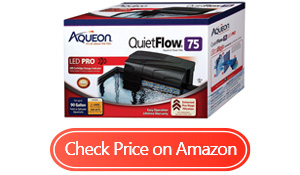
I have been unlucky enough to go through a couple of water filters because their motors burned out after a brief power outage. This is not a problem with this water filter as it has a self-priming pump. Even after a couple of thunderstorms tripped the fuse box, this filter kept on chugging.
Another neat feature of this filter system is that you do not need to visually inspect the filters to find out when you need to replace them. This filter has an indicator LED that lights up when the filter senses that the flow rate has gotten significantly slower.
This compact HOB filter has 5 stages of filtration. This filter uses mechanical, chemical, biological, and two optional specialty Aqueon filter pads. I used this filter when I reset my 55-gallon tank, and it only took one day to get the water crystal clear. The filters also worked well at decreasing ammonia and nitrate levels and keeping them down.
I also liked how low-maintenance this filter is. When it comes to cleaning, it is easy to dismantle. I did not need any tools to disassemble the filter completely, even the impeller was easy to remove and clean. Once the parts are clean, they are as easy to put back together as they were to take them apart.
The only thing I did not like is how easy it was to burn out the water pump motor. Even running it dry for a short while is enough to cause the motor to burn. The first filter I had burned out was when the water level got a bit too low. This would have been better if it had an emergency cutoff switch to prevent this from happening.
- The water pump is self-priming
- Has an indicator light to signal when to replace the filter cartridges
- Has 5 stages of filtration
- Easy to dismantle and clean
- The motor burns out immediately when it dries – It does not have a safety cutoff switch
If you keep a close eye on your tank and you don’t let too much water evaporate, this filter will treat you well. With proper use and maintenance, you can get a couple of years’ worth of use at least.
6. OASE Indoor Aquatics Biomaster Thermo
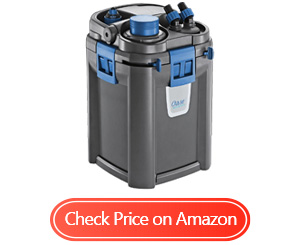
The thing I liked the most about this water filtration system is that it has an all-in-one function. It is not just a water filter. This device also has a built-in heater, which is a must for fish sensitive to sudden temperature changes. I liked this feature especially since I live where the temperature usually drops to below freezing during the winter.
I was also quite happy with how this filter kept the water in my tank clean and free of harmful chemicals like ammonia and nitrates. The water goes through 4 filtration stages, namely pre-filtration, mechanical, chemical, and biological filters. The water coming out of the output pipe is not just clear but also free of chemical contaminants.
I have used other brands of external cartridge water filters and most of them were quite noisy. It is like you can hear the water gushing inside them. This product is quite the opposite. It is so quiet that I sometimes think that it is not working or got unplugged accidentally.
In addition, this cartridge filter has a water pump that can easily circulate the water in a 55-gallon tank, maybe even bigger. It is so powerful that I had to dial down the flow rate as it is disturbing the substrate too much.
I honestly do like this filter quite a bit. However, I do wish that the heater feature was a bit more consistent. There have been times when the water temperature would fluctuate by an entire degree or two. It caused quite a bit of stress on my fish. It is not enough to kill them, but you can see their agitation.
- Has an integrated water heater
- Provides 4-stage water filtration
- Operates quietly
- Has a powerful pump – It can circulate the water inside a 55-gallon tank easily
- The heater is a bit inconsistent
If the built-in heater was a bit better at keeping a constant temperature, then I would have ranked this filter higher. It is still a great filter nonetheless. If you have a 55-gallon tank and you are keeping fish with high bio loads, like goldfish or big cichlids, then this is a great option.
7. JackSuper Ultra Quiet Fish Tank Filter

This aquarium filter has a novel little feature that I kind of like: interchangeable water outlet pipes. You can choose to use the wavemaker attachment, which is ideal for turtle ponds. There is also the aerator attachment, which you can connect with an air pump, oxygenating the water. There is also one to use the filter as a submersible pump.
For something so versatile, this aquarium filter is surprisingly easy to use. This was technically ready-to-use right out of the box. I just had to remove the plastic covering of the filter media and it was already good to go. It was also nice that it did not need any additional tools to disassemble and clean.
For something so powerful, I was surprised that it was not bigger. This aquarium filter has a water pump that is strong enough that it can circulate the water in a 55-gallon tank easily. However, it is also so compact that it was easy to hide behind aquarium decorations. This gave my aquarium a clean and uncluttered look.
Speaking of the water pump, I always used it for partial and full tank water replacements. I would run a hose from the device’s water outlet and into my kitchen sink for a mess-free water replacement.
Afterward, I would also use it as a submersible pump. I would place it inside a bucket of clean, treated water and run a hose into my tank. It helped quicken the entire process.
This would have been much better if I could adjust the water flow. As it is, the water pump is a bit too strong for my tank. It would sometimes blow my fish away. Thankfully, I was able to jerry-rig a flow limiter to slow down the water coming out of the outlet.
- Swappable outlet attachments
- Easy to install
- Compact design
- Moves a huge volume of water efficiently
- Non-adjustable water flow
The switchable water outlets alone make this filter a worthy purchase. They add more versatility and uses to the water filter. In addition, it also helped a lot that this water filter is inexpensive while working as well as the more expensive brands.
8. Marineland Emperor 400 Pro Bio-Wheel Filter
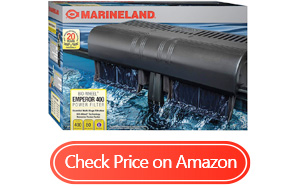
Getting this aquarium filter was a no-brainer for me considering that this is one of the most popular HOB filters in the market. The biggest selling point of this device, for me, is its durability. I have lots of aquarist friends that have been using theirs for almost ten years, and they have not run into any serious problems whatsoever.
Aside from being durable, this aquarium filter also does a great job at chemical and biological filtration, thanks to the bio-wheel feature. The spinning ceramic water wheel allows beneficial bacteria to grow on their surface, and the rotating action constantly exposes them to air, which makes them work more efficiently.
I also like the long inlet pipe that can almost reach the bottom of my 55-gallon tank. This makes sure that all the water in the tank gets sucked into the filter. I have had some aquarium filters that had short inlet pipes and it resulted in the water at the bottom getting stagnant.
Even though this aquarium filter has a lot of moving parts, this is quite easy to clean and maintain. Even the bio-wheels are easy to remove and clean. No wonder this brand of aquarium filter can last so long.
Although I haven’t experienced it myself, several people said that their filters were a bit noisy. This might be due to not cleaning the bio-wheels properly, resulting in a slight squeaking sound as they turn.
- Incredibly durable – It can work for a long time without breaking down
- The rotating bio-wheel works as advertised
- Low-maintenance and easy to clean
- Comes with a long telescoping inlet pipe
- The bio-wheel can get noisy when it is dirty
Except for some slight noise, which only happens when the filter gets too dirty, this is a great HOB filter system. If you keep fish that creates a large amount of waste, you need to get this filter. It will keep your tank ammonia-free if it is working properly.
9. FREESEA Internal Aquarium Power Filter
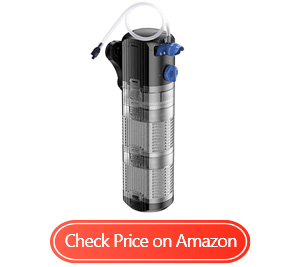
This aquarium filter does more than just clean the water but also dissolved oxygen effectively. I liked this feature because it removes the need for a separate air stone for oxygenating the water, which gave my tank a nice uncluttered look. I also used this filter for my planted tank, which uses an external CO2 tank.
Another reason why I like using this aquarium filter is that it is easy to dismantle for thorough cleaning. The filter compartments simply snap in place. I can also easily remove them by hand. I was even able to pull out the impeller easily for cleaning.
Although this filter has such a powerful pump motor, it is still quiet. If not for the bubbles that come out of this water filter, I would have sworn that it was not working. I have a small aquarium set up in my bedroom with this filter, and I can only hear it humming when completely quiet. The white noise it produces is also quite relaxing.
As I mentioned earlier, I also use this water filter for a smaller tank. Typically, a filter with a pump as powerful as this one would not work with a tank smaller than 55 gallons. However, since this has an adjustable flow rate, I was able to dial the power down so that it will not cause the water to splash around in the tank.
The only issue I had with this aquarium filter is that it is quite tricky to clean due to it having so many parts. You have to be careful when you dismantle this filter for cleaning since there are a couple of small parts that you might misplace.
- Aerates the water while filtering out waste
- Easily disassembled even without using tools
- Quiet operating motor
- Has adjustable water flow
- A bit difficult to clean due to its many parts
This is one little filter that can move a lot of water, which is why I am thankful that it has a flow adjustment valve. In addition, despite its compact size, it was able to clear the cloudy water in my tank after just a day of running.
10. SunSun Hw302 265GPH Pro Canister Filter
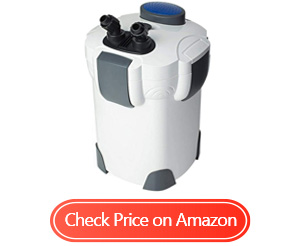
When I first got this filter kit, I thought I needed to buy the filter media separately. It is mostly my fault for not reading the label. When I opened the box that this device came in, I was surprised to see that it already contained everything that I needed, including the different kinds of filter media.
Just like all external canister filters, this one has a priming button for when you need to start the water pump again. Unlike other canister filters I have used before, this device primed right up after just a couple of pumps. In addition, even when the power goes out for a couple of moments, you do not need to prime the pump again to get it going.
I have a tank full of goldfish, Black Moors to be exact, and people who keep fish like this know that they create a ton of waste. I used a HOB filter on the tank once, and it did not take more than a couple of days before it was full. I opted for this canister filter for a 55-gallon tank because it is larger than a HOB, and I was glad I made the switch.
Also, unlike some of the other canister filters I tried so far, this has proven to be quite leak-proof. It has thick and beefy O-rings that prevent even the tiniest amount of water from getting through. Other filters I have owned usually sat in a small pool of water after a couple of months, but I haven’t had any problems like that with this product.
The only complaint I have with this kit is that the included rubber hoses for the inlet and outlet were stiff. I needed to soak the hoses in a basin of hot water for a couple of minutes to get them nice and loose. On the other hand, once the hoses cooled down, they held onto the hose connectors tightly.
- The set comes with all the things that you need to get started
- The pump primes easily and almost effortlessly
- Can handle large volumes of biological waste
- Has beefy O-rings and rubber seals
- The included rubber hoses are a bit stiff
If you are having difficulty controlling the ammonia level in your tank, you should try this powerful external filter system. This not only removes almost all of the solid waste floating in the water, but it also uses beneficial bacteria to decompose the ammonia from fish waste. This, in turn, makes the water clean and clear.
What to Look For When Buying a Filter For 55 Gallon Aquarium
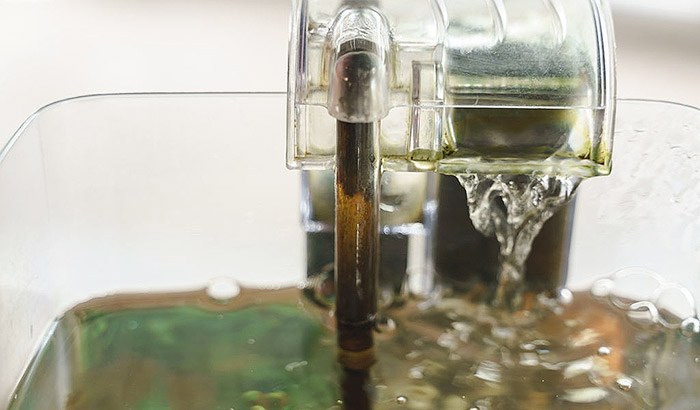
Shopping for the most suitable filter for a 55-gallon aquarium can be tricky, especially if you are not aware of the qualities you need to look for. The following are just some of the qualities that a good water filter needs to have:
Mechanical and Biological Filtration
Mechanical filtration pertains to how effectively a filter removes solid matter from the water. The filter should be fine enough that it can remove most if not all the dirt and debris suspended in the water, but without hampering the pump’s ability to move the water.
Biological filtration, on the other hand, gets rid of hazardous chemicals, like ammonia, from the waste of the fish using beneficial bacteria. If the ammonia level gets too high, your fish will get sick and eventually die. To figure out if your filter has mechanical and biological filtration, check if there are ceramic balls in the filter compartment.
Low Maintenance
A good aquarium filter does not require frequent maintenance. There are lots of cheap aquarium filters that you need to clean every other day or so; otherwise, the water output will significantly lessen, and eventually, the pump motor will burn out.
If the time comes that you need to give the filter a thorough cleaning, it should be easy to dismantle so that it will be easier to clean.
Size
If you mounted your 55-gallon aquarium on a sturdy cabinet with plenty of storage space, an external canister filter system might be more to your speed. These filters have significantly more filter media, allowing them to clean the water in the aquarium more efficiently.
If you do not have the luxury of space, you should opt for a HOB (hang-on-back) or a submersible filter. These kinds of filters are small enough that you can hide them at the back of the tank or behind the plants or decorations inside it. Although they are not quite as efficient at filtering compared to canister filters, they still do a respectable job.
Frequently Asked Questions
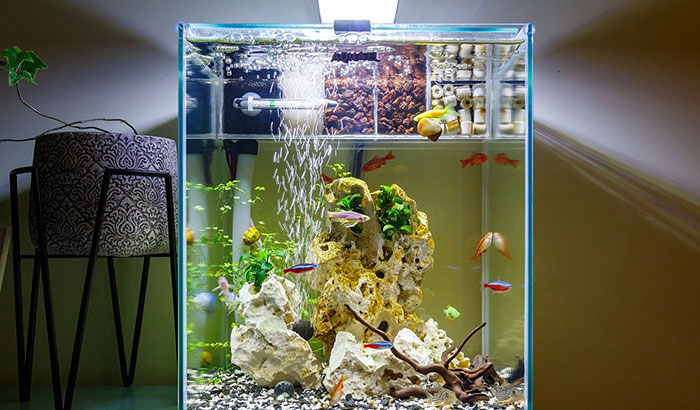
What Size Filter For 55 Gallon Tank?
The rule of thumb when choosing a filter for your tank is that it needs to have a flow rate that is four times the volume of the tank. If you have a 55-gallon tank, you will need a filtration system that can move water at a rate of at least 220 gallons per hour.
How Often Do I Change My 55 Gallon Aquarium Filter?
Ideally, you will need to replace your filter media every three to four weeks. While the filter is already out of the water, take this time to scrub the inside of the filter housing using an old toothbrush and water that came from the tank. This will keep you from accidentally removing the beneficial bacteria from the filter.
Conclusion
If you are upgrading from a smaller aquarium, you will also need to upgrade your hardware, which includes getting the best aquarium filter for a 55-gallon tank. The filter you used for your smaller tank might not be able to keep up with the load that comes with the larger one.
A filter for a 55-gallon aquarium is the one that can handle all the biological waste that your fish can produce while circulating the water in the tank at the same time.
The post The Best Filter for 55 Gallon Aquarium in 2022 appeared first on Aquatic Eden.
]]>