Friday, March 28, 2008

Cheap Scapes: Collecting Your Own Rocks

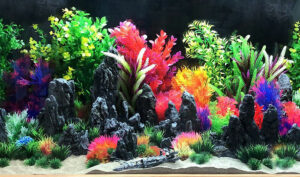
Who ever though they'd be paying good money for a rock when they started an aquarium? Yet many of us do. After discussing ways to save money while creating a beautiful aquarium in the last post, I touched upon collecting rocks yourself to use in your aquarium to save money. I've decided to continue the budget aquascaping theme with a post on collecting your own rocks to use in your aquariums. If you're lucky enough to live in or near an area that has appropriate rocks, this can be a great money saver and add a unique flavor to your aquascape. Sure, you'll get some strange glances as you lug a bag of rocks back home, but it's worth it!

It can be difficult to find rocks locally that "fit" into an aquarium. Some will just look out of place underwater. The best rocks are those found in or near water. Rivers, streams, and lakes are the best source. These rocks often have more rounded edges and will look more natural in the aquarium. Since they also are often worn smooth, you will have less of a problem with algae or detritus collecting on the rock. Finally, since they have been under water before, they are most likely (although not always) safe to put in your aquarium.

This brings up several important things to remember when putting rocks in your aquarium.
First and probably most important is the fact that some rocks just aren't suited for aquariums based on their composition. Certain chemicals contained in the rocks can leach into the water and play havoc with your water parameters. Some, like calcium carbonate or magnesium carbonate, will make your water hardness go through the roof as the elements dissolve into the water. Marble, limestone, coral, dolomite, or anything similar will do just that. While it's possible to live with rocks that impact your water parameters (Amano scapes often use such stones) in the long run, it just isn't worth it. Rocks with obvious metallic seams in them should also be avoided as they can also leach harmful substances into the water. A decent (although somewhat dangerous) method of testing whether or not a rock will dissolve into your aquarium is to put a few drops of acid onto it (strong vinegar or muriatic acid; be careful!) and see if it foams or fizzes after a few minutes. If it does, it likely contains an element that will affect your water parameters.

Second, rocks come from an outdoor environment. They can carry all sorts of dirt and substances on them that may be harmful to your aquarium's ecosystem. What I do is wash them thoroughly under running water with a mild soap to remove any loose dirt and oils. Then, I put them in a pot of water and boil them for a while. This kills any living things on the rock that I may not want in the aquarium. After the rocks have cooled they should be ready to be placed into your aquarium.


Using this knowledge, and a basic understanding of geology, it's possible to find unique and interesting rocks locally for your aquarium. Best of all, they're free!

Monday, March 10, 2008

Cheap Scapes: Tips for Budget Aquascaping

Although we look at beautiful sweeping aquascapes in magazines and books and websites in awe, not all of us can afford such an investment. A fully equipped, top of the line aquascape can easily cost in the thousands of dollars, about as much as a fancy reef aquarium. Here are some tips to save cash and have a great looking aquarium at the same time.

  1. Buy Used - Getting a brand new tank or brand new equipment may be appealing, but it often costs a fortune. Most of the money in an aquarium is devoted to lighting, filtration, and the actual tank and stand itself. Finding these used can save you a fortune. Sure, you'll have to put up with some scratches in the tank glass or maybe a somewhat noisy filter, but they'll still function just the same. Just make sure everything is in working order before you pay. The best part of this though, is that even if it doesn't work, you end up spending 1/10th what you'd spend on it new, so you can either throw it out or fix it up. eBay, Craigslist, and the For Sale section of fish forums are the best places to look.
  2. Smaller is Cheaper - We all know deep down we want a 120+ gallon tank so we can have a sweeping aquascape with hundreds of fish and plant species. Heck, who wouldn't want to follow in Amano's footsteps and create a whole room sized aquarium? The problem is, as the size expands, so does the price. Exponentially, in fact. To support that bigger tank you need a bigger stand (or even a bigger room/apartment/house!), more light, bigger filters, more power to run all the equipment, more substrate, and more money spent on stocking it with fish and plants. Compromise on size. In fact, look at a smaller tank as a challenge. Aquascaping a nano is much, much harder than a large tank. As a benefit, the maintenance won't take a whole day either!
  3. Do It Yourself - Love that fancy glass CO2 diffuser? Oops, it costs more than you paid for your second-hand tank! Not to worry, there are often many simple, quick, and best of all FREE (or really really cheap) ways to improve your aquarium. DIY CO2 can save you hundreds of dollars and DIY lighting is effective as well. You can even make a DIY filter if you've got the right tools and don't mind troubleshooting a few leaks and issues (trust me, I've done it). Although some of these DIY adventures will often result in just a temporary solution (like my DIY filter that was replaced by a second hand Eheim after a month) they can be a lot of fun and with persistence can save you money. Check out the DIY section for some example projects. DIY can also apply to the hardscape in your tank. Why buy rocks and wood when you can find it outside for free? Granted, not everyone can find appropriate rocks and wood locally and you have to be careful in what types of wood and rock you put in your tank and what it might introduce. With proper procedures though, you can get an awesome, natural hardscape for free!
  4. Be Patient - Sure you can rush out to the fish store and buy 20 tetras and splurge on 4 or 5 of each exotic high-light plant and your tank will look pretty good...for a few days. However, very soon you might be faced with a mass die off as ammonia levels spike and plants wither and rot. It's the ultimate tank meltdown as you watch all that money you spent on plants and fish melt into goo. Be patient and hold off on fully stocking your tank and don't get difficult plants right off the bat. Add new fish gradually and fill the tank up with cheap, fast growing, hardy plants to fend off algae and absorb the ammonia. These cheap plants can often be found for free, which brings me to my last point.
  5. Leverage the Community - There's a huge community of fish keepers and aquascapers out there. You can find them in aquarium clubs or online in fish forums. Most, if not all, have members who are willing to give away excess plants and fish for FREE. These are usually easy to grow starter plants or fish that are hardy and multiply quickly: perfect for a start up tank. Then, once you get established, you can return the favor and give away your excess and move on to the harder varieties. Once you have an excess of these, you can even sell them back to the community, generating some revenue to offset the cost of the hobby. Try Aquabid for cheap plants and fish; you can sell your own plants and fish there too. You probably won't break even, but it'll help mitigate the ongoing maintenance costs associated with an aquarium.

Hopefully these tips can help you achieve a beautiful aquascape without spending thousands of dollars. Although it can be an expensive hobby, you can get just as much enjoyment out if it for a fraction of the price.

Monday, February 11, 2008

Beautiful Biotope Aquariums

Amano style aquariums are beautiful to look at, but they are far different from the actual environments on which they are based. Although they are often referred to as nature aquariums, many incorporate plants and animals that would never be present together in the wild. Recreating a particular environment with native plants and animals, also called a biotope, can be as beautiful and challenging as creating a tranquil Amano aquascape. Through careful research and planning, it's possible to have an accurate piece of nature in your home. According to the AGA, a biotope aquarium

"models the physical conditions in a biotope and is populated by plants and animals that are found together in that biotope. In an accurate biotope aquarium, the water temperature, water movement, water chemistry, color and turbidity mimic the natural habitat. Stones, wood and debris, if present in the biotope, are also present in the biotope aquarium. The substrate in the biotope aquarium is similar to the natural substrate."

Despite the restrictions of a biotope aquarium, many hobbyists have been able to cr
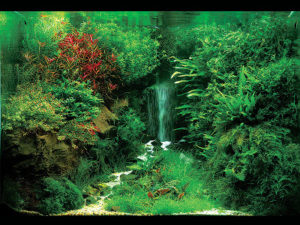
eate spectacular masterpieces that rival the best Amano style aquascapes. After all, Amano style aquariums are inspired by nature, while biotope aquariums aim to mirror nature. There are also other reasons to set up a biotope aquarium. The natural habitats create different behavior in fish than seen in a community aquarium and make it much easier to get fish to spawn. Finally, the challenge of setting up a successful and true-to-nature biotope aquarium is certainly something to brag about. Here are some examples from the biotope category of the 2007 AGA Contest to get your creative juices flowing:


For more information on biotope aquariums and examples of freshwater biotopes, try Badman's biotope page.

Wednesday, January 23, 2008

Planted Amano Aquarium: From Start to Finish

I stumbled upon this really useful article today that details the development of one of Takashi Amano's planted aquariums from start to finish with pictures. It's called "A Path to the Finished Aquarium." Although it doesn't start from the very beginning (including the setup of the tank), it shows how to trim stem plants to encourage bushy growth and how an aquascape grows and matures over the course of two months. Also helpful, it includes all information about the aquarium, including lighting type, strength, and duration and fertilization strategies. Here are the first few entries.

May
31st, 2005 (7th day)

A week from planting. Although half of the tank water was changed daily, the water still looked somewhat cloudy. The growth of stem plants was still sparse.


June
8th, 2005 (15th day)

15 days has passed since planting. The water has become clear. Glossostigma and Echinodorus tenellus have developed runners and Willow Moss on driftwood is growing steadily.


June
15th, 2005 (22nd day)

The first trimming on the 22nd day from planting. The stem plants planted at the same time to the same height were beginning to show a difference in their growth depending on their types. Trimming became necessary to keep their growth in balance.


Check out the rest of the entries and the detailed aquarium specifications in the article.